RosTrace

Tag: national security

Ash Cooper

High-Performance Computing at a Crossroads: The Race for Technological Sovereignty

High-performance computing (HPC) systems—advanced computing infrastructures that deliver massive processing power—are increasingly critical in fields such as scientific research, engineering, defense, and artificial intelligence (AI). However, technical challenges and geopolitical competition are shaping the future of HPC, according to a new Policy Forum published by Ewa Deelman and colleagues in the American Association for the Advancement of Science (AAAS).

· 3 min read

Maya Winters

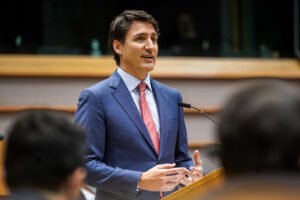
Justin Trudeau Warns of Trump’s Canada Annexation Threat as a ‘Real Thing’

Ottawa: Canadian Prime Minister Justin Trudeau has warned that U.S. President Donald Trump’s threat to annex Canada and make it the 51st state is a “real thing,” citing America’s interest in Canada’s vast supply of critical minerals. The comments were made during a summit of business and labor leaders discussing Trump's looming 25% tariff threat on all Canadian imports.

· 2 min read

Blair Foster

China Condemns Australia’s Deepseek Ban: An Analysis of Political and Security Implications

Australia's recent ban on the Deepseek AI platform highlights growing concerns over national security and data integrity in the context of rising geopolitical tensions. This decision reflects a broader scrutiny of AI technologies and parallels actions taken by other nations, such as South Korea. As countries prioritize both innovation and security, the implications of such bans extend beyond bilateral relations, influencing global discussions on AI governance and collaboration. The evolving landscape points to the need for standardized regulations to navigate the intricate intersection of technology, privacy, and international relations.

· 5 min read

Maya Winters

Albanese government prohibits DeepSeek on official devices over security concerns

Deepseek, an advanced AI chatbot developed in China, has rapidly gained traction in the technology sector despite facing scrutiny over data security and privacy. With its rise to the top of app downloads and subsequent bans from governments like Australia, Deepseek's implications for data protection and national security continue to spark global dialogue. This blog post explores the innovative functionalities of Deepseek, the rationale behind governmental restrictions, and the broader impact of AI technologies on privacy and security across industries. As AI evolves, understanding the balance between innovation and safety becomes crucial.

· 5 min read

Ash Cooper

Japan to Restrict Exports of Chips and Quantum Computing Technology

Explore the intricate dynamics of global supply chains with a focus on the relationship between China and Japan. This post delves into the challenges posed by geopolitical tensions, export controls on semiconductors, and the importance of cooperation for stability in the global market. Discover how both nations can navigate these challenges through constructive dialogue and innovative strategies to enhance supply chain resilience and foster economic collaboration.

· 5 min read

Blair Foster

Australia Boosts Investment in Air Defence Capabilities

Explore Australia's significant investment in air defence capabilities, reflecting a strategic response to regional threats. This comprehensive overview covers the government's financial commitment, initiatives like the Advanced Strategic Capabilities Accelerator (ASCA), and partnerships with local companies. With a focus on innovation and job creation, the investment aims to enhance national security while fostering economic growth. Discover the implications of these developments for Australia's military readiness and the broader Indo-Pacific security landscape.

· 5 min read

Blair Foster

US Designates Tencent as a Chinese Military Company: Implications and Reactions

The recent designation of Tencent and other Chinese firms as military companies by the US government highlights escalating tensions between the two nations. This move underscores fears regarding China's military-civil fusion strategy, potentially leading to tighter regulations and impacting US businesses engaging with Chinese entities. The implications of this designation extend beyond bilateral relations, affecting global supply chains and international partnerships. Tencent's firm denial and the Chinese government's criticism of the US action further signal a complex economic landscape. As the US prepares to navigate this growing rivalry, the future of technology competition and US-China relations remains uncertain, highlighting a pivotal moment in the global tech ecosystem.

· 5 min read

Blair Foster

Biden’s Decision to Block Nippon Steel Takeover: Protecting Jobs or Igniting Uncertainty?

President Biden's decision to block Nippon Steel’s $15 billion takeover of U.S. Steel highlights national security concerns and aims to protect American jobs in the steel industry. This move has sparked debate about the future of the steel sector, the implications for workers, and the economic stability of communities reliant on steel production. As the industry faces challenges from globalization and changing production technologies, this decision may shape the landscape of American manufacturing, fostering a balance between job preservation and global competitiveness.

· 5 min read