Nvidia CEO Jensen Huang has been reinstated by the company’s board after resigning earlier this month, but his return leaves the chipmaker facing questions about China, export controls and corporate oversight. A…
Nvidia has reported quarterly revenue of $115.8bn, more than double the figure a year earlier, while its board says it will not reinstate co-founder Jensen Huang as chief executive. Interim CEO Colette…
Nvidia CEO Jensen Huang told employees he had been unfaithful to his wife, Lori, and apologised to her and their children, according to a report published by India Today on November 9,…
Nvidia says its board has launched an independent investigation after reports that chief executive Jensen Huang had a relationship with Alice Huang, a Chinese businesswoman whom US intelligence officials reportedly believed was…
Shadow Defence Minister Angus Taylor urges the Albanese government to clarify Australia's role in a potential Taiwan conflict. On ABC’s 7.30, Taylor insisted Canberra should align with AUKUS allies, making firm commitments to Taiwan’s defense. He emphasized that a clear stance is vital for credible deterrence in the Indo-Pacific. Taylor stated, “We should commit to Taiwan’s security jointly.” He highlighted the importance of “peace through deterrence,” asserting readiness to act when necessary.
The U.S. Department of Defense has temporarily halted some key weapons shipments to Ukraine, causing concern in Kyiv and Washington. This pause, due to low U.S. stockpiles, impacts precision-guided munitions and air-defense interceptors crucial for countering Russian drones and missiles. This is the third disruption of U.S. military aid to Ukraine in 2024–25, coinciding with Russia's intensified summer offensive in eastern Ukraine and continuous drone and missile attacks on civilian areas.
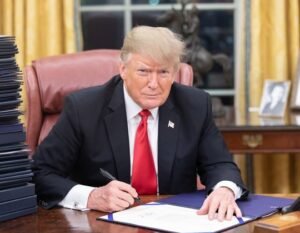
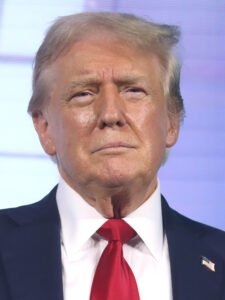
President Trump's recent authorization of U.S. airstrikes on Iranian sites has plunged America into direct conflict with Iran. Although officials claimed these were precise strikes to weaken Iran's supposed nuclear weapons program and not a step towards full-scale war, many experts, allies, and opponents agree that the U.S. has embarked on a dangerous new phase of military engagement in the Middle East.
President Trump declared he would decide on U.S. strikes on Iran "within the next two weeks," creating uncertainty. This timeframe allows for immediate action or extended diplomatic efforts, leaving allies, adversaries, and markets in suspense.
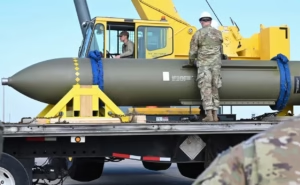
In the aftermath of Israel’s unprecedented air campaign against Iran’s nuclear and military facilities, President Donald Trump has signaled to defense officials that the United States should only consider joining strikes on Iran if the GBU-57 Massive Ordnance Penetrator (MOP) “bunker buster” bomb can be guaranteed to neutralize the deeply buried uranium enrichment facility at Fordow. According to multiple defense sources familiar with White House deliberations, Trump has not been fully convinced of the GBU-57’s ability to eliminate Fordow’s critical infrastructure and has delayed authorizing U.S. involvement while assessing whether the mere threat of American intervention might bring Tehran back to the negotiating table.
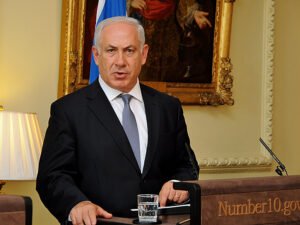
Israel’s recent air strikes on Iranian nuclear sites—and Iran’s retaliatory missile launches—mark a decisive shift in the balance of power across the Middle East. Prime Minister Benjamin Netanyahu demonstrated his willingness to act unilaterally, defying even President Donald Trump’s entreaties to hold off until after planned US-backed negotiations on a new nuclear deal with Tehran.
For decades, Israeli Prime Minister Benjamin Netanyahu has openly vowed to thwart Iran’s nuclear ambitions by any means necessary. Those long-held threats culminated this week in “Operation Rising Lion,” a series of coordinated airstrikes against Iranian military and nuclear infrastructure. While Netanyahu’s carefully cultivated reputation as “Mr. Security” may have compelled him to pull the trigger, the strikes carry profound strategic, diplomatic, and domestic risks. As rescuers sift through the rubble in Tehran and world leaders scramble for a response, the true costs of confronting Iran head-on are only beginning to surface.
In December of the previous year, South Korea was thrust into a political maelstrom when President Yoon Suk-yeol declared martial law in the wake of widespread protests. The decision, intended to quell escalating demonstrations over government policies and economic discontent, backfired spectacularly. Lawmakers from the Democratic Party and other opposition factions filed impeachment articles against Yoon, arguing that the extraordinary measure infringed on constitutional rights and threatened democratic norms. The Constitutional Court upheld the impeachment in April, marking only the second time in South Korea’s history that a sitting president was removed from office.
· 12 min read
Your privacy
We use essential cookies to run this site. With your permission, we and our advertising and analytics partners, including Google, also use cookies to measure readership and show more relevant ads. You can change your choice at any time from "Cookie settings" at the bottom of every page. Read our Privacy Policy
Accessibility
Adjust how this site looks and behaves for you. Your choices are saved on this device only.
Darker text and stronger lines, borders and links.
Shows text in the OpenDyslexic typeface.
More space between lines, letters and words.
Makes every link easy to spot.
A bold outline shows where you are when using a keyboard.
Turns off animations, transitions and autoplaying video.