
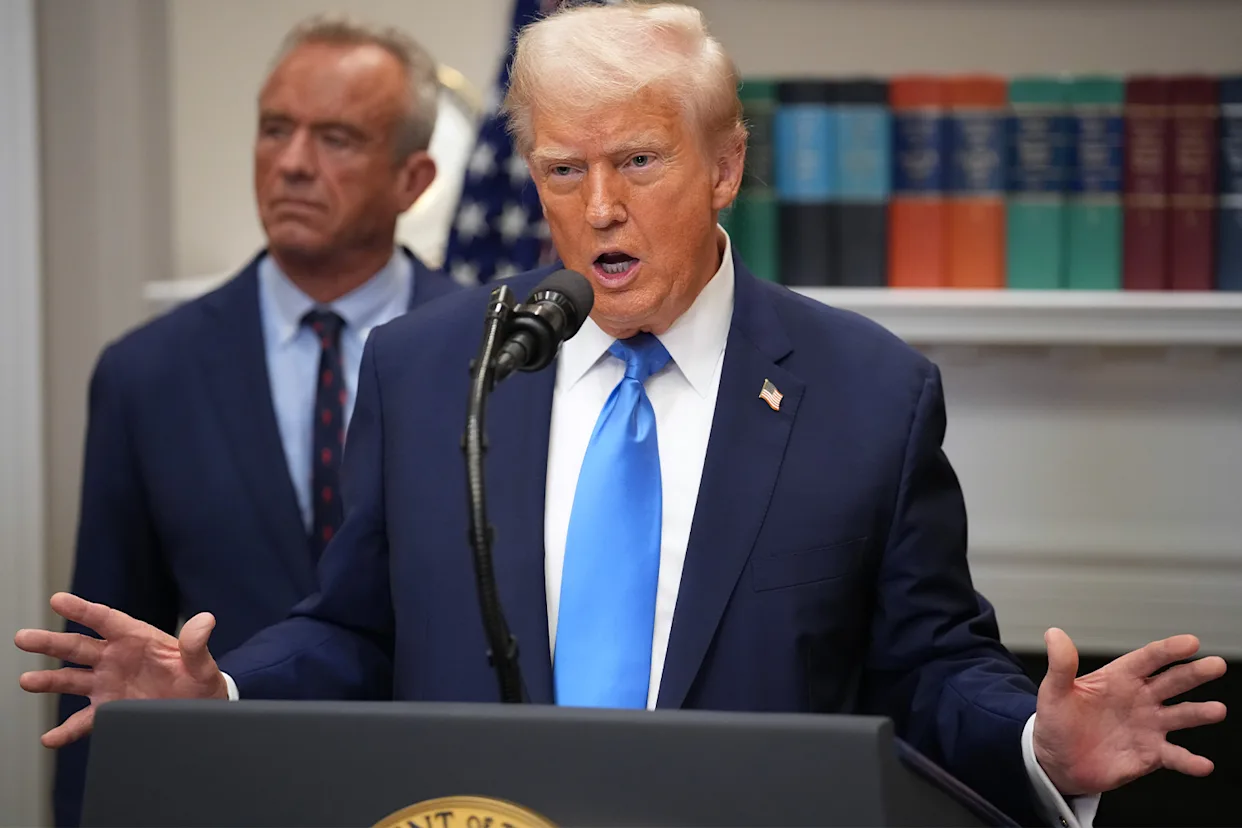
President Donald Trump’s recent remarks linking paracetamol use in pregnancy to autism in children have reignited fears of misinformation spilling across borders. His claim, widely rejected by health authorities, has been described by Australian experts as a dangerous distraction that could undermine trust in safe medicines and stoke unnecessary anxiety among families.
The issue is not confined to the U.S. Already, Australian general practitioners (GPs) are bracing for an influx of patient questions, reminiscent of past health misinformation crises such as the discredited claims about vaccines and autism.
The Claim and Its Origins
During a White House briefing, Trump suggested that pregnant women should avoid paracetamol, known as acetaminophen in the United States, due to a supposed link with autism spectrum disorder (ASD) in children. The comments referenced selective studies claiming a statistical association between prenatal exposure and later diagnoses of ASD or attention deficit hyperactivity disorder (ADHD).
However, none of these studies establishes a direct causal link. In fact, leading researchers stress that such studies are prone to confounding factors and should not be interpreted as proof of harm.
The comparison to Andrew Wakefield’s infamous 1998 Lancet paper is hard to miss. That debunked study falsely linked the measles, mumps, and rubella (MMR) vaccine to autism, creating a legacy of fear and vaccine hesitancy still felt today.
Expert Reactions in Australia
Associate Professor John Kramer, Chair of RACGP Specific Interests ADHD, ASD and Neurodiversity, said the claim will almost certainly reach Australian clinics.
“It’s going to confuse people,” he told newsGP. “Trump has created a media storm as a distraction, but this one is dangerous because it scares parents without evidence. Autism is understood to be predominantly genetic, with some environmental influence. But the science Trump is citing is weak and contradicted by more robust studies.”
Kramer pointed to a 2024 study published in JAMA by Ahlqvist et al., which analysed data from 2.5 million Swedish children. When controlling for parental neurodivergence and sibling relationships, the researchers found no association between prenatal paracetamol exposure and neurodivergence in children.
The Royal Australian and New Zealand College of Obstetricians and Gynaecologists (RANZCOG) echoed this, stressing that earlier studies showed association but not causation. In their statement, they highlighted that statistical links in poorly controlled studies cannot justify public health policy shifts.
The Risks of Untreated Fever
Another point overlooked in Trump’s remarks is the risk of leaving fever untreated during pregnancy. High maternal fever has long been recognised as a risk factor for miscarriage, neural tube defects, and other complications.
Dr Ramya Raman, RACGP Vice-President, warned against ignoring this context. “Any small association must be weighed against the clear risks of untreated fever. Pregnant women with high fever face very real dangers to themselves and their babies. Paracetamol remains the safest and most widely recommended option.”
This perspective underscores the delicate balance doctors must maintain: addressing fears stoked by misinformation while ensuring patients understand the well-established benefits of appropriate treatments.
How Misinformation Travels
Health misinformation has a proven ability to transcend borders. The Wakefield saga, although originating in the UK, led to lower vaccination rates in Australia and outbreaks of preventable diseases.
Experts fear Trump’s comments could have a similar ripple effect. Kramer noted, “People will hear this and rationally think, ‘It can’t be true.’ But not everyone reacts rationally. Seeds of doubt grow quickly, especially online, and that creates anxiety without foundation.”
Social media accelerates the spread. Posts linking Trump’s claim to parental fears have already appeared in Australian parenting forums, with some calling for “natural alternatives” to paracetamol. Doctors warn that this cycle risks undermining trust in everyday medicines just as vaccine misinformation did.
Guidance for GPs
Australian GPs now face the task of responding calmly and consistently. According to Kramer, the strength of the patient–doctor relationship will shape how these conversations unfold.
- For trusted patients, reassurance may be enough: “There’s no evidence for this. If there was, health authorities would have acted long ago.”
- For sceptical patients, doctors should reference credible evidence, such as the Ahlqvist JAMA study, to show that larger, methodologically rigorous research contradicts Trump’s claim.
- For anxious families, contextualising the Wakefield episode may help: highlighting how fabricated evidence once caused panic but was later debunked can reinforce the importance of scientific scrutiny.
This approach not only addresses the immediate misinformation but also builds long-term resilience against future health myths.
The Broader Pattern of Distrust
Kramer expressed concern that Trump’s remarks reflect a broader pattern: sidelining health experts in favour of political loyalty. “This demonstrates what happens when you remove trained experts from institutions like the CDC and replace them with political loyalists. The public loses accurate, science-based advice and gets fear instead.”
Such developments are not confined to the U.S. In an interconnected world, misinformation from one country can quickly affect health decisions in another. Australian health literacy, while improving, is not immune to doubt and anxiety stirred by high-profile political statements.
Lessons From Past Misinformation Crises
Public health leaders argue that the Wakefield scandal holds valuable lessons for today. Despite being retracted and discredited, it left a long shadow. The consequences included vaccine hesitancy, lower immunisation rates, and avoidable outbreaks.
By drawing parallels, experts hope to remind the public that science self-corrects, but misinformation lingers if not actively challenged. The responsibility lies with clinicians, researchers, and public institutions to reinforce evidence-based guidance before unfounded claims take root.
Looking Ahead
The episode raises bigger questions about how societies can strengthen resilience against health misinformation. Suggested strategies include:
- Strengthening public health communication: Rapid, clear responses from health authorities like RANZCOG and RACGP help counter misinformation before it spreads.
- Building digital literacy: Teaching communities to critically evaluate health claims online reduces vulnerability to misinformation.
- Empowering clinicians: Equipping GPs with accessible, evidence-backed resources enables them to reassure patients effectively.
- Leveraging community voices: Trusted local leaders and parent networks can amplify accurate messages to counter social media noise.
These strategies highlight that countering misinformation requires a multi-layered approach. Scientific evidence alone is not enough; it must be communicated in ways that resonate with the public’s concerns and experiences.
Conclusion
Trump’s paracetamol–autism claim is not supported by credible evidence. Australian doctors and health organisations have been quick to reject it, citing large-scale studies that disprove any causal link. Yet the impact of misinformation goes beyond facts. It shapes emotions, decisions, and trust.
For Australian GPs, the challenge is twofold: to calm fears in the consulting room and to guard against misinformation gaining traction in the wider community. The experience with vaccines has shown that silence allows myths to spread, but proactive communication grounded in evidence can limit the damage.
The takeaway is clear. Pregnant women should continue to follow medical advice, which overwhelmingly supports paracetamol as the safest option for treating pain and fever. At the same time, society must remain vigilant against the corrosive effect of misinformation, especially when amplified by political figures with global reach.
The episode serves as a reminder: science must not only be done but also defended.