
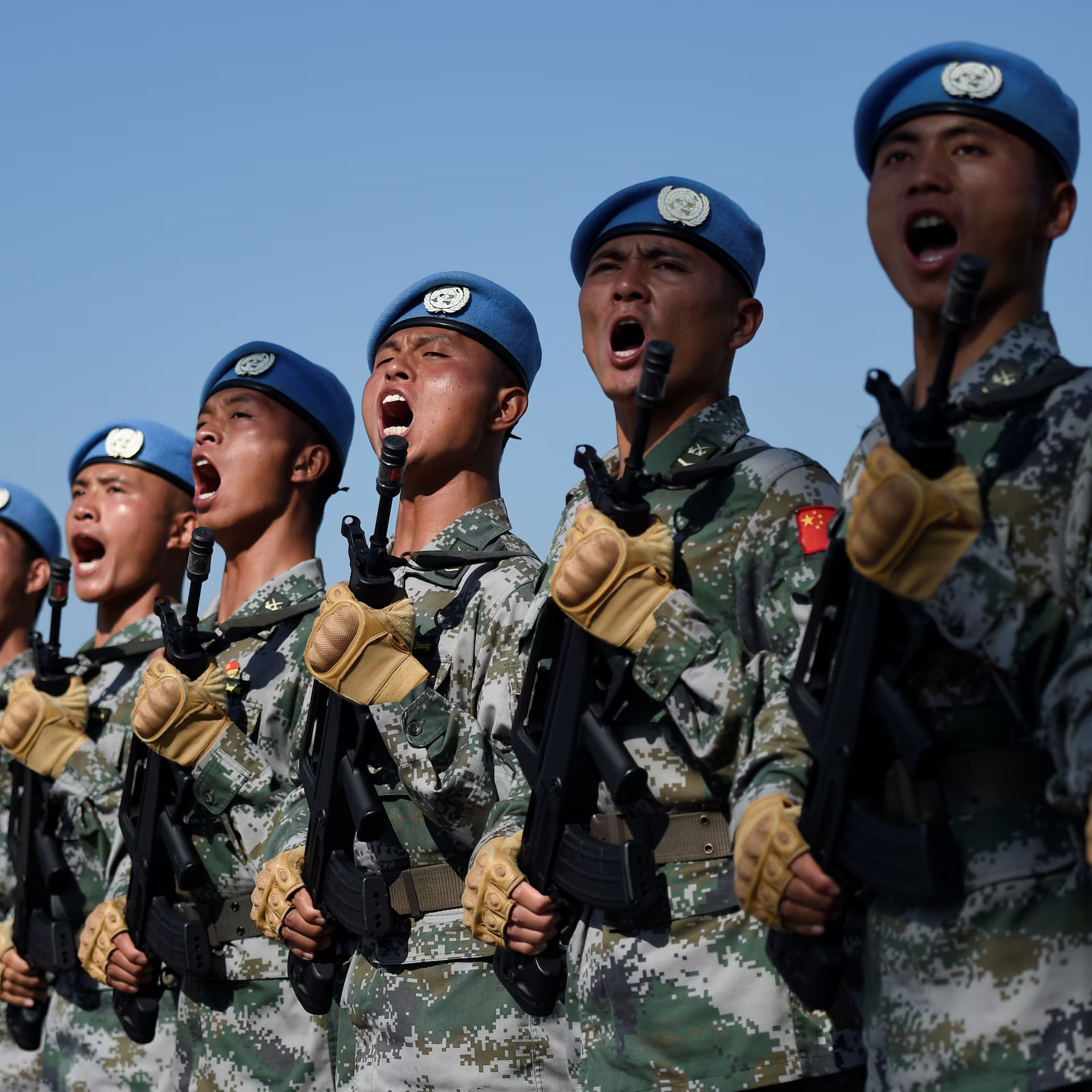
China has announced a new increase in defence spending, reinforcing its long term goal of building a modern and technologically advanced military. The move, revealed during the annual session of the National People’s Congress in Beijing, reflects Beijing’s growing focus on military readiness, technological innovation, and strategic competition in the Indo Pacific region.
The defence budget increase also signals China’s determination to keep pace with evolving global security challenges. According to Chinese officials, the spending rise will fund modern weapons systems, advanced training, and improved operational capabilities for the People’s Liberation Army. Analysts say the announcement highlights China’s intention to strengthen deterrence while continuing a decades long effort to transform its military into a world class force.
China’s Military Modernisation Strategy Gains Momentum
China’s defence budget growth forms part of a broader strategy that has been unfolding for more than twenty years. Beijing aims to complete key stages of military modernisation by 2035 and to build a “world class military” by the middle of the century. This strategy prioritises technology, joint combat capability, and the integration of advanced digital systems.
Short sentences capture the immediate point. China is investing heavily in modern warfare tools.
Longer analysis shows the deeper strategy behind the move. Funding will support the development of advanced fighter aircraft, naval expansion, cyber warfare capability, space defence systems, and artificial intelligence driven military technology. The spending plan also focuses on improving logistics networks and battlefield communication systems, which allow the military to operate more effectively across land, sea, air, cyber, and space domains.
According to experts, China’s defence spending still represents a smaller share of gross domestic product than some other major military powers. Yet the steady growth rate over several decades has enabled the country to modernise quickly. Investments in new submarines, aircraft carriers, hypersonic missile technology, and satellite networks illustrate how the Chinese military has expanded its operational reach.
Another key focus involves improving the professional training and readiness of troops. Officials say better training facilities, joint military exercises, and advanced simulation systems will help forces respond quickly during crises. These reforms reflect lessons learned from modern conflicts and from observing global military developments.
Key Areas Receiving Increased Defence Investment
China’s defence budget increase is expected to fund several priority areas. Government documents and defence analysts highlight the following major investment targets:
- Naval expansion and maritime security
China continues to expand the capabilities of its navy, focusing on aircraft carriers, advanced destroyers, and long range submarines. This expansion supports maritime patrols and protection of sea lanes that are vital for global trade. - Next generation weapons systems
Research and development funding will accelerate work on hypersonic missiles, stealth aircraft, and advanced missile defence technologies. These systems aim to strengthen deterrence and improve battlefield effectiveness. - Cyber and information warfare capabilities
Modern conflicts increasingly involve digital infrastructure. China is investing in cyber defence, electronic warfare tools, and secure communication networks to ensure operational superiority in information driven warfare. - Space and satellite security
Satellite networks play a crucial role in navigation, intelligence gathering, and communication. China’s military modernisation includes stronger space monitoring systems and satellite protection technologies.
These investments highlight a broader shift toward technology driven defence strategies. Rather than focusing solely on troop numbers, the Chinese military is placing greater emphasis on precision, intelligence, and rapid response capability.
The emphasis on technological advancement also reflects the importance of innovation in modern warfare. Artificial intelligence, autonomous systems, and data driven decision making are becoming central to military operations. China’s defence planners view these technologies as critical tools for future conflict scenarios.
Defence Spending Trends Among Major Global Powers
| Country | Estimated Defence Spending (Recent Data) | Key Focus Areas | Strategic Goal |
|---|---|---|---|
| China | Over $230 billion annually | Naval expansion, hypersonic weapons, AI warfare | World class military by mid century |
| United States | Over $850 billion annually | Global force projection, advanced technology | Maintain global military dominance |
| Russia | Around $100 billion annually | Strategic missile systems, nuclear forces | Strengthen regional security influence |
| India | Around $80 billion annually | Border security, modernization programs | Regional stability and deterrence |
The comparison illustrates the scale of global defence spending and the strategic priorities shaping military policy. While China’s spending remains below that of the United States, the steady growth rate has drawn attention from policymakers and defence analysts worldwide.
Security experts note that military budgets alone do not tell the entire story. Efficiency, innovation, and technological integration also determine military effectiveness. China’s emphasis on modern systems suggests that it aims to maximise capability rather than simply increase force size.
Global Reactions and Strategic Implications
China’s defence spending increase has sparked discussions among governments, military planners, and security analysts. Many countries are closely watching how the additional funding will shape China’s military capabilities over the coming decade.
Regional security experts note that rising defence budgets can influence strategic balances. In the Indo Pacific region, several countries are strengthening partnerships and defence cooperation in response to evolving security dynamics. Joint military exercises, intelligence sharing, and technological collaboration have become more common.
At the same time, Chinese officials stress that their military development is defensive in nature. They argue that modernisation efforts are necessary to safeguard national sovereignty and protect economic interests. Beijing also points to its participation in international peacekeeping missions as evidence of a broader commitment to global stability.
The conversation around defence spending often extends beyond military matters. It also touches on economic capacity, technological innovation, and geopolitical strategy. A nation’s ability to sustain long term defence investment depends on economic growth and industrial strength.
China’s rapid technological progress has allowed it to integrate civilian innovation into military development. The strategy known as “civil military fusion” encourages collaboration between private technology companies and defence research institutions. This approach accelerates the development of advanced systems while strengthening the domestic technology sector.
What China’s Defence Spending Means for the Future
The latest budget increase highlights a clear strategic direction. China intends to continue modernising its military and expanding technological capability. The decision also reflects a broader shift in global security dynamics where technological superiority plays a central role.
For policymakers and analysts, the announcement offers several insights. First, China remains committed to a long term military transformation strategy. Second, the focus on advanced technology suggests future conflicts will rely heavily on digital infrastructure, artificial intelligence, and precision systems. Third, the increase reinforces the importance of monitoring defence developments across major global powers.
For businesses and investors, the trend also highlights the growing importance of the defence technology sector. Companies involved in aerospace engineering, cybersecurity, artificial intelligence, and satellite systems may see rising demand as governments invest in modern military capabilities.
China’s defence spending increase therefore carries implications beyond the battlefield. It influences economic policy, technological innovation, and international diplomacy. As global security challenges evolve, decisions about defence investment will continue to shape the geopolitical landscape.
Trending FAQ
Why is China increasing its defence spending?
China says the spending increase supports military modernisation, improves troop training, and strengthens national defence capabilities.
How large is China’s defence budget compared with other countries?
China has the second largest defence budget in the world, behind the United States, though it remains significantly smaller than the US total.
What technologies is China prioritising in its military development?
Key focus areas include hypersonic weapons, artificial intelligence, cyber warfare systems, advanced naval platforms, and satellite networks.
Does higher defence spending mean increased global tensions?
Not necessarily. Defence budgets rise for many reasons, including technological upgrades and training improvements. However, significant increases often attract attention from other countries and can influence strategic relationships.
What is China’s long term military goal?
Chinese leaders have stated that the goal is to build a fully modernised military by 2035 and a world class force by the middle of the twenty first century.