
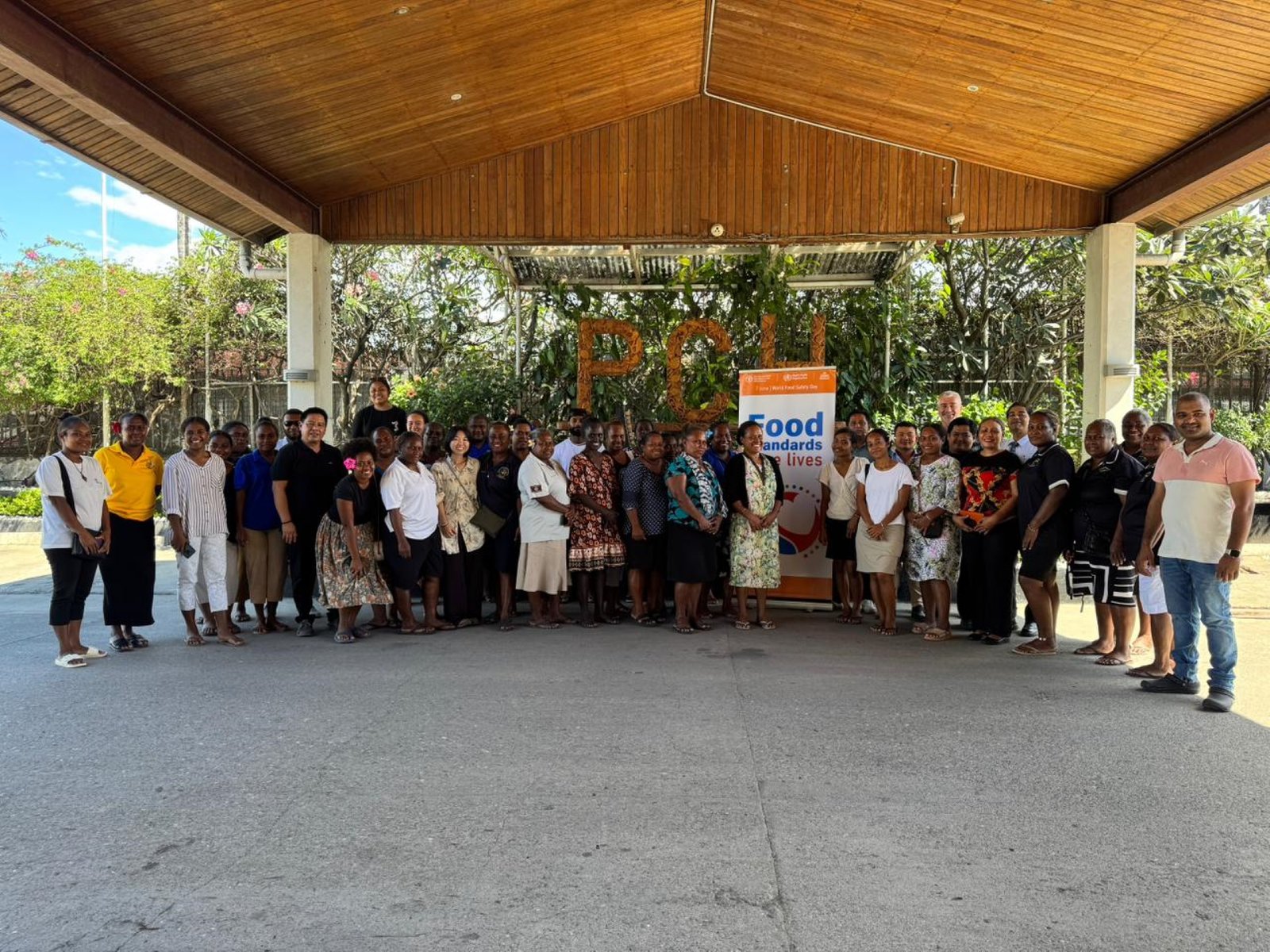
The Solomon Islands is taking decisive steps to raise food safety standards and protect public health, with a new initiative in Honiara aimed at the hospitality industry. Over two days, from 23–24 September 2025, the Ministry of Health and Medical Services (MHMS) hosted a Hazard Analysis and Critical Control Points (HACCP) training program for hotel and restaurant personnel. Organized in partnership with Honiara City Council and Guadalcanal Province, the training brought together more than 60 participants, including chefs, managers, supervisors, food handlers, environmental health officers, and inspectors.
The training marks a significant milestone in the country’s efforts to align with international best practices in food safety. HACCP is globally recognized as one of the most effective systems for preventing foodborne illness, managing risks across supply chains, and ensuring consumer confidence. For a country where tourism is a key driver of economic growth and large-scale gatherings are increasingly common, strengthening food safety has become both a public health necessity and an economic imperative.
Food Safety as Public Health and Tourism Priority
Officials emphasized that the training goes beyond regulatory compliance. It reflects the government’s broader commitment to protect the welfare of citizens, promote tourism, and prepare for emergencies. Mrs. Patricia Soqoilo, National Chief Health Inspector at MHMS, captured this sentiment: “This training is not just about compliance; it’s about protecting lives, supporting tourism, and preparing for any situation where food safety is critical. Food safety is everyone’s responsibility. By embracing HACCP, we are protecting our people, strengthening our tourism, and showing the world that Solomon Islands practices great care in serving safe, great food.”
The World Health Organization (WHO) Solomon Islands Team Leader for Health Emergencies, Georgios Theocharopoulos, added that HACCP builds a vital bridge between regulators and operators. He stressed that the system ensures readiness during spikes in demand or emergencies, giving assurance that the hospitality and food supply sectors can continue operating safely without jeopardizing public health.
Building on Global Health Recommendations
The initiative also responds to findings from the recent Joint External Evaluation (JEE), which highlighted weaknesses in outbreak response and hazard control in the Solomon Islands’ food supply chains. The JEE recommended improving collaboration between agencies, bolstering laboratory testing, and embedding hazard analysis into food safety systems. By strengthening HACCP training, the government is directly addressing these recommendations.
This alignment also builds resilience ahead of high-profile events such as the Pacific Islands Forum. These gatherings require confidence that the local hospitality sector can handle high demand while maintaining safety. The program therefore strengthens not only everyday operations but also preparedness for future large-scale occasions where international visibility is high.
Why HACCP Matters in Honiara
Foodborne illnesses remain a significant challenge in Honiara. The combination of a growing urban population, an expanding hospitality industry, and frequent community events raises the risk of outbreaks. While food safety laws exist and inspectors are trained, implementation has often been inconsistent. HACCP, which focuses on identifying risks, establishing control measures, and continuous monitoring, fills these gaps with a structured and preventive approach.
By embedding HACCP into hotels and restaurants, operators can move from reactive measures to proactive systems that reduce risks. For regulators, it allows a consistent standard that is measurable, auditable, and aligned with global expectations. For the public, it means safer food and stronger trust in both local eateries and larger establishments catering to tourists.
Insights from the Training
Participants reported that the program gave them practical tools to improve daily operations. Topics covered included hazard identification, monitoring of critical control points, setting up corrective actions, and staff training on best practices.
Ms. Katie Pikacha, Manager at Ormis Kitchen, explained that the training allows her team to identify risks more clearly, establish control measures, and train staff effectively. She emphasized that the WHO’s involvement adds credibility and ensures the program follows global standards. She also encouraged continued collaboration with local authorities to keep the training relevant to Honiara’s unique challenges.
Mr. Joy Bhattacharya, Manager for Training and Development at Heritage Park Hotel, underscored the link between HACCP and reputation management. “This training helps reinforce HACCP principles in our day-to-day operations, which is key to maintaining our reputation for quality and safety,” he said. He added that the knowledge gained equips managers to implement preventive measures more effectively, strengthen internal systems, and maintain compliance with international standards.
Both participants highlighted that WHO’s involvement encourages broader participation across sectors, ensuring the lessons extend beyond individual hotels to the wider hospitality community.
Strengthening Compliance and Preparedness
The training is expected to deliver several long-term benefits for Honiara and the Solomon Islands more broadly:
- Reduced risk of outbreaks: By standardizing hazard controls, the likelihood of foodborne illness is lowered.
- Greater confidence in tourism: Visitors can trust that local hotels and restaurants are aligned with international food safety standards.
- Improved collaboration: Regulators and operators now have a stronger framework for working together on compliance and monitoring.
- Event readiness: Large-scale events such as regional forums or emergencies can be managed more safely, with reliable food supply systems.
In addition, enhancing skills among chefs, supervisors, and food handlers ensures that knowledge is applied daily, not just during audits or inspections. This helps embed a culture of safety across the industry.
Global and Local Partnerships in Action
The program demonstrates the value of collaboration between international organizations like WHO and local institutions such as MHMS, Honiara City Council, and Guadalcanal Province. While WHO brings global expertise and credibility, local authorities ensure the training is adapted to national frameworks and cultural contexts.
Such partnerships are crucial in ensuring that global standards are not applied as one-size-fits-all solutions but are contextualized for the Solomon Islands. This balance helps improve adoption rates and builds local ownership of the system.
Toward a Safer Future
The Solomon Islands is positioning itself as a responsible tourism destination by prioritizing food safety. By investing in HACCP training, the country signals to both its citizens and international visitors that public health comes first. With continued collaboration, follow-up training, and consistent enforcement, these efforts could serve as a model for other Pacific nations facing similar challenges.
The program also demonstrates that food safety is not merely a technical requirement but a foundation for public trust, economic resilience, and national reputation. As the Solomon Islands navigates a future with more tourists, larger events, and greater public health risks, building capacity in food safety will remain critical.
The lessons from Honiara show that safeguarding public health through global standards is both achievable and impactful when government, industry, and international partners work hand in hand. By making HACCP central to its hospitality sector, the Solomon Islands is investing in safer meals, stronger communities, and a more confident future for its people and visitors alike.