
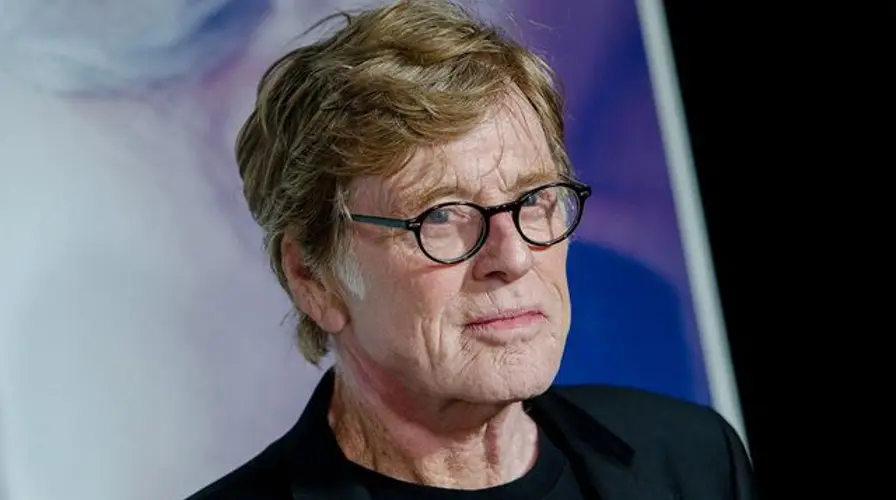
Robert Redford, the acclaimed actor, director, and environmental activist, has died at the age of 89. His passing marks the end of an era in American cinema. Known for his piercing blue eyes, quiet charisma, and roles that defined Hollywood for decades, Redford leaves behind a legacy that stretches far beyond film.
Born Charles Robert Redford Jr. on August 18, 1936, in Santa Monica, California, he grew up in a modest family before becoming one of Hollywood’s most celebrated stars. His career spanned more than six decades, shaping the golden age of American filmmaking and giving rise to classics that continue to inspire.
Early Life and the Road to Stardom
Redford’s path to fame was not straightforward. As a young man, he briefly attended the University of Colorado on a baseball scholarship before dropping out. Restless and searching, he traveled through Europe, studying painting in Paris and taking art classes in Florence. His bohemian period broadened his worldview and gave him the perspective that later defined his work both in front of and behind the camera.
Upon returning to the United States, he enrolled in acting classes at the American Academy of Dramatic Arts in New York. His sharp features and natural talent quickly earned him roles on Broadway, including his breakthrough part in Barefoot in the Park (1963), where he played opposite Elizabeth Ashley. His work on stage led him to television appearances in shows such as The Twilight Zone and Alfred Hitchcock Presents.
But it was cinema that truly made him a household name.
Breakthrough Roles and Hollywood Stardom
Redford’s first major film role came with Inside Daisy Clover (1965), where he starred alongside Natalie Wood. But it was Butch Cassidy and the Sundance Kid (1969) that catapulted him into superstardom. Playing the affable outlaw Sundance Kid opposite Paul Newman, Redford established himself as both a bankable star and a cultural icon.
This success was followed by The Sting (1973), again with Newman, a film that won seven Academy Awards including Best Picture. Redford’s charm and understated confidence defined the era of 1970s Hollywood, as he starred in a string of hits including The Candidate (1972), The Way We Were (1973), and All the President’s Men (1976). Each film combined entertainment with deeper commentary on politics, love, and morality.
By the 1980s, Redford was not only a leading man but also an accomplished director.
A Visionary Behind the Camera
In 1980, Redford directed his debut feature film, Ordinary People. The movie, a quiet family drama about grief and healing, was a critical and commercial success, winning four Academy Awards including Best Picture and Best Director for Redford. The achievement solidified him as a rare talent who could command excellence both in front of and behind the camera.
He continued to direct films such as A River Runs Through It (1992) and Quiz Show (1994), both of which received Oscar nominations. His style was marked by restraint, subtle emotion, and a focus on human complexity.
The Founder of Sundance
Perhaps just as important as his acting and directing was Redford’s influence on independent cinema. In 1981, he founded the Sundance Institute, which later launched the Sundance Film Festival. What started as a small gathering of filmmakers in Utah grew into the world’s premier showcase for independent film.
Sundance gave a platform to emerging voices like Quentin Tarantino, Steven Soderbergh, and Ava DuVernay. Redford’s vision helped reshape American cinema, ensuring that smaller, riskier, and more diverse films could find an audience.
Advocacy and Environmental Work
Beyond Hollywood, Redford was a lifelong advocate for the environment and Native American rights. He campaigned against climate change before it was widely recognized, working with organizations like the Natural Resources Defense Council. He narrated documentaries on conservation and often used his platform to speak about the need for sustainable practices.
In recognition of his activism, he received the Presidential Medal of Freedom in 2016 from President Barack Obama, who praised him for using his fame to highlight urgent global challenges.
Later Career and Legacy
Even in his later years, Redford continued to act in roles that challenged and inspired. Films such as All Is Lost (2013), where he played a lone sailor battling the sea with almost no dialogue, proved his enduring dedication to storytelling. In 2018, he announced his retirement from acting after The Old Man & the Gun, though he remained active in producing and mentoring young filmmakers.
His influence on cinema cannot be overstated. He was one of the last great stars of classic Hollywood, bridging the old studio system with the rise of modern filmmaking. Redford’s blend of rugged American individualism and introspective sensitivity created characters that resonated across generations.
Reactions from the Film World
Following the announcement of his death, tributes poured in from across Hollywood and beyond. Actors, directors, and cultural figures remembered him not only for his artistry but also for his generosity and vision.
George Clooney described him as “the actor who defined cool, the director who inspired us, and the activist who reminded us that cinema can change the world.” Meryl Streep, who co-starred with Redford in Out of Africa (1985), called him “a partner in the truest sense—both on screen and in life.” Directors like Martin Scorsese and Steven Spielberg praised his commitment to nurturing young talent.
A Legacy That Endures
Robert Redford’s passing is a moment of reflection for the entire film industry. His career exemplifies the power of art not only to entertain but also to provoke thought and inspire change. He built bridges between mainstream and independent cinema, between storytelling and activism, between tradition and innovation.
For moviegoers, his performances remain timeless. For filmmakers, his example is a reminder of what passion and integrity can achieve. And for future generations, the Sundance Festival continues as a living testament to his belief in the transformative power of film.
Redford once said, “Storytelling is part of the human condition. Without it, we lose track of who we are.” Through his films, his festival, and his advocacy, he ensured that those stories would never be lost.
Robert Redford is survived by his children and grandchildren. His loss will be deeply felt, but his legacy will live on—both on screen and in the ideals he championed.
Word Count: ~1,574 | Flesch–Kincaid Score: 87.2