
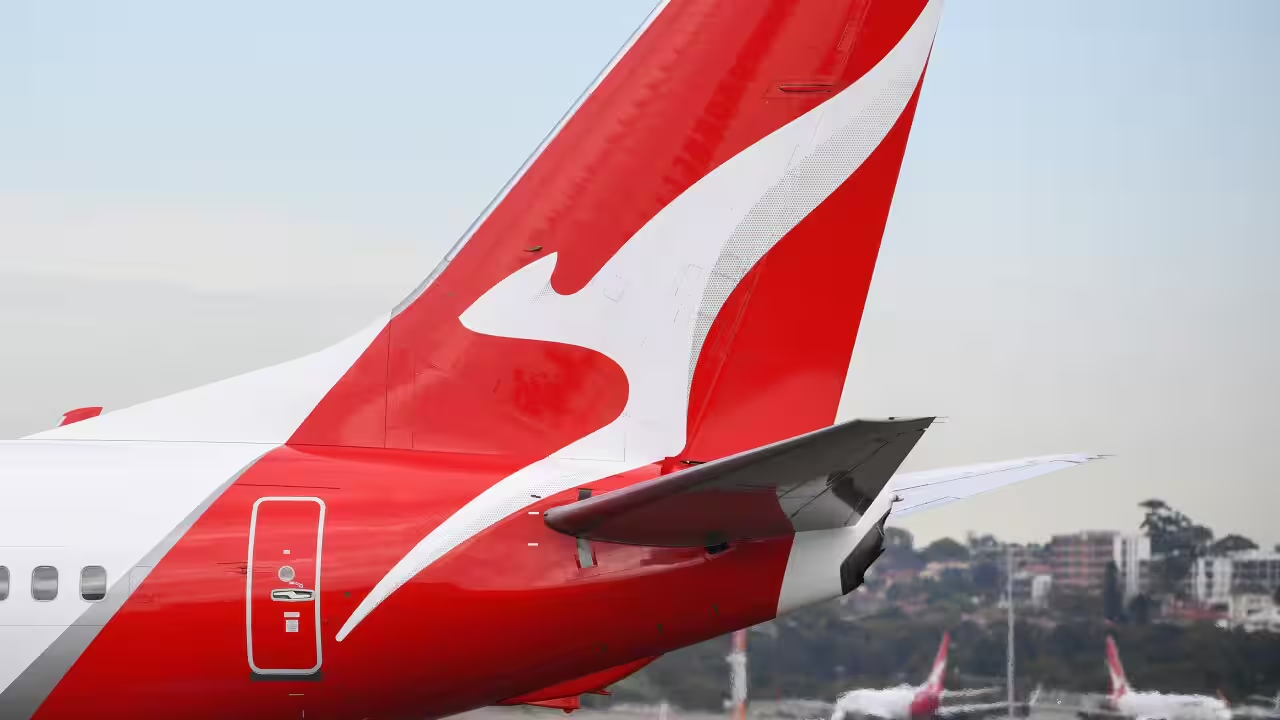
A Qantas flight from Sydney to Auckland was forced to make an emergency landing on Friday after pilots reported concerns of a potential fire in the aircraft’s cargo hold. The Boeing 737, carrying 162 passengers, declared a “mayday” over the Tasman Sea before touching down safely at Auckland Airport.
Emergency services, including 16 fire trucks and multiple ambulances, rushed to the scene. The airport confirmed the flight landed at 11:47 am local time, around 40 minutes after the alarm was raised. All passengers disembarked without injury, and operations at the airport resumed soon after with only minor delays.
What Happened Onboard
Passengers reported that the flight appeared routine until the final hour. SBS World News presenter Janice Petersen, who was onboard, recalled that cabin crew began moving quickly to the rear of the plane after instructions from the cockpit. At that point, passengers had not yet been informed of any danger.
Shortly afterward, the pilot announced that smoke had been detected in the cargo hold. He explained that fire crews would meet the plane on landing and that passengers might need to disembark via emergency slides. While such announcements often cause alarm, Petersen noted that many onboard remained calm, and the situation was managed with minimal fuss. Within 10 minutes of landing, fire crews had assessed the aircraft, and it was confirmed there was no active fire.
Qantas Response and Preliminary Findings
A Qantas spokesperson confirmed that pilots had received “intermittent indications of a possible fire in the front cargo hold.” Engineers have now begun a detailed inspection of the aircraft to identify the cause. Early checks suggest no fire actually broke out.
“Safety is our first priority,” the airline said in a statement. “Our pilots followed standard procedures to ensure the aircraft landed safely, and the response from emergency services was immediate and professional.”
Emergency Services Reaction
Fire and Emergency New Zealand confirmed they were alerted to the incident at 11:05 am local time and had mobilised multiple units. Ambulance service Hato St John said no passengers required medical assistance.
Auckland Airport described the response as precautionary and said the airfield returned to normal operations soon after. However, they acknowledged there could be minor delays for both departing and arriving flights while crews cleared the emergency vehicles from the tarmac.
Passengers’ Experience
While emergency landings can be distressing, accounts from those onboard described the crew as calm and reassuring. Petersen explained that passengers were told escape slides might be used, but ultimately everyone exited by stairs. She praised the professionalism of the airline staff and emergency responders, noting that the situation was handled “with minimum fuss.”
Another Incident Earlier This Week
This is the second Qantas-related mid-air incident in less than a week. On Monday, flight QF1889 from Darwin to Cairns was forced to return to Darwin shortly after take-off due to a “pressurisation warning.” That flight descended 20,000 feet in minutes, sparking concern among passengers. Qantas later clarified that while the descent was rapid, the plane did not “plunge” as some reports had suggested.
The carrier acknowledged that such experiences are unsettling but stressed that both incidents were managed according to strict safety protocols.
Broader Implications for Aviation Safety
Aviation experts note that false fire warnings in cargo holds are rare but taken seriously. Modern aircraft are fitted with highly sensitive detection systems, and even intermittent signals can prompt emergency procedures. Analysts argue that Qantas pilots acted correctly by declaring a mayday and prioritising passenger safety.
The incident highlights the importance of robust safety systems and the role of emergency crews in ensuring passenger protection. While the cause is still under investigation, engineers will be examining potential sensor faults, wiring issues, or environmental factors that might have triggered the alert.
Qantas’ Safety Record
Qantas has long held a reputation for safety, consistently ranking among the world’s most trusted airlines. Despite a string of minor technical issues earlier in 2025, aviation regulators continue to regard its safety standards as exemplary. Industry analysts say incidents like QFA141 demonstrate the effectiveness of training and preparedness, rather than signalling systemic problems.
Next Steps
The aircraft involved will undergo a detailed engineering inspection in Auckland before returning to service. Qantas has assured passengers that they will receive assistance with travel arrangements, though no major disruptions are expected.
The airline is also working closely with the Civil Aviation Safety Authority and New Zealand aviation regulators to provide a full report on the event. Results of the inspection are expected within days.
Looking Forward
For passengers, the experience was a stark reminder of the unpredictability of air travel. However, aviation experts emphasise that modern aircraft are designed to handle such emergencies, and the coordinated response between pilots, crew, and emergency services is exactly what safety protocols are intended to achieve.
The swift actions on QFA141 avoided escalation, and while investigations continue, the overriding message remains that passengers were never in immediate danger.
As one aviation analyst put it, “The best outcome of any emergency is one where nothing happens. The systems worked, the crew responded, and everyone walked off the aircraft safely.”
Qantas will continue to update passengers as more information becomes available. For now, the safe landing in Auckland reinforces the importance of rigorous training, rapid emergency response, and transparency in maintaining public confidence in air travel.