
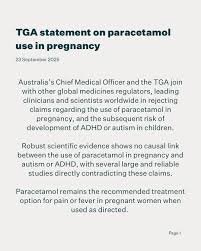
Last week in the United States, President Donald Trump linked paracetamol use during pregnancy with autism in children, urging expectant mothers to avoid the medication. Health experts around the world have responded swiftly. They say the evidence does not support such a conclusion. Below is a deep look at what research has found, where uncertainty remains, and what pregnant people should consider doing now.
The Claims vs. the Evidence
What Was Said
- Trump claimed there’s “mounting evidence” that paracetamol (also called acetaminophen, or Tylenol) taken during pregnancy causes autism in children.
- He suggested that certain communities, like Amish or Cuban populations, with lower paracetamol use have almost no autism — implying a causal relationship.
What Research Shows Instead
- A recent large-scale Swedish study, published in JAMA in 2024, examined nearly 2.5 million children born between 1995 and 2019. (JAMA Network)
- For children whose mothers took paracetamol during pregnancy, there was a slight increase in autism, ADHD, and intellectual disability in broad population-based models. (JAMA Network)
- However, when the researchers did sibling-control analyses — comparing children from the same mother, some exposed, some not — no increased risk was found. (JAMA Network)
- A separate, recent systematic review led by researchers from Mount Sinai / Harvard looked at 46 studies, covering over 100,000 participants. (BioMed Central)
- That review found higher-quality studies are more likely to report some associations between prenatal paracetamol exposure and neurodevelopmental disorders (autism and ADHD). (ScienceDaily)
- But the review also emphasized that association is not causation. There are many confounding factors (for example, why the medication was taken — fever, infection, pain) that could account for the associations. (BioMed Central)
Why Many Experts Are Unconvinced
Confounding Factors
- Conditions like fever during pregnancy are themselves known to pose risks to neurodevelopment. If paracetamol is taken to reduce fever, the observed risk might be due to the fever rather than the drug. (JAMA Network)
- Genetic, environmental, and family-level factors (income, parental health, prenatal care quality) can strongly affect neurodevelopment outcomes. The Swedish study’s sibling comparisons aim to control for many of these. (news.ki.se)
Dose, Timing, Duration
- Some studies report stronger associations when exposure is longer, during particular trimesters, or with higher overall doses. But results are mixed, and not all studies can measure dosage or timing precisely. (BioMed Central)
Public Health and Regulatory Consensus
- The European Medicines Agency (EMA) states there is no new evidence that warrants changing current guidance: paracetamol remains considered safe for pregnant women when used as directed (lowest effective dose, shortest duration). (Reuters)
- Australian authorities, including RANZCOG and the Therapeutic Goods Administration, echo similar reassurances. (The Guardian)
- Swedish regulatory and scientific voices also say there is “no cause for alarm” based on current data. (Omni)
The Bottom Line for Pregnant People and Health Professionals
What To Do Now
- Use paracetamol only if necessary: for moderate pain or fever not controlled by non-drug methods.
- If using it, follow dosage guidelines carefully. Use the lowest effective dose for the shortest time needed.
- Consult a qualified healthcare provider when deciding on medication during pregnancy. They can help weigh risks and benefits in your specific situation.
- Do not let fear of unproven claims cause avoidance of managing fever. Untreated fever and infection can themselves have serious risks for both mother and baby.
What Healthcare Authorities Are Recommending
- Maintain the current guidelines. Most health regulators have not changed their recommendations in light of these claims. (Reuters)
- Emphasize transparency in communication. Medical experts warn that oversimplified or politicized messages can generate undue fear or guilt. (SBS)
Where the Gaps Remain
- More research is needed that tracks dosage, timing, and reasons for using paracetamol (e.g. infection vs. pain).
- Longitudinal studies following children over many years to see if subtle effects emerge.
- Better biological understanding: how might paracetamol theoretically influence fetal brain development, and under what conditions? (Animal studies, mechanistic studies are ongoing.)
- Improved reporting of over-the-counter use, which is harder to capture in many datasets.
Implications
- Public messaging: Officials should clarify that current evidence does not support claiming paracetamol causes autism, based on sibling controlled and population-based studies.
- Clinical practice: Clinicians should continue to advise judicious use of paracetamol during pregnancy, as they have been doing, and not discourage its use when needed.
- Policy: Regulatory bodies may monitor emerging studies but so far have not shifted guidelines.
Conclusion
Based on the best evidence we have now, there is no strong support for the claim that taking paracetamol during pregnancy causes autism. Some studies suggest possible associations, especially in non-controlled analyses, but rigorous research designs — especially sibling comparisons — do not detect a meaningful risk once genetic and familial factors are accounted for. Paracetamol remains one of the safer options for treating pain or fever during pregnancy when used properly. Pregnant people should work with healthcare providers to make decisions, balancing relief of symptoms against uncertain risks.