
Every year, the U.S. energy industry loses about 3 percent of its natural gas production to leaks. That amounts to roughly $1 billion in lost revenue, according to the U.S. Environmental Protection Agency (EPA). The gas escaping into the atmosphere is mostly methane, an invisible but highly potent greenhouse gas. Scientists now estimate methane is responsible for about 30 percent of current global warming, making it a critical target for reduction. What was once a hidden and persistent problem is now visible thanks to an innovation in laser-based sensing known as lidar.
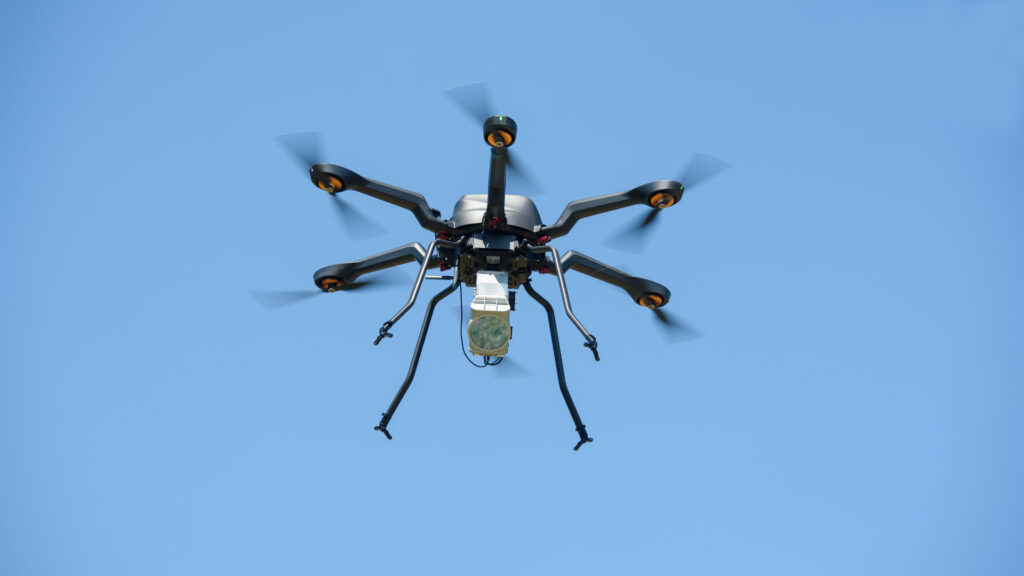
Developed through collaboration between Bridger Photonics in Montana and the Massachusetts Institute of Technology’s Lincoln Laboratory, a new methane-detecting lidar is transforming the way leaks are found and repaired. Unlike older detection tools, which were either too slow or too inaccurate, this system can pinpoint emissions with unmatched precision from aircraft and drones. Nine of the ten largest natural gas producers in the United States are already using it, underscoring its practical impact.
“Keeping gas in the pipe is good for everyone,” says Pete Roos, founder and chief innovation officer at Bridger Photonics. “It helps companies bring the gas to market, improves safety, and protects the outdoors.”
Why Methane Matters
Methane is the primary component of natural gas. It burns cleaner than coal when used for electricity, but when released into the air it traps heat more effectively than carbon dioxide. Over a 20-year period, methane is about 80 times more powerful than CO₂ at warming the planet. According to the International Energy Agency, global methane emissions from fossil fuel operations could be reduced by 75 percent with existing technology.
This urgency is not just about climate. Methane leaks pose real economic and safety risks. Gas lost from pipelines and facilities can lead to explosions, community hazards, and reputational damage for companies. For years, operators relied on handheld detectors or ground-based surveys to find leaks. These methods often missed smaller plumes or covered too little area, allowing significant emissions to go undetected.
Aerial Lidar: Seeing the Invisible
Lidar, short for “light detection and ranging,” works by sending laser pulses toward the ground and measuring how the light reflects back. It’s commonly used for mapping terrain or guiding autonomous vehicles. Bridger Photonics re-engineered this tool to target methane specifically.
Methane absorbs infrared light at a wavelength of 1.65 microns. By tuning the laser to that wavelength, scientists could make the invisible visible. The challenge was to generate a laser beam powerful and stable enough to measure leaks from aircraft flying hundreds of meters above the ground. That’s where MIT Lincoln Laboratory’s slab-coupled optical waveguide amplifier (SCOWA) came in.
“This laser source was one of the hardest parts to get right,” recalls Roos. “The program manager at ARPA-E told us we’d need a miracle.”
That “miracle” arrived when MIT engineers adapted their amplifier technology to operate at 1.65 microns. The result was a laser powerful enough to map methane plumes from meaningful altitudes.
From Lab to Marketplace
The innovation was first funded by the U.S. Department of Energy’s Advanced Research Projects Agency-Energy (ARPA-E) in 2014. Bridger Photonics and MIT Lincoln Laboratory worked under a Cooperative Research and Development Agreement (CRADA) to refine the system.
By 2019, the Gas Mapping Lidar was commercially released. It quickly drew attention, winning an R&D 100 Award that same year. Within months, major gas producers signed contracts to deploy it. By mounting the lidar on small planes or drones, operators could scan pipelines, well pads, and compressor stations across entire regions in hours.
The data is delivered in a digital map showing precise leak locations and estimated leak rates. Field crews can then go directly to the source for repair, saving both time and money.
Industry Adoption and Regulation
In January 2025, the EPA gave regulatory approval for companies to use Bridger’s lidar to comply with new federal methane rules. These rules require oil and gas operators to monitor and fix leaks more aggressively, with fines for noncompliance.
Chevron, one of the largest U.S. energy companies, described the system as “game-changing.” Bruce Niemeyer, president of Chevron’s shale and tight operations, explained: “Our goal is simple—keep methane in the pipe. This technology helps us assure we are doing that. It can find leaks ten times smaller than other commercial providers are capable of spotting.”
For gas producers, the benefits are clear. Each repaired leak saves valuable product, reduces safety risks, and improves environmental performance. For regulators and the public, the technology offers verifiable proof that industry is reducing emissions.
A History of Laser Leadership
MIT Lincoln Laboratory has a long legacy in laser innovation. In 1962, its scientists were among the first to demonstrate the diode laser, which now powers everything from fiber-optic internet to barcode scanners. Over the decades, its research spun out companies like Lasertron and TeraDiode, which applied breakthroughs to telecommunications and industrial cutting.
The SCOWA amplifier represents another leap. By guiding laser light through a carefully engineered semiconductor slab, SCOWA can boost optical power by orders of magnitude. This bright, stable beam proved to be the missing piece for methane mapping.
“We developed a semiconductor optical amplifier that was ten times better than anything before,” said Jason Plant, a key researcher at MIT. “When Bridger approached us, it was the perfect fit for an impactful application.”
What Comes Next
Bridger Photonics continues to refine the Gas Mapping Lidar. Recent improvements allow drones to carry the sensor for local surveys, reducing costs for smaller operators. The company is also expanding internationally, with interest from Europe and Asia where methane reduction targets are tightening.
Meanwhile, MIT Lincoln Laboratory is expanding its Microsystems Prototyping Foundry to include a new Compound Semiconductor Laboratory. This facility will help develop the next generation of optical devices, including photonic integrated circuits coupled with SCOWA technology. Such platforms could one day power quantum computers, advanced sensors, and even more efficient methane detectors.
The U.S. government is actively seeking industry partners to commercialize these technologies. “Lincoln Laboratory is a national resource for semiconductor optical emitter technology,” said Paul Juodawlkis, who co-developed SCOWA. “Our goal is to transition innovations into the hands of people who can use them.”
Global Implications
The International Energy Agency has warned that methane reductions are among the cheapest and fastest ways to slow climate change. Unlike carbon dioxide, which lingers for centuries, methane breaks down in about 12 years. Cutting emissions now can have near-term benefits for global temperatures.
Aerial lidar could also support international methane agreements. At the 2021 UN climate summit, more than 100 countries signed the Global Methane Pledge, committing to cut emissions by 30 percent by 2030. Tools like Bridger’s lidar provide the transparency needed to track progress and hold emitters accountable.
Environmental groups cautiously welcome the technology. They stress that while leak detection is vital, long-term climate goals still require reducing overall reliance on fossil fuels. But they agree that preventing methane waste is an immediate win.
Actionable Steps for Companies
For energy companies seeking to adopt or expand methane detection, experts recommend several practical steps:
- Audit infrastructure regularly. Use aerial surveys to identify both large and small leaks.
- Integrate data into maintenance systems. Linking lidar maps with digital asset management can streamline repairs.
- Train repair crews in rapid response. Quick fixes maximize cost savings and emission cuts.
- Report transparently. Sharing results with regulators and the public can build trust and demonstrate climate leadership.
- Plan for scaling. As rules tighten globally, having proven detection systems in place reduces future compliance costs.
Looking Ahead
The partnership between MIT Lincoln Laboratory and Bridger Photonics shows how academic research, government funding, and private enterprise can work together to solve urgent problems. A challenge once described as needing a miracle has become a commercial success, helping the energy sector cut waste, improve safety, and curb climate damage.
For an industry under pressure to clean up, lidar may well be one of the brightest beams of hope.