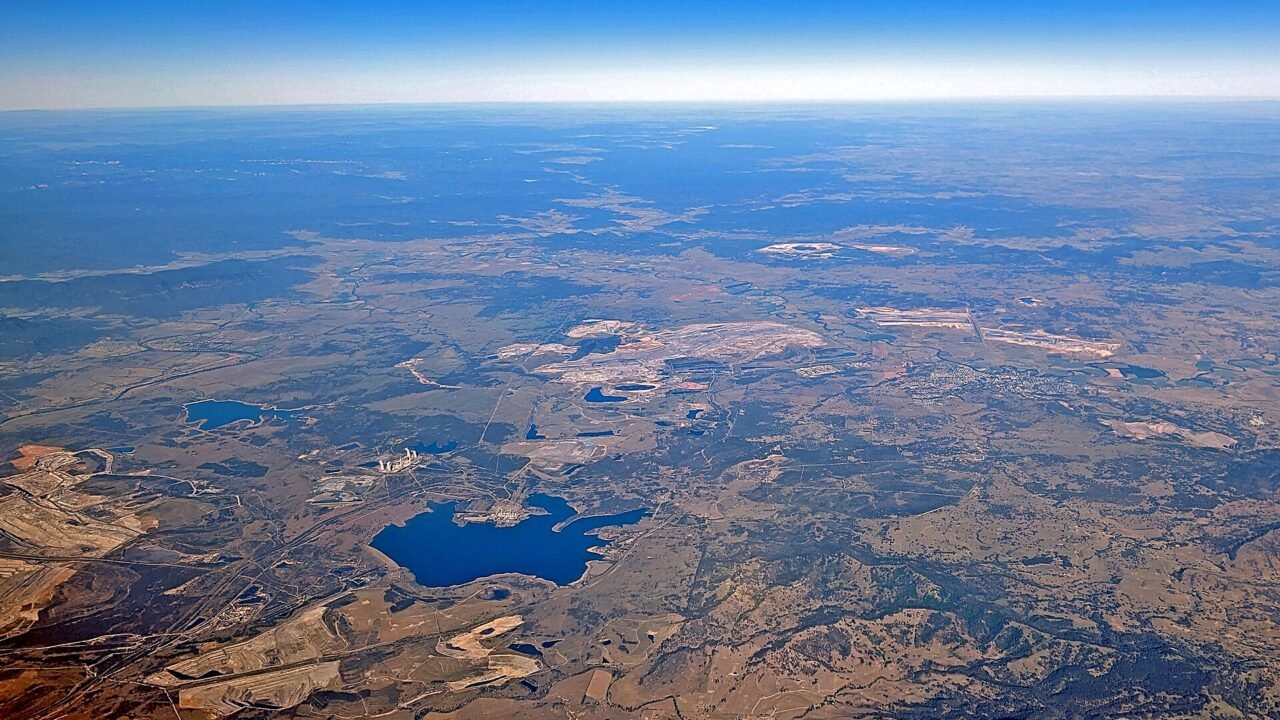
Disused coal-mining land in New South Wales’ Hunter region is being prepared for new industries, including a motor-sport resort, a solar farm and train manufacturing. The state has rezoned parts of two major mine sites for industrial use while mining and rehabilitation continue, a change intended to make more kinds of development possible, according to the ABC’s report on Hunter mine reuse. [1]
The proposals matter to communities facing further coal-sector job losses, but they do not mean every former mine is ready for construction. Each site has its own planning, environmental and rehabilitation challenges. Local leaders and project proponents say a region-wide plan could help match suitable land with new industries, while advocacy group Hunter Renewal says mining companies must still meet their obligations to repair mined land. [1,4]
Three Hunter mine sites, three different reuse proposals
At the former Rhondda Colliery in Lake Macquarie, developer Tony Palmer is planning what he believes will be Australia’s first motor-sport resort. The proposed development includes a 5.4-kilometre racetrack, a hotel, a restaurant and private residences. Palmer said the site’s previous industrial use gave him a clear vision for its next purpose. [1,2]
Rhondda Colliery operated from the 1890s until 1971. Its redevelopment has required extensive rehabilitation and detailed investigation of what lies beneath the surface. Palmer told the ABC that drilling work began about 60 metres underground and had occupied the project’s team for the previous 18 months. He also described the approvals process as complex, with authorities sometimes working under rules or policies that do not align. [1,2]
The experience is a reminder that a site’s apparent suitability does not settle whether a project can proceed. Past mining can leave practical issues that need to be investigated and addressed. In Rhondda’s case, the time spent drilling illustrates the work involved before a developer can confidently plan buildings and track infrastructure. The ABC report does not give a construction start date, an opening date or a total project cost.
Further north, OX2’s Muswellbrook Solar Farm is taking shape on an Idemitsu mine that closed in 2022. OX2 vice-president Australia Steve Symons said the project required substantial planning work, including consideration of environmental and biodiversity issues. The project links former coal land with a different form of energy generation, but the report does not state the farm’s capacity or when it will be complete. [1,3]
A third proposal is planned at the old Teralba Colliery, within the Macquarie Coal Complex. The NSW government has proposed a $12 billion train manufacturing facility there. The figure is the proposed facility’s value, not a reported final construction bill. State Planning Minister Paul Scully said the site had useful industrial features, including rail access and room for the type of facility the government wants to build. [1]
Rezoning could make industrial reuse easier, but rehabilitation remains central
The NSW government has rezoned parts of the Macquarie Coal Complex and Mount Arthur coalmine as “enterprise” land. The new zoning allows a range of industrial and commercial uses. Mining and rehabilitation work are still ongoing at the sites, so rezoning should not be read as proof that every project has final approval or is ready to start. [1]
The state described the two sites as pilot projects that could bring up to 7,000 jobs. That number is a government estimate for potential jobs across the sites, not a confirmed count of positions already created. The report does not set out how many jobs would come from each proposal or when they might be available. [1]
| Site or proposal | Reported detail | What is confirmed in the report |
|---|---|---|
| Rhondda Colliery, Lake Macquarie | Proposed motor-sport resort with a 5.4km track | Developer’s plan; no opening date or total cost reported |
| Macquarie Coal Complex and Mount Arthur | Parts rezoned as enterprise land | Industrial and commercial uses allowed; government says pilot sites could bring up to 7,000 jobs |
| Old Teralba Colliery | Proposed train manufacturing facility | NSW government proposal valued at $12 billion |
| Former Idemitsu mine, Muswellbrook | OX2 solar farm | Mine closed in 2022; solar project is taking shape |
Under NSW rehabilitation requirements, mining companies must leave land safe, stable and non-polluting. Scully said that traditional rehabilitation can involve removing hardstands, sheds, roads, electricity, water and rail infrastructure, then returning land to grass. The government is considering whether some infrastructure could instead support another generation of employment. [1]
That question involves a balance. Reusing roads, rail connections or other facilities may help a new industrial project, but the source material does not say that a rezoning removes a company’s rehabilitation duties. Hunter Renewal coordinator Steve Phillips said the group had not seen legislation changes to facilitate post-mining land use and warned against letting new industries weaken mining companies’ obligations to repair land, bush and water. [1,4]
Why a region-wide plan matters to workers and communities
Muswellbrook Mayor Jeff Drayton said the area could face around 12,000 job losses by the end of 2030 as coal mining winds down. This is a forecast he gave to the ABC, not a confirmed number of redundancies. He argued that planning should look across the Hunter and assess which mine lands are suitable for which industries, rather than considering projects one by one. [1]
A regional approach could help communities compare proposals against local needs and site conditions. But the ABC report does not identify a published regional plan, a timetable for one, or a specific new law. It reports calls from the mayor, project proponents and Hunter Renewal for more coordinated planning. Those calls are advocacy positions, not decisions already made by the state. [1]
For residents, workers and businesses following a proposal, the practical task is to distinguish among three stages: a potential use, a planning or zoning change, and a project that has secured the approvals and rehabilitation work needed to proceed. The reported rezoning expands possible uses on parts of two sites, but it does not confirm that every proposed development has cleared all remaining steps.
When reviewing a local proposal, these questions can help clarify what is known and what remains uncertain:
- What exactly has changed? Check whether the news concerns zoning, a planning approval, a funding decision or construction. These are different milestones.
- Which part of the mine site is involved? The reported rezoning covers parts of the Macquarie Coal Complex and Mount Arthur, not necessarily every area within either complex.
- What work remains? Look for information on rehabilitation, environmental and biodiversity assessment, and site investigations. The report identifies these as issues in the examples discussed.
- Are jobs a forecast or a confirmed outcome? The up-to-7,000 figure is a government estimate, while the roughly 12,000 potential losses are the mayor’s forecast through the end of 2030.
For current planning documents, readers can search the NSW Planning Portal. The ABC report does not provide individual application numbers or approval dates for the projects, so readers should confirm the status of a specific proposal through its current planning records. [5]
The next confirmed development is not a single region-wide decision: the reported projects remain at different stages, and no common completion date is given. The state’s pilot rezoning has opened parts of two mine sites to broader industrial and commercial uses. Whether that approach leads to a wider Hunter plan, and how future reuse will be balanced with rehabilitation, remains unresolved. [1]
Frequently Asked Questions (FAQ)
Does rezoning mean the Hunter mine projects have final approval?
No. The rezoning allows a range of industrial and commercial uses on parts of the Macquarie Coal Complex and Mount Arthur. The report does not say that all proposed projects have received final approvals. [1]
How many jobs could the rezoned sites bring?
The NSW government said the pilot projects could bring up to 7,000 jobs. This is a potential figure, not a confirmed count of jobs already created or allocated to individual projects. [1]
Do mining companies still have to rehabilitate the land?
Yes. The report says NSW requirements call for mining companies to leave land safe, stable and non-polluting. Hunter Renewal also stressed that reuse should not remove those obligations. [1,4]
References
- Yeandle C. Motor-racing resort could breathe new life into old mine site. ABC News [Internet]. 2026 Nov 26. Available from: https://www.abc.net.au/news/2026-11-27/nsw-coal-town-calls-for-better-planning-for-post-mining-land-use/107398386
- Palmer T. Comments on the proposed Rhondda Colliery motor-sport resort. Interview reported in: Yeandle C. ABC News [Internet]. 2026 Nov 26. Available from: https://www.abc.net.au/news/2026-11-27/nsw-coal-town-calls-for-better-planning-for-post-mining-land-use/107398386
- Symons S. Comments on the Muswellbrook Solar Farm. Interview reported in: Yeandle C. ABC News [Internet]. 2026 Nov 26. Available from: https://www.abc.net.au/news/2026-11-27/nsw-coal-town-calls-for-better-planning-for-post-mining-land-use/107398386
- Phillips S. Comments on post-mining land use and rehabilitation. Interview reported in: Yeandle C. ABC News [Internet]. 2026 Nov 26. Available from: https://www.abc.net.au/news/2026-11-27/nsw-coal-town-calls-for-better-planning-for-post-mining-land-use/107398386
- NSW Department of Planning, Housing and Infrastructure. NSW Planning Portal [Internet]. Available from: https://www.planningportal.nsw.gov.au/