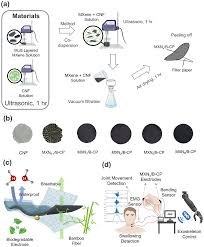
Researchers at National Taiwan University (NTU) have unveiled a breakthrough that could shift how we design wearable health devices. Their new biodegradable MXene–bamboo paper electrodes combine flexibility, stability, and tunable conductivity while remaining eco-friendly. Unlike many existing electrodes that generate electronic waste, these electrodes can degrade safely after use, making them a sustainable option for next-generation human–machine interfaces.
Why This Innovation Matters
Wearable sensors are booming. Global sales are projected to surpass USD 150 billion by 2030, driven by growing interest in fitness tracking, telemedicine, and assistive robotics. Yet most electrodes used in these devices rely on plastic substrates, petroleum-based polymers, or metals that do not break down easily. This creates waste streams that are difficult to recycle. NTU’s development addresses this challenge directly by using bamboo-derived scaffolds and cellulose nanofibers, both renewable and biodegradable.
For healthcare systems, this is more than a technical upgrade. It represents a potential shift toward greener medical devices at a time when hospitals and manufacturers are under pressure to reduce carbon footprints. It also opens doors to safer single-use sensors that do not persist in landfills or oceans.
The Science Behind the Electrode
The NTU team integrated Ti₃C₂Tx MXene nanosheets into bamboo-based cellulose structures. MXenes are a family of two-dimensional materials known for their electrical conductivity and mechanical strength. By embedding them in bamboo paper, the researchers created a thin, lightweight, yet highly conductive electrode.
A porous Ecoflex coating was then applied. This silicone-based elastomer provided two critical properties: waterproofing and breathability. The result is an electrode that can survive sweat, rain, and long-term wear, without trapping heat or moisture against the skin.
During lab testing, the electrodes showed stable electrical performance over repeated bending and stretching cycles. They captured high-quality electromyography (EMG) signals, enabling applications such as muscle activity tracking and even wireless control of an exoskeleton knee joint.
Applications in Assistive Technology
The implications for assistive robotics are significant. One of the biggest challenges in exoskeleton design is the reliability of muscle signal detection. Poor-quality electrodes can introduce noise, delay, or discomfort. By offering both comfort and stability, NTU’s electrodes could allow users to control robotic limbs more naturally and with fewer errors.
For rehabilitation medicine, this technology could improve patient monitoring. Therapists could track subtle muscle activity during recovery exercises, using disposable, eco-friendly electrodes instead of gel-based patches that require cleaning or generate non-biodegradable waste.
Environmental and Economic Benefits
Electronic waste is a fast-growing environmental problem. According to the Global E-Waste Monitor, the world generated more than 62 million metric tons of e-waste in 2022, with less than 20% formally recycled. Medical devices contribute to this problem, especially single-use sensors and monitoring patches.
The bamboo-based electrodes degrade through oxidative processes, leaving behind minimal residue. This feature could reduce the environmental burden of disposable devices in hospitals, sports facilities, and home health monitoring. Bamboo itself is an abundant and low-cost raw material, growing rapidly in tropical and subtropical regions without heavy fertilizer use. Using bamboo as a structural base not only makes the electrodes greener but also economically scalable.
Road to Commercialization
Scalability is always the challenge with lab discoveries. NTU’s researchers emphasized that their process is compatible with paper-making techniques already used in industry. This could lower barriers to mass production.
However, commercialization will require regulatory approvals, biocompatibility tests in humans, and partnerships with medical device firms. Large-scale clinical trials are likely needed before the electrodes appear in hospitals or consumer wearables.
Global companies already investing in MXene research, including firms in the U.S., Europe, and China, may see NTU’s innovation as a foundation for future products. If scaled, biodegradable electrodes could capture part of the growing wearable health tech market, particularly in regions where sustainability standards are tightening.
Global Competition in Biodegradable Electronics
NTU is not alone in pursuing green electronics. U.S. researchers have tested silk-based sensors that dissolve in the body, while European teams are experimenting with cellulose-based circuit boards. What makes NTU’s approach stand out is the balance between durability and degradability. Most biodegradable devices compromise on performance, but these electrodes show industrial-grade conductivity while remaining eco-friendly.
With rising demand for eco-certification in medical devices, such hybrid solutions may gain an advantage. Manufacturers will need to demonstrate not just product performance but also end-of-life safety.
Actionable Insights for Industry and Healthcare Leaders
For hospital administrators: consider pilot projects with biodegradable monitoring patches in rehabilitation units. The cost savings on disposal and compliance could balance the initial investment.
For wearable manufacturers: invest in supply-chain studies for bamboo-based materials. Their scalability and low carbon footprint may align with future environmental regulations.
For policymakers: create incentives for biodegradable medical technologies, such as fast-track approvals or green procurement policies. These could encourage companies to adopt innovations like NTU’s electrode system.
Looking Ahead
The NTU electrodes are still early-stage, but they highlight an important shift in medical device design: performance is no longer enough. Sustainability and environmental impact are becoming central to innovation.
As health systems grow more digital and interconnected, the number of disposable sensors and patches will only rise. Developing biodegradable alternatives now can prevent tomorrow’s waste crisis. For researchers and investors, this is both an environmental responsibility and a market opportunity.
The biodegradable MXene–bamboo paper electrode is more than a lab curiosity. It is a reminder that the future of healthcare must be both smart and sustainable. By combining advanced materials with renewable resources, NTU’s work sets a precedent for how technology can respect both human needs and planetary limits.

