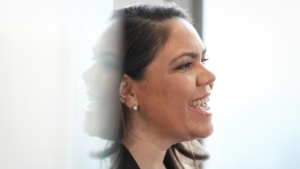
Liberal Party Senator Jacinta Nampijinpa Price has triggered a storm of debate after remarks linking Indian migration to broader concerns about national identity and economic pressure. Her comments, made during a media…
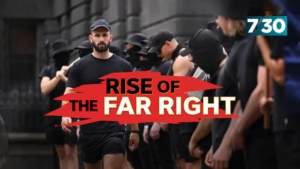
Last month, more than 25,000 Australians took to the streets in coordinated protests against mass immigration. In Sydney, Melbourne, Brisbane, Adelaide, Perth, and Hobart, crowds waved national flags, held banners, and listened…
Since the Hamas-led attack on October 7, 2023, killing 1,200 Israelis and abducting 251 hostages, Israel has launched a persistent military campaign in Gaza. Gaza’s Ministry of Health reports over 57,000 Palestinian deaths, marking one of the Middle East's most prolonged and destructive conflicts. Brief ceasefires, facilitated by Qatar, Egypt, and the U.S., allowed some hostages to be exchanged for Palestinian prisoners. Yet, these truces collapsed due to mutual accusations of violations and failure to secure long-term peace.
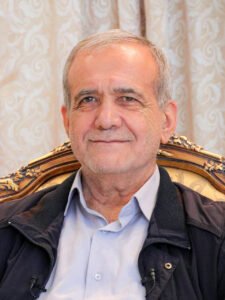
Iran's President Masoud Pezeshkian declared that Tehran will halt its cooperation with the International Atomic Energy Agency (IAEA) after recent air strikes by the U.S. and Israel on its nuclear sites. This decision, lacking clear timelines or details, intensifies Iran's ongoing conflict with the UN nuclear agency and threatens to weaken global efforts to oversee Iran's nuclear activities.
The shocking case of Lucy Letby, a former neonatal nurse, rocked the UK healthcare system and sparked national outrage. Letby, 35, was convicted in 2023 for murdering seven newborns and attempting to murder eight more at Countess of Chester Hospital from June 2015 to June 2016. The trial revealed disturbing details of unexplained infant collapses, altered medical records, and a system that failed its most vulnerable patients. After two juries found her guilty and three appellate judges dismissed her challenges to expert evidence, Letby received multiple life sentences and was told she would never be released.
On the 1,222nd day of Russia's invasion, Ukrainian President Zelenskyy announced Ukraine's exit from the 1997 Ottawa Convention, which bans anti-personnel landmines. Zelenskyy cited the "utmost cynicism" of Russian forces using these weapons and emphasized the need to strengthen Ukraine's defenses. Concurrently, Russia executed its most extensive aerial attack since the war's start in February 2022, launching over 500 drones, decoys, and missiles overnight.
In May 2025, Australians voted with local issues in mind: housing costs, healthcare delays, and rising prices for groceries and petrol. However, late in the campaign, Donald Trump’s surprise “Liberation Day” tariffs on American imports disrupted domestic debates. Though experts thought these tariffs would barely affect Australia, the political reactions showed how global economics and Australian politics are now deeply connected.
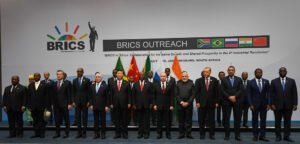
In an era of shifting alliances and emerging power blocs, the age-old adage that “there are no permanent friends nor permanent foes, only permanent interests” has never felt more apt. Trade wars, strategic realignments, and titanic global challenges from Ukraine to Palestine test the durability of relationships once taken for granted. Yet they also underscore the capacity of sovereign states to recalibrate, cooperate, and—even after prolonged estrangement—find common ground when it serves their national interests.
In the charred aftermath of World War II, fifty nations gathered at San Francisco’s War Memorial Opera House to sign the United Nations Charter on June 26, 1945. Their aim: “to save succeeding generations from the scourge of war.” Drafted over four months by delegates from Allied powers and smaller states alike, the 19-chapter, 111-article document established fundamental principles of international conduct—sovereign equality, peaceful dispute resolution, collective security and the protection of human rights. It created the Security Council with five permanent veto-wielding members, the General Assembly, the Secretariat led by the secretary-general, and set up the International Court of Justice to adjudicate inter-state disputes.
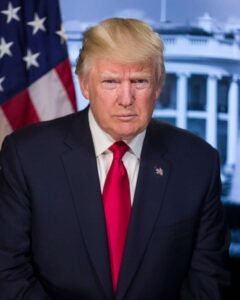
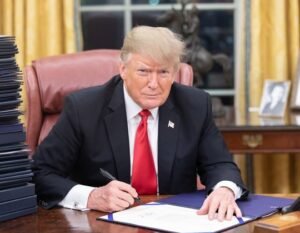
On April 2, 2025, U.S. President Donald Trump’s declaration of universal “reciprocal” tariffs sent ripples through global markets, marking what many commentators have called the death knell of the post–World War II rules-based system. The 100 percent levies on imports from major trading partners—including Southeast Asia—underscored a turn toward unilateralism, protectionism, and economic nationalism under the banner of “Making America Great Again.”
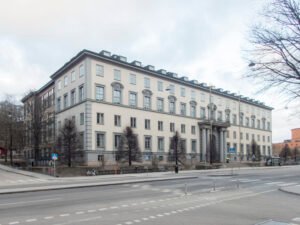
For one intensive week in mid-June, a cohort of 25 senior professionals and policymakers from 21 countries gathered at Kämpasten, a serene retreat outside Sigtuna, Sweden, to participate in the in-person masterclass of the Executive Programme in International Politics and Diplomacy for Health. Jointly organized by Karolinska Institutet and the Stockholm School of Economics, this flagship programme equips health leaders with the political acumen and negotiation skills required to influence complex decision-making processes at both global and regional levels.
The United States and Israel launched air strikes on Iranian nuclear sites at Fordow, Natanz, and Isfahan. President Trump called this a strong move against Iran's nuclear goals, stating the U.S. is "fully aligned" with Israel to stop Iran from developing a bomb. However, experts caution that these strikes might not stop nuclear spread but could break international law norms and lead to a more unstable world where powerful countries act without restraint.
· 4 min read
Your privacy
We use essential cookies to run this site. With your permission, we and our advertising and analytics partners, including Google, also use cookies to measure readership and show more relevant ads. You can change your choice at any time from "Cookie settings" at the bottom of every page. Read our Privacy Policy
Accessibility
Adjust how this site looks and behaves for you. Your choices are saved on this device only.
Darker text and stronger lines, borders and links.
Shows text in the OpenDyslexic typeface.
More space between lines, letters and words.
Makes every link easy to spot.
A bold outline shows where you are when using a keyboard.
Turns off animations, transitions and autoplaying video.