
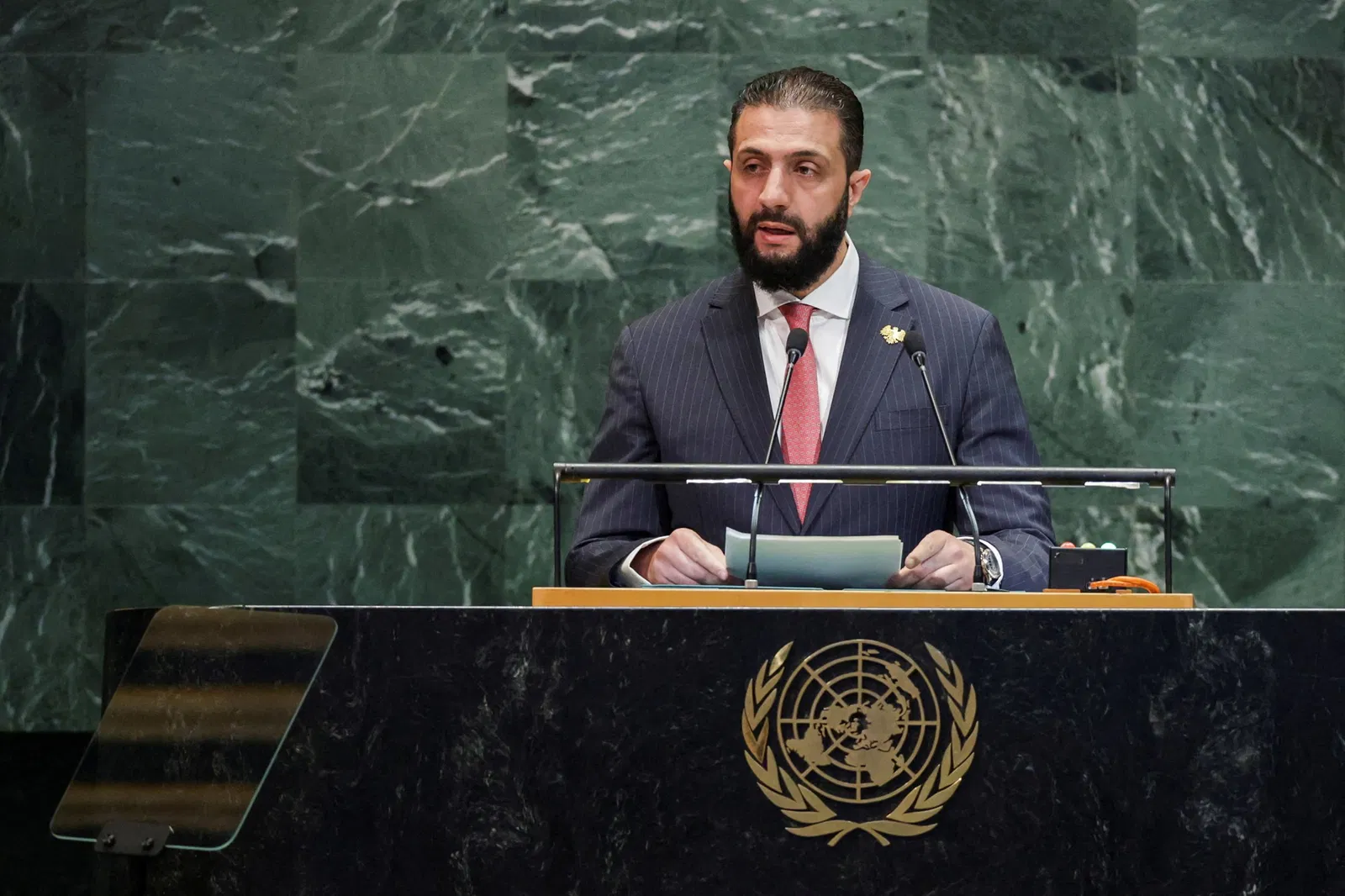
Australia’s Prime Minister Anthony Albanese has delivered his first address to the United Nations General Assembly in New York, presenting an agenda that tied climate action to economic opportunity, renewed calls for global cooperation, and confirmed Australia’s bid for a temporary seat on the UN Security Council in 2029–30.
The speech came just one day after former U.S. President Donald Trump denounced international climate commitments as a “con job” and accused global leaders of driving their nations “to hell.” Albanese’s remarks stood in sharp contrast, positioning Australia as a proponent of clean energy, democratic resilience, and multilateral engagement in an increasingly fragmented world.
Climate Action as Economic Opportunity
Albanese reaffirmed Australia’s new 2035 emissions reduction target, framing it as both a responsibility and an opportunity.
“Clean energy can carry the world beyond the false choice between economic growth and environmental responsibility,” he told delegates. He argued that renewable energy would allow the fast-growing economies of the Indo-Pacific to industrialise while lowering emissions, ensuring living standards continue to rise without deepening the climate crisis.
Australia’s government has previously committed to net-zero by 2050, with interim targets to cut emissions by 43% by 2030 and now by 65–75% by 2035. Independent modelling shows Australia’s vast solar and wind resources could make it a leading exporter of green hydrogen and critical minerals, industries projected to add billions to GDP by the early 2030s.
By linking environmental policy with prosperity, Albanese signalled that climate action must move beyond political debates. He presented it as a strategic necessity for both Australia and the region.
A Rebuttal to Trump’s Climate Criticism
Just hours earlier, Trump had taken the UN podium to disparage climate commitments, blasting European nations for recognising Palestine and warning that Western leaders were “destroying their economies.”
Albanese, who shared a brief exchange with Trump at a reception the night before, did not name him directly but rejected the premise of Trump’s message. “Australia is acting to meet the environmental challenge while seizing the economic opportunities of renewable energy,” he said, underscoring that the transition was both unavoidable and beneficial.
The divergence between the two leaders’ remarks highlighted the political polarisation shaping climate diplomacy. Where Trump leaned on grievance, Albanese pitched collaboration and resilience.
Reviving the Security Council Goal
The most concrete announcement in the prime minister’s 19-minute speech was that Australia would campaign for a temporary seat on the UN Security Council for the 2029–30 term.
The seat was first pursued in 2015 by then-foreign minister Julie Bishop, who set the distant timeframe to avoid costly early campaigning. At the time, Labor criticised the plan as “unambitious.” Now in government, Albanese has revived the goal, arguing that Australia’s voice as a middle power is more needed than ever.
“The United Nations is much more than an arena for the great powers to veto each other’s ambitions,” he told the assembly. “This is a platform for middle powers and small nations to voice — and achieve — our aspirations.”
Elections for the rotating seat are scheduled for June 2028. Success will depend on extensive lobbying in Africa, Latin America, and Asia, where Australia must secure votes against potential competitors.
Support for Ukraine and Warnings on Autocracy
Albanese echoed Ukrainian President Volodymyr Zelenskyy, who had earlier warned of “the most destructive arms race in human history.” The Australian leader condemned Russia’s invasion as “illegal and immoral” and pledged continued support for Kyiv.
“We share the resolve of every member of the coalition of the willing to secure peace on Ukraine’s terms,” he said.
He also warned against the rise of autocratic powers using technology to erode trust in democratic institutions, saying that if cooperation fails, “the risk of conflict becoming the default option grows.”
Australia, he added, would continue strengthening defence, development, and diplomacy across the Indo-Pacific while deepening ties with ASEAN, Indonesia, India, South Korea, Japan, and long-standing allies such as the U.S. and U.K.
Calls for Peace in Gaza Without Naming Israel
On the Middle East, Albanese urged a ceasefire in Gaza, the release of hostages, and the unimpeded flow of humanitarian aid. Notably, he avoided direct mention of Israel, even as he stressed the urgency of a two-state solution.
“For decades, leaders have come to this podium in search of new words and new ways to call the world to action on a two-state solution,” he said. “We must ask ourselves: When can those words hold meaning, if not now?”
His omission of Israel’s name drew attention, especially following a UN commission report that accused Israel of genocide in Gaza — a finding Israel has rejected as politically motivated. Australia, along with several Western nations, recently recognised Palestinian statehood, sparking anger in Jerusalem and sharp criticism from Trump.
Condemnation of Iran’s Alleged Attacks
The prime minister also used the platform to denounce Iran for what Australian intelligence agencies have described as state-backed antisemitic attacks. These include the firebombing of a Melbourne synagogue and a Jewish restaurant in Sydney.
“Just last month, Australian security agencies confirmed that the Iranian regime orchestrated the firebombing,” Albanese said. “We expelled the Iranian Ambassador from Australia — the first time since the Second World War that our country has taken such a step.”
He described the incidents as “criminal acts of cowardice, aimed at spreading fear,” and pledged that Australia would continue to take strong action against antisemitism both at home and abroad.
Reforming the United Nations
Albanese acknowledged growing scepticism about the UN’s ability to manage global crises, particularly in Gaza. But rather than dismissing the body, he urged reform and revitalisation.
“If the United Nations steps back, we all lose ground,” he said. “If we give people reason to doubt the value of cooperation, then the risk of conflict becoming the default option grows.”
The remarks were a direct counter to Trump’s claim that the UN had failed and was irrelevant. Albanese sought to reclaim the institution’s founding ideals of peace and cooperation while recognising its limitations.
Domestic Implications and Next Steps
At home, the speech signals a more assertive foreign policy posture for Albanese, who has so far been seen as cautious on international issues. His emphasis on climate diplomacy reflects domestic priorities, where his government is investing heavily in renewable energy zones and grid infrastructure.
The Security Council bid will require careful resource allocation, as critics have previously warned that campaigns can cost tens of millions of dollars and divert diplomatic bandwidth. Yet winning a seat could amplify Australia’s voice on issues ranging from Indo-Pacific security to human rights.
For Australian businesses and investors, the speech underlined opportunities in clean energy exports, defence partnerships, and regional trade. For policymakers, it reinforced the need to balance strategic ties with the U.S. and Europe while engaging constructively with Asia and the Pacific.
A Speech Framed by Contrasts
In many ways, Albanese’s first UN address was defined as much by what it rejected as what it embraced. Where Trump cast doubt on the UN, Albanese urged renewal. Where Trump dismissed climate action, Albanese framed it as an economic engine. Where Trump criticised Western recognition of Palestine, Albanese cautiously called for peace without inflaming tensions further.
For a leader making his UN debut, the strategy was deliberate: avoid confrontation with great powers while carving space for middle powers like Australia to matter on the global stage.
The Road to 2029
The success of Australia’s Security Council bid will depend not only on diplomatic campaigning but also on whether Albanese’s vision of climate-driven prosperity and multilateral engagement resonates with nations across regions.
As elections loom in 2028, the government must demonstrate consistency in its policies, from climate targets at home to peace advocacy abroad. Failure to deliver tangible results could weaken the credibility of its campaign.
Still, by using his first appearance to outline bold goals, Albanese has positioned Australia not as a bystander but as a player willing to shape international debate. Whether that stance translates into influence will become clear as the next decade unfolds.