
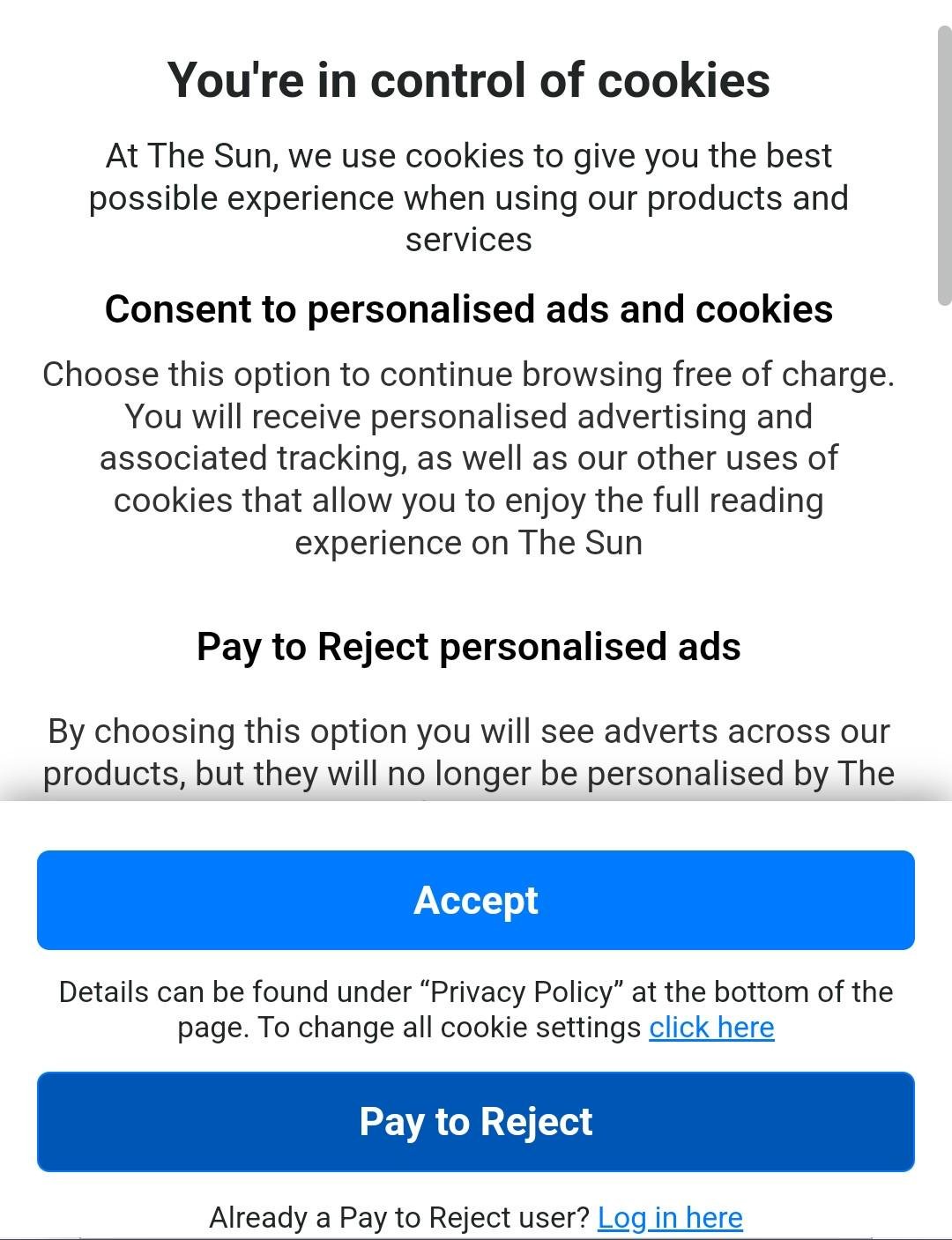
When you land on Sky News or other websites operated by Sky and its partners, you are met with a familiar pop-up: a cookie banner asking for your consent. At first glance, it seems like a routine request, but behind it lies a sophisticated ecosystem of data collection, advertising partnerships, and regulatory obligations. Understanding what happens when you click “Accept all” versus “Essential cookies only” is crucial, especially in a digital environment where privacy has become as valuable as currency.
What Cookies Actually Do
Cookies are small text files stored on your device when you browse a website. Some are essential, such as those that keep you logged in or remember what’s in your shopping cart. Others track your behavior across websites, build user profiles, and help companies deliver targeted advertising.
Sky notes that its cookie framework allows both it and its 197 trusted partners to store and access information about your browsing habits, personal data, and unique identifiers. That data can then be used for three main purposes:
- Personalized advertising and content – showing ads tailored to your interests and past activity.
- Performance measurement – tracking how well ads and content perform across audiences.
- Audience research and development – gathering insights to refine future services.
Essential vs. Personalized Choices
The banner typically presents two options. Clicking “Essential cookies only” limits data collection to the minimum necessary for the website to function. You’ll still see ads, but they’ll be generic and not tailored to your profile. On the other hand, choosing “Accept all” gives Sky and its partners permission to personalize your digital experience based on your browsing history and, if you are a Sky customer, account information such as your subscription tier or viewing preferences.
A third option—“View options”—takes you to a more detailed breakdown. There, you can see which partners claim “legitimate interest” to process your data without explicit consent. You also gain the right to object to such processing.
The Role of Legitimate Interest
Legitimate interest is a concept rooted in the European Union’s General Data Protection Regulation (GDPR). It allows companies to use your data without explicit permission if they can demonstrate that the processing is necessary for business operations and does not override your fundamental rights. In practice, this can be contentious. For example, an advertiser may argue it has a legitimate interest in showing you relevant ads, but regulators emphasize that users must still have the ability to opt out.
Implications for Sky Customers
If you are a Sky customer, the company goes further. It may blend your browsing data with account information, such as what channels you watch or which services you subscribe to. This enables a higher level of personalization across platforms. While it can make advertising feel more relevant, it also raises the question of how much of your personal media consumption habits are being tracked and leveraged.
The Wider Advertising Ecosystem
Sky’s disclosure that it works with 197 partners underscores the scale of the digital advertising supply chain. These partners may include data brokers, ad tech firms, and analytics providers. Each one may set its own cookies, expanding the circle of data collection. This can be useful for measuring ad effectiveness across platforms but also increases the risk of your data being repurposed in ways you did not anticipate.
Research by the UK’s Information Commissioner’s Office (ICO) shows that most internet users find cookie banners confusing and often accept all by default to access content quickly. A 2023 survey found that only 23% of respondents regularly review their cookie preferences in detail.
Risks and Concerns
The risks of allowing personalized cookies go beyond targeted ads. They can include:
- Profiling – Building detailed behavioral profiles that could be used for credit scoring, insurance, or political targeting.
- Data leakage – Partners may inadvertently share or expose data to third parties through weak security.
- Consent fatigue – Repeated requests to manage preferences can cause users to disengage, leading them to accept terms without scrutiny.
Regulatory Oversight
Regulators in Europe and the UK are tightening the rules. The ICO, along with the European Data Protection Board (EDPB), has made clear that companies must provide genuine, granular choices. Consent must be freely given, specific, informed, and unambiguous. Pre-ticked boxes or manipulative design—sometimes called “dark patterns”—are no longer acceptable.
In 2024, the French data protection authority (CNIL) fined a major telecom operator €10 million for failing to provide a proper opt-out option for cookies. This case serves as a warning to companies like Sky: compliance is not optional, and regulators are prepared to enforce.
How to Take Control
For users who want to maintain control of their data, here are practical steps:
- Use the “View options” button – This reveals partner lists and purposes, allowing you to toggle off personalized advertising.
- Regularly clear cookies – This limits long-term tracking, although you’ll need to re-log into websites.
- Install privacy tools – Browser extensions like uBlock Origin, Privacy Badger, or built-in features like Safari’s Intelligent Tracking Prevention can reduce tracking.
- Adjust device settings – Both Android and iOS offer options to limit cross-app tracking.
- Review Sky account settings – If you’re a subscriber, check your account dashboard for privacy and personalization settings that go beyond cookie choices.
Industry Debate
The broader industry is debating the future of cookies altogether. Google, for instance, is phasing out third-party cookies in its Chrome browser, a move expected to reshape online advertising. Alternatives such as Privacy Sandbox and contextual advertising are being tested. Critics argue that these still involve forms of tracking, though with more anonymity.
Sky’s approach illustrates a transitional moment: balancing the commercial need for personalized ads with the legal requirement to respect user consent. For advertisers, the challenge is maintaining effectiveness in a landscape where users are more privacy-aware. For regulators, it’s about ensuring transparency and accountability.
The Bottom Line
Every time you encounter a cookie banner, you are essentially negotiating a contract. Accepting all may give you smoother, more customized browsing, but at the cost of sharing more data than you realize. Choosing essential cookies only may protect your privacy but result in less tailored content and more repetitive ads.
The decision is ultimately personal. But it is a decision worth making consciously, not passively. Users who understand the implications can take steps to protect their data while still enjoying the services they value.
Sky’s transparency in outlining its practices is a step forward, but the responsibility remains on individuals to click with awareness. In today’s digital economy, your data is the product—and cookies are the gateway.