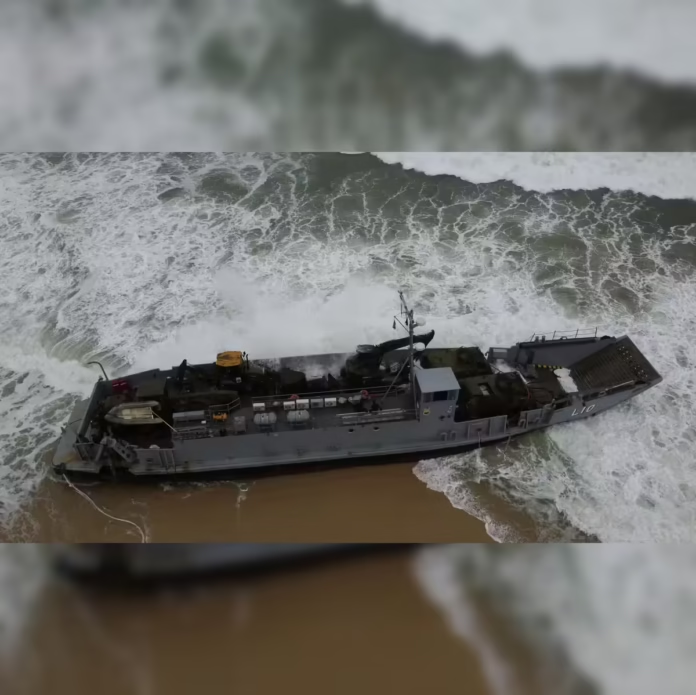
The United States said it carried out strikes against 16 Iranian mine-laying vessels operating near a critical maritime corridor in the Middle East. The move follows rising tensions in the region and reflects growing concern about threats to global shipping routes that carry a large share of the world’s oil and trade.
According to U.S. officials, the vessels were suspected of preparing naval mines in waters close to a major strategic strait that connects the Persian Gulf to international shipping lanes. The action aims to prevent disruptions to commercial shipping and reduce risks for global energy supply chains. The development has drawn attention from governments, shipping companies, and financial markets because the route is one of the most sensitive chokepoints in global trade.
Escalating Maritime Tensions and the Strategic Importance of the Strait
The targeted vessels were reportedly operating near the Strait of Hormuz, a narrow waterway that connects the Persian Gulf with the Gulf of Oman and the Arabian Sea. This passage is one of the world’s most vital maritime corridors. Roughly one fifth of global petroleum liquids pass through the strait each day, according to data from the U.S. Energy Information Administration.
Because of this importance, any threat to navigation in the area quickly triggers international concern. Naval mines are especially dangerous. Even a small number can disrupt shipping for weeks, raise insurance costs, and force vessels to reroute across longer and more expensive paths.
The United States has maintained a naval presence in the region for decades to protect shipping and maintain freedom of navigation. Officials say that the suspected mine-laying activity posed an immediate risk to commercial vessels moving through the corridor.
Iran has previously been accused of using naval mines during regional confrontations. During the late stages of the Iran-Iraq war in the 1980s, mine attacks damaged several vessels in the Gulf and triggered international military responses. Since then, the issue of maritime mines has remained a central security concern for naval forces operating in the area.
Energy analysts note that even the perception of danger near the Strait of Hormuz can affect markets. Oil prices often rise when security risks increase because traders fear possible supply disruptions.
Key Factors Behind the Military Operation
U.S. defense officials say the operation was designed to stop potential mining before it could disrupt international trade. Military analysts highlight several factors that may have shaped the decision to act.
• Protection of Global Shipping: The strait handles millions of barrels of oil every day. A single mining incident could halt traffic and trigger large economic effects.
• Regional Security Commitments: The United States has defense agreements with several Gulf countries and often patrols the waterway to protect maritime traffic.
• Deterrence Strategy: Acting early sends a signal that attempts to disrupt shipping routes will be met with rapid response.
• Energy Market Stability: Any threat to the strait can quickly influence oil prices and global economic confidence.
Security experts say the presence of mine-laying vessels can cause severe disruption even without direct attacks. Insurance premiums for ships may rise sharply, and shipping firms may delay travel until waters are cleared.
Naval mines also create complex technical challenges. Detecting and removing them often requires specialized equipment, divers, and mine-sweeping ships. Clearing operations can take days or even weeks depending on the scale of the threat.
Because of these risks, many governments treat suspected mining activity as an urgent security issue. Early intervention can prevent a small incident from escalating into a major maritime crisis.
Global Trade and Energy Implications
The Strait of Hormuz serves as the main export route for oil producers in the Persian Gulf, including Saudi Arabia, Iraq, Kuwait, and the United Arab Emirates. The waterway is narrow. At some points it is only about 21 miles wide, with shipping lanes that are even narrower.
Because so much energy moves through this route, any military incident immediately attracts international attention. Oil companies, shipping firms, and governments track developments in the strait closely.
If the passage were blocked or heavily disrupted, the consequences could spread across several sectors:
- Energy markets may experience sharp price swings.
- Shipping costs could rise due to increased insurance and security measures.
- Importing countries might face supply delays.
- Global trade routes could temporarily shift to alternative pipelines or ports.
Despite these risks, analysts say the immediate impact depends on how long tensions last. Short incidents often create temporary price spikes that stabilize once shipping resumes normally.
Financial markets also watch the region carefully because the Persian Gulf supplies a large share of Asia’s oil imports. Countries such as China, India, Japan, and South Korea depend heavily on shipments that pass through the strait.
H3: Strategic Overview of the Strait of Hormuz
| Key Indicator | Details |
|---|---|
| Location | Connects the Persian Gulf with the Gulf of Oman and Arabian Sea |
| Width of Strait | About 21 miles at narrowest point |
| Daily Oil Transit | Roughly 20 percent of global petroleum liquids |
| Major Exporters Using Route | Saudi Arabia, Iraq, Kuwait, UAE, Qatar |
| Main Security Risks | Naval mines, military tensions, shipping disruptions |
| Global Economic Impact | Oil prices, shipping costs, trade stability |
The table highlights why naval activity in the region receives immediate global attention. Even a small disruption can ripple through international energy markets.
International Reactions and Possible Diplomatic Outcomes
The latest military action has prompted strong reactions from governments across the Middle East and beyond. Several countries have called for restraint and urged all sides to avoid steps that could escalate tensions further.
Diplomatic observers note that incidents involving naval operations near major shipping routes often lead to emergency consultations among international partners. Maritime security is a shared concern, especially for countries that rely heavily on imported energy.
Experts also point out that long term stability in the region depends on diplomatic channels remaining open. Military actions may prevent immediate threats, but sustainable security usually requires negotiations and international cooperation.
The situation remains fluid. Regional navies continue to monitor shipping lanes, while commercial vessels follow updated navigation guidance from maritime authorities.
Trending FAQ
Why is the Strait of Hormuz so important?
The Strait of Hormuz is one of the world’s most critical energy transit routes. Around 20 percent of global petroleum shipments pass through this narrow waterway every day.
What are naval mines and why are they dangerous?
Naval mines are explosive devices placed in water to damage ships. They are difficult to detect and can disrupt shipping routes even if only a few are deployed.
How could this incident affect oil prices?
Tensions near the strait can cause oil prices to rise because traders fear possible supply disruptions. However, prices usually stabilize if shipping continues normally.
Do international navies patrol the region regularly?
Yes. Several countries maintain naval forces in the Gulf to protect shipping lanes and ensure freedom of navigation.
Could the situation escalate further?
It depends on diplomatic responses and future actions in the region. Analysts say calm communication between countries will be essential to prevent wider conflict.

