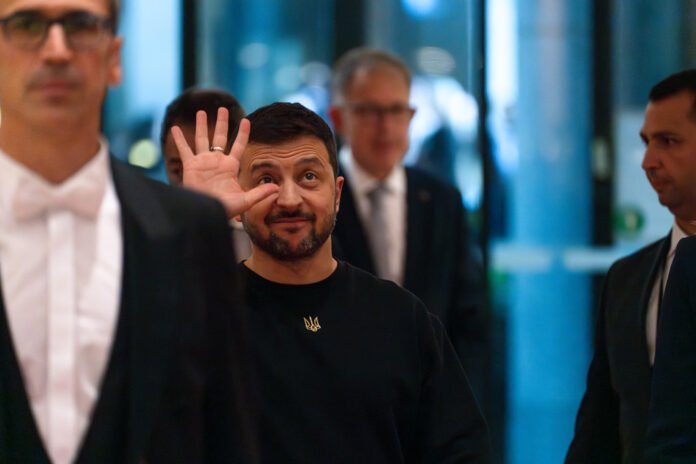
On the 1,222nd day of Russia’s invasion, Ukrainian President Zelenskyy announced Ukraine’s exit from the 1997 Ottawa Convention, which bans anti-personnel landmines. Zelenskyy cited the “utmost cynicism” of Russian forces using these weapons and emphasized the need to strengthen Ukraine’s defenses. Concurrently, Russia executed its most extensive aerial attack since the war’s start in February 2022, launching over 500 drones, decoys, and missiles overnight.
Russia Has Never Joined Ottawa Treaty
Zelenskyy emphasized that Russia has not ratified the Ottawa Convention and frequently uses anti-personnel mines, causing severe harm to civilians. He stated in a video address that this is typical of Russian forces, who destroy lives without restraint.
President Zelenskyy emphasized recent events at Ukraine’s northeastern border, where landmines have blocked civilian crossings and hindered Ukrainian military actions. He referenced satellite images and reports showing Russian minefields in Sumy and Kharkiv. Zelenskyy noted Europe’s response to this danger and urged Ottawa Convention members to exchange intelligence and create new mine-clearing technologies.
Political Signaling to Western Allies
Zelenskyy announced Ukraine’s plan to exit the treaty, which requires a year before using anti-personnel mines. He presented this move as a strategic message to international allies, especially NATO countries like Finland, Poland, and the Baltic states, who have left or plan to leave the treaty. “This is relevant for all nations bordering Russia,” Zelenskyy stated. He called for diplomatic backing to quickly obtain anti-tank mines and other defense weapons from allies.
Implications Under International Law
The Ottawa Convention bans anti-personnel mines but permits countries to exit with a year’s notice. Until then, Ukraine must adhere to the treaty. Exiting doesn’t permit mine use immediately; it allows Kyiv to negotiate for mines. Human-rights groups warn that increased landmine use could harm de-mining efforts and threaten civilians even after conflicts end.
Russia’s Massive Overnight Air Assault
Largest Aerial Barrage Since February 2022
Ukraine’s military reported the largest air assault of the war. From late Saturday to Sunday morning, Russia launched 477 drones and decoys, plus 60 cruise and ballistic missiles. Ukrainian air defenses intercepted or diverted 475 threats, marking this as the “most massive airstrike” since the war started.
Civilian Casualties and Infrastructure Damage
Three civilians died in the attack, and two more were killed by earlier Russian shelling in eastern Ukraine. Key infrastructure faced sporadic damage: power stations in Dnipropetrovsk and Kherson were struck, leading to brief power outages. Emergency services noted numerous injuries from explosions and debris.
Heroic Sacrifice of Ukrainian F-16 Pilot
Major Maksym Ustymenko, a celebrated F-16 pilot, died heroically during an air battle. The Ukrainian Air Force shared details of his last mission, where he destroyed seven enemy drones. Despite severe damage to his fighter jet, Ustymenko chose not to eject over a populated area. Instead, he bravely guided the damaged aircraft away from residential zones, ultimately sacrificing his life. In recognition of his exceptional courage, President Zelenskyy honored him posthumously with the Hero of Ukraine title.
Strategic Implications of Drone Warfare
Russia’s extensive use of drones marks a shift towards using unmanned systems to boost military power. These affordable, swarm-like drone attacks aim to overwhelm air defenses and weaken Ukrainian morale. Although Ukraine’s Patriot and S-300 systems are effective, maintaining a steady supply of interceptors is a major issue. Western nations are speeding up the delivery of more missile systems, like NASAMS and IRIS-T, to counter Russia’s increased aggression.
Diplomatic Retaliation and Sanction Reprisal Threats
In Moscow, Kremlin spokesman Dmitry Peskov called the aerial attack a strategic need, blaming Ukraine and its Western allies for increasing tensions. On Sunday, Russia’s Foreign Ministry warned that more EU sanctions would hurt European economies. On June 10, the European Commission suggested broader measures against Russian energy, banking, and arms sectors. However, Washington has avoided new US sanctions, focusing on unity within the G7.
Resumption of Russian-US Intelligence Talks
In the midst of military and political chaos, Russia’s intelligence head, Sergey Naryshkin, revealed a recent call with CIA Director John Ratcliffe. This was the first direct contact since March, signaling a cautious thaw between Moscow and Washington. Naryshkin said they agreed to keep “open lines” for talks on shared interests. US officials haven’t confirmed or denied the meeting, but the call highlights ongoing US-Russian communication despite sanctions and conflict.
Regional and Global Reactions
NATO and EU Responses
NATO’s Secretary-General Jens Stoltenberg criticized Russia’s airstrike, calling it a “reckless escalation.” He emphasized NATO’s dedication to strengthening Ukraine’s air defenses and cautioned that targeting civilian infrastructure will not weaken Ukraine’s determination.
EU’s Foreign Affairs Chief, Josep Borrell, condemned Russia’s drone attacks. He urged EU nations to agree on new sanctions swiftly. “Europe must unite to prevent more aggression and uphold international law,” he stated.
Humanitarian Concerns and Displacement
By Sunday, over 10,000 people from coastal towns near Santorini and the Kherson-Zaporizhzhia frontline were displaced due to mine threats and air strikes. Humanitarian groups report a lack of temporary shelters and medical supplies, worsened by heatwaves in southern Ukraine. The International Committee of the Red Cross has requested more funding to maintain relief efforts throughout the summer.
Domestic Political Fallout in Kyiv
Zelenskyy’s move to exit the Ottawa Convention faces backlash from Ukrainian civil groups, highlighting the enduring threat of landmines in freed areas. Kateryna Shevchenko, leading a demining NGO, stressed the need for the government to juggle immediate defense requirements with future mine-clearing strategies. She warned, “As battle lines change, anti-personnel mines will stay a concealed danger for years.
In parliament, nationalist opposition lawmakers praised the decree as essential to counter Russian attacks. Meanwhile, independent deputies demanded more transparency regarding Kyiv’s mine-clearance promises. A committee is working on legislation to manage the purchase, use, and removal of new mines.
What Comes Next?
Execution of Withdrawal Procedure
Under the Ottawa Convention, withdrawal becomes effective one year after formal notice is received. Until then, Ukraine must fulfill its obligations. The Ukrainian Foreign Ministry plans to speed up talks with allies to secure defensive mines and seek humanitarian demining support after withdrawal.
Escalation or De-escalation of Aerial Campaigns
Analysts warn that the large-scale drone and missile attacks could signal more Russian escalations this summer, possibly including missile strikes on key logistics centers. However, Ukraine’s successful interceptions, achieving a 99.6% success rate in the recent attack, might discourage future mass drone use if Russia finds the cost too high.
Continued Diplomatic Engagement
Amid rising tensions, experts see the recent Russian-US intelligence dialogue as a sign of practical diplomacy. Keeping these lines open could lead to talks on prisoner swaps, holiday ceasefires, or local peace zones.
Conclusion
Ukraine faces intense aerial attacks and plans to withdraw from the Ottawa Convention, signaling a new war phase. President Zelenskyy’s decision highlights Kyiv’s resolve to defend itself by any means. Meanwhile, Russia’s massive drone attacks show how modern warfare is changing, challenging traditional air defenses. In this context, the courage of Ukrainian air defenders, pilots like Maksym Ustymenko, and unwavering Western support will be crucial in determining the war’s future.
READ MORE: Trump’s Tariffs and the 2025 Australian Federal Election: When Global Trade Became Domestic Politics

