RosTrace

Tag: space science

Sage Bennett

Rock Fragments Reveal the Moment the Moon Turned Solid

Scientists have uncovered new details about the Moon’s early history, pinpointing the time it solidified into its current state. By analyzing Apollo mission rock samples, researchers at the University of Chicago have determined that the Moon’s crust formed approximately 4.43 billion years ago—coinciding with Earth’s transformation into a habitable planet.

· 1 min read

Sage Bennett

Enhancing Gravitational-Wave Detection Through Innovative Optical Technologies

Explore the fascinating world of gravitational waves, their detection, and implications for astrophysics and cosmology. This blog post delves into the revolutionary changes since the detection of gravitational waves by LIGO, recent advancements in optical technology, and the future of gravitational-wave observatories. Learn how these developments enhance our understanding of the universe, from black hole mergers to the earliest moments of cosmic history, fundamentally reshaping our knowledge of space-time and fundamental physics.

· 5 min read

Sage Bennett

Astronomers Reveal Our Best Glimpse Yet of Planets Being Born

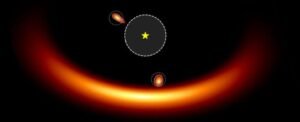
Explore the intricate processes of planet formation in protoplanetary disks, with a focus on the PDS 70 star system. This blog delves into the significant discoveries enabled by the James Webb Space Telescope and how they enhance our understanding of how planets develop from gas and dust. Gain insights into the formation of protoplanets like PDS 70 b and c, the role of circumplanetary disks, and the implications of these observations for planetary systems across the universe. Stay updated on future research directions and the collaborative efforts shaping our knowledge of the cosmos.

· 5 min read

Sage Bennett

Groundbreaking Discovery: Western Sydney University Detects Most Energetic Elementary Particle Ever Recorded

Western Sydney University researchers have made a groundbreaking discovery with the identification of the most energetic elementary particle ever recorded—an ultra-high-energy neutrino. Collaborating with the KM3NeT project, they utilized advanced detection technology to capture this elusive particle, providing vital insights into cosmic events and astrophysical processes. This significant achievement challenges existing models in particle physics and paves the way for future research directions in neutrino astronomy, enhancing our understanding of the universe.

· 5 min read

Sage Bennett

Mysterious Fast Radio Bursts Traced to Ancient Dead Galaxy

Discover the mysterious world of Fast Radio Bursts (FRBs), particularly the groundbreaking FRB 20240209A observed in February 2024. This blog explores the nature of FRBs, their origins in ancient galaxies, and the complex mechanisms behind their emission. Learn about the distinctions between repeating and non-repeating FRBs, and how recent advancements in observational techniques are reshaping our understanding of the cosmos. Dive into the latest findings that challenge previous assumptions, including the role of neutron stars and magnetars in generating these enigmatic signals, and what it all means for the future of astrophysics.

· 5 min read

Sage Bennett

The Hubble Tension: A Crisis in Our Cosmic Understanding

Explore the Hubble tension, a significant discrepancy in measurements of the Hubble constant that underscores the complexities of our understanding of the universe's expansion. This blog post delves into the conflicting results from different measurement methods, recent findings from the Coma Cluster, and the implications for cosmology. Researchers are challenged to reconcile these differences, potentially leading to groundbreaking discoveries about dark energy and the fundamental laws governing the cosmos. Stay informed on the latest in astronomy as we investigate the nature of cosmic expansion and its impact on our understanding of the universe.

· 5 min read

Sage Bennett

China’s Space Station Achieves Breakthrough in Extraterrestrial Artificial Photosynthesis

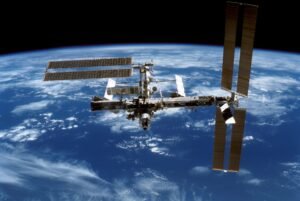
Explore the groundbreaking advancements in extraterrestrial artificial photosynthesis by China. This innovative technology mimics natural photosynthesis to generate essential resources like oxygen and organic compounds, ensuring sustainability for long-term space missions. Learn how these developments could enable human colonization of other planets, enhance life support systems, and promote international collaboration in space research. Discover the implications of this technology for future missions to the Moon and Mars, showcasing the potential for self-sufficiency beyond Earth.

· 5 min read

Sage Bennett

A Swarm of Black Holes Detected in the Milky Way: Insights from Gaia

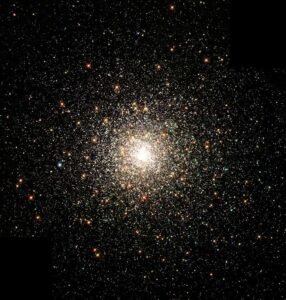
Explore the fascinating study of Palomar 5, a globular cluster in the Milky Way, and its relationship with black holes and stellar streams. Discover how recent advancements in astronomical observations are unveiling the complexities of star dynamics, gravitational interactions, and the implications for dark matter and cosmic structure. This blog delves into the discovery of multiple black holes within Palomar 5 and their impact on our understanding of stellar evolution and galactic history.

· 5 min read

Sage Bennett

James Webb Space Telescope Discovers Record-Breaking Collection of Stars in Distant Galaxy

The James Webb Space Telescope has unveiled a remarkable assembly of stars in a distant galaxy, revealing vital information about stellar formation and galaxy evolution. This groundbreaking discovery enhances our understanding of cosmic structures and the role of dark matter. With infrared capabilities, JWST allows astronomers to explore hidden celestial phenomena, offering insights into the life cycles of massive stars and the dynamics within galaxies. The implications of these findings extend into future research and exploration, potentially reshaping our comprehension of the universe and our place within it.

· 4 min read