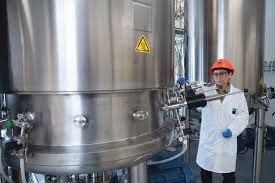
Queensland University of Technology (QUT) has signed a landmark Memorandum of Understanding (MOU) with the Japan Bioindustry Association (JBA), marking a new era of collaboration in biomanufacturing between Australia and Japan. This strategic partnership is designed to accelerate innovation, drive sustainable bioindustries, and strengthen economic ties across the Asia-Pacific.
QUT, already recognized as a leader in bioeconomy research, is well-positioned to leverage its extensive infrastructure and research expertise to support new ventures. With its Mackay-based Pioneer BioPilot facility recently upgraded through an $18 million investment, the university now hosts Australia’s most advanced pilot-scale fermentation hub. The partnership with JBA, which represents a diverse membership base across pharmaceuticals, healthcare, food, energy, and IT, creates an international pipeline for innovation and commercial translation.
Building the Future of Biomanufacturing
The MOU is more than a formal agreement; it is a commitment to advancing sustainable biotechnologies with real-world applications. Both organizations see immense potential in bridging industry and academia while tapping into global markets.
QUT’s Centre for Agriculture and the Bioeconomy has established itself as a hub for research into biofuels, biochemicals, and sustainable agriculture solutions. Professor Ian O’Hara, one of QUT’s leading voices in the field, emphasized the role of the Pioneer BioPilot in supporting industry partners for over 15 years. By converting biomass into biofuels and green chemicals, the facility has become a proving ground for projects with tangible impact.
Meanwhile, JBA brings unparalleled international reach. As Japan’s foremost bioindustry body, it supports cross-sectoral innovation, including pharmaceuticals, food and beverage, and renewable energy. CEO Tetsuya Tanaka highlighted Australia’s unique strengths in feedstock availability and renewable energy, describing Queensland as an ideal partner for advancing Japan’s biomanufacturing ambitions.
This collaboration also reflects growing global interest in bioeconomy principles—where biological resources are harnessed for sustainable industrial use. It aligns with policy priorities in both countries, including Japan’s “Society 5.0” innovation strategy and Australia’s push to expand renewable, export-ready industries.
Strategic Opportunities for Industry and Researchers
The QUT–JBA partnership is expected to deliver several practical benefits, with opportunities for both established companies and emerging innovators. Key opportunities include:
- Joint Research Projects – Collaborative initiatives between QUT and Japanese research institutes will fast-track innovation in synthetic biology, fermentation, and sustainable chemical processes.
- Commercial Scale-Up – Through the Pioneer BioPilot, businesses can test and scale products from lab concepts to commercial-ready solutions.
- Knowledge Exchange – Workshops, researcher exchanges, and industry networking will enhance skill transfer and global collaboration.
- Regional Hub Development – Queensland’s position as a hub for bioindustrial activity will strengthen, attracting new investment and international partnerships.
Dr Leon Scott, QUT’s Director of Research Infrastructure Operations, noted that the agreement reinforces QUT’s commitment to real-world impact. By partnering with JBA, the university extends its global footprint, ensuring its facilities and research expertise benefit industries far beyond Australia.
Comparative Landscape of Biomanufacturing Partnerships
The collaboration between QUT and JBA fits within a broader global trend of strategic biomanufacturing partnerships. The table below provides a comparative overview of similar initiatives.
| Partnership | Focus Area | Infrastructure Investment | Geographic Impact | Key Outcomes |
|---|---|---|---|---|
| QUT & JBA (2025) | Biofuels, green chemicals, food products | $18m Pioneer BioPilot upgrade | Asia-Pacific | Joint projects, scale-up capacity, regional hub creation |
| EU Bio-Based Industries Consortium | Circular bioeconomy | €3.7b public-private partnership | Europe | 140+ projects, biomass value chains |
| US Department of Energy & National Labs | Advanced bioproducts, synthetic biology | $600m+ programs | United States | New feedstock technologies, renewable chemicals |
| Japan Bioeconomy Strategy Initiatives | Synthetic biology, energy | Government-funded hubs | Japan | Expansion of Society 5.0 goals, biotech clusters |
This comparison highlights how the QUT–JBA agreement positions Queensland as a serious competitor on the global stage, with the infrastructure and expertise to rival much larger economies.
Driving Innovation Through Global Collaboration
The significance of this agreement extends beyond academic and industrial circles. For Queensland, the MOU reinforces its role as a global innovation hub and opens pathways for international investment. For Japan, it secures access to abundant natural resources, renewable energy, and pioneering academic partnerships.
Importantly, the agreement also sets a precedent for how universities and industry organizations can collaborate across borders to address pressing challenges such as climate change, energy transition, and sustainable food systems. By integrating technical expertise with industry scale-up capacity, QUT and JBA are positioned to lead advancements that deliver both environmental benefits and commercial growth.
As Professor O’Hara noted, real-world impact lies at the heart of QUT’s research. The Pioneer BioPilot’s proximity to sugarcane feedstock and renewable power gives it a competitive advantage, while JBA’s global networks ensure discoveries can move quickly from Queensland to international markets.
This is not just about research—it is about creating sustainable economic futures where science and business work hand in hand.
Trending FAQ
What is the Pioneer BioPilot?
The Pioneer BioPilot, based in Mackay, Queensland, is Australia’s leading pilot-scale fermentation facility. Recently upgraded with $18 million in funding, it enables companies to test and scale innovations in food, fuel, and bioproducts.
Why is Japan partnering with QUT?
Japan sees Queensland as an ideal partner due to its sugarcane feedstock, renewable energy resources, and government support for synthetic biology. The collaboration offers Japanese industries a practical testing ground for bioindustrial technologies.
How does this benefit Australia’s economy?
The partnership strengthens Queensland’s position as a global hub for biomanufacturing, creating jobs, attracting investment, and ensuring that Australian research translates into commercial opportunities.
What industries will benefit from the MOU?
Pharmaceuticals, healthcare, food and beverage, energy, and chemicals are key sectors expected to gain from the knowledge exchange, new technologies, and product development pipelines created through this partnership.
What makes this agreement globally significant?
By aligning expertise in sustainable technologies, the MOU positions both nations as leaders in the global bioeconomy, advancing real-world solutions that respond to climate, health, and industrial challenges.

