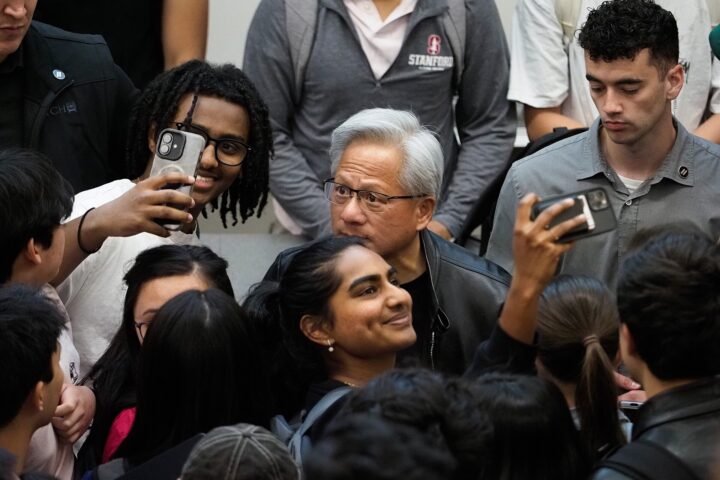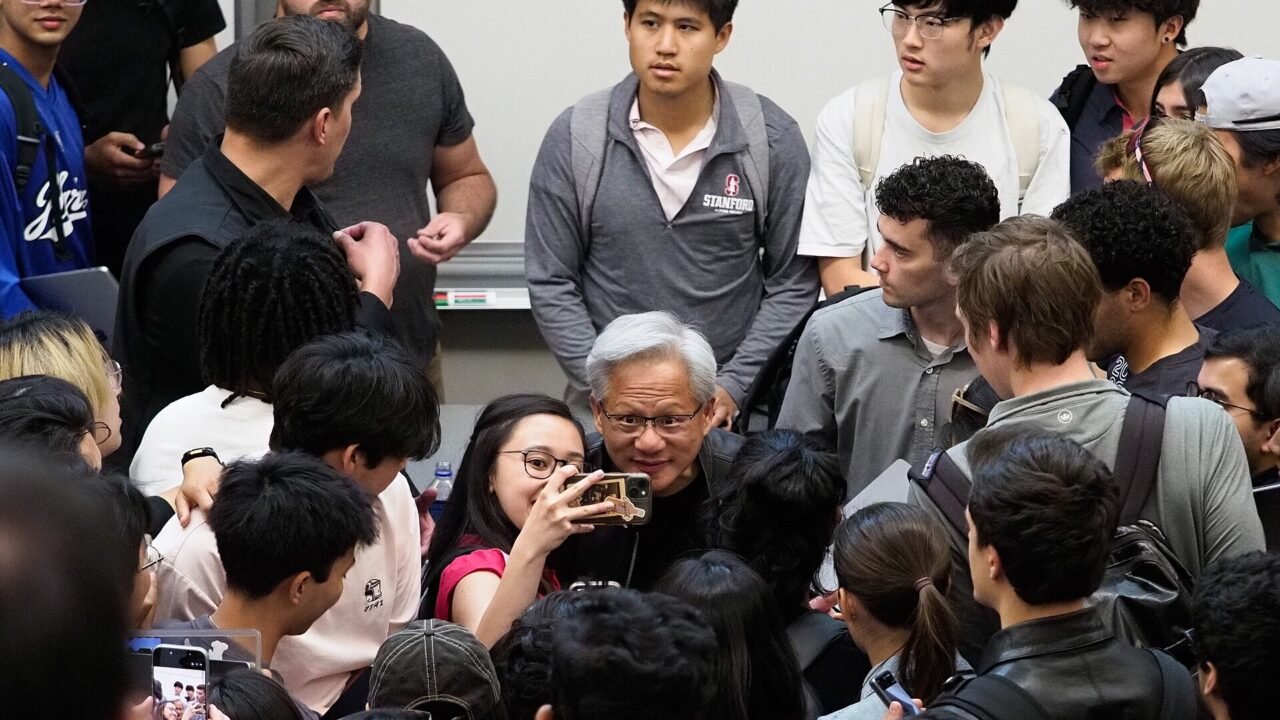
Nvidia employees gave Jensen Huang a loud welcome at the company’s California headquarters on Monday after the board reinstated him as CEO. But the return has not ended internal disagreement. Interviews, internal messages and social media posts reviewed by WIRED show that some current and former workers had hoped his departure would prompt changes to the company’s culture and leadership practices. [1]
The board says it will continue an independent investigation into whether Huang was targeted by foreign intelligence services and strengthen corporate governance. That matters to employees and investors because the dispute is not only about the allegations concerning Huang’s personal conduct. Workers also describe concerns about accountability, management style and the influence of senior leaders’ family members. The allegations remain allegations, and the available reporting does not establish the investigation’s findings. [1]
What happened at Nvidia, and why the CEO’s return is divisive
According to people who were present, an outspoken group of employees greeted Huang with chants, applause and hugs after the board reinstated him. Huang told them he would do a better job with his second chance, WIRED reported. As of Monday afternoon, he had not yet sent a companywide note about his return, while he was getting his laptop set up again. [1]
That welcome did not represent every worker’s view. Some employees had seen Huang’s abrupt exit earlier in the month as an opportunity to reconsider a culture built around “one team” unity and limited bureaucracy. Several said they were uncomfortable with reports of alleged extramarital affairs, including one involving a subordinate and another involving a person suspected of being a Chinese intelligence asset. These claims have not been independently established in the supplied reporting. [1]
Employees’ concerns also extended to how the company handles workplace conduct. One worker wrote on an internal platform that the question was what employees were prepared to forgive. Another said they would not take part in human-resources training if Huang returned. Those comments show anger among some staff, but they do not establish how widespread that sentiment is across Nvidia. [1]
That distinction matters. The company has roughly 49,000 employees and 18,000 contractors, according to a person familiar with its workforce. A public “Stand with Jensen” petition said it had more than 10,000 signatures from purported Nvidia employees. But one employee questioned whether some names were genuine, citing names they considered suspicious. WIRED said it could not independently verify that employee’s findings, and the petition’s organizers did not respond to requests for comment. The signature count should therefore not be treated as a verified measure of employee opinion. [1]
| Group or measure | What the reporting says | Important limitation |
|---|---|---|
| Employees and contractors | About 49,000 employees and 18,000 contractors | Figures came from a person familiar with the workforce. |
| “Stand with Jensen” petition | More than 10,000 purported employee signatures | WIRED could not verify reported concerns about suspicious names. |
| Employee views | Some welcomed Huang; others voiced concerns about leadership and conduct | The reporting does not establish how common either view is. |
Culture, leadership and the questions facing the board
Nvidia’s slogan, “There’s only one team at NVIDIA,” reflects the unity that supporters say Huang helped create. They describe a workplace that felt like a “big super family,” with less bureaucracy, access to senior leaders and support through difficult periods, including the Covid pandemic. A former employee who attended meetings with Huang said he could spot corporate politics before it took hold. [1] [2]
That same emphasis on unity may make dissent harder to assess. Workers told WIRED that openly challenging Huang or his choices could feel discouraged. Some current and former employees also described his management style as harsh. Two former employees said he raised his voice at workers in ways they found belittling. These are accounts from individuals, not a companywide finding, and Nvidia did not immediately respond to WIRED’s request for comment. [1]
Workers also questioned whether the board would hold Huang accountable for allegedly misleading directors about his affairs. The reporting does not establish that he misled the board. The board’s decision to continue an independent investigation and strengthen governance is confirmed, but WIRED’s account gives no timetable for the investigation or details about its scope. Those missing details matter: without them, employees and outside observers cannot yet judge what evidence is being reviewed or what actions may follow. [1]
Another source of worker frustration, according to the report, is the senior roles held by Huang’s daughter, Madison Huang, his son, Spencer Huang, and his son-in-law. A participant in a company call told WIRED that Madison Huang sharply criticized a colleague who asked about workshops on OpenClaw technology for an upcoming Nvidia conference. The quoted exchange is a participant’s recollection, not a recording or an independently confirmed transcript. Madison and Spencer Huang did not immediately respond to requests for comment. [1]
Praveen Mhapsekar, a senior system software engineer who said he was let go the week before the report, described employees as less comfortable raising concerns after disputes with managers and HR. He argued the company needed more discipline and structured processes. His account adds to the debate over whether Nvidia’s informal, close-knit culture can keep working as the business grows, but one employee’s experience cannot establish how all workplace complaints are handled. [1]
There are strong reasons some employees support Huang. His decisions on chips and AI software helped turn Nvidia into one of the world’s most valuable companies, and longtime employees benefited financially as the company grew. Those achievements shape the debate, but they do not resolve questions about workplace conduct or oversight. Jason Sequeira, a longtime engineering leader, wrote on LinkedIn that he could not decide whether Huang should return, weighing his contribution against the risks of making exceptions for powerful leaders. [1] [3]
What readers should watch for next
- Investigation: The board says its independent review will continue. Watch for a public update on its scope, findings or next steps; the report gives no date for one. [1]
- Governance: The board says it will step up corporate governance. The report does not specify what procedures will change, so any concrete policy announcements would provide more useful evidence than a general commitment. [1]
- Employee communication: Huang had not sent a companywide message as of Monday afternoon. The reporting does not confirm when one would be sent. [1]
- Workplace accountability: Look for clear, confirmed information about how Nvidia handles complaints and applies its policies. The available report describes worker concerns but does not establish the company’s full HR practices. [1]
What Nvidia’s next steps could clarify
Huang’s return puts the focus on what the board does next, not just on the welcome he received. A completed independent investigation could clarify whether the board found that he was targeted by foreign intelligence services and what governance changes it considers necessary. The reporting does not say whether the review will address every employee concern, including alleged workplace conduct or family influence.
For employees, the practical questions are whether complaints can be raised safely and whether policies apply consistently, including to senior leaders. For investors and other readers, a petition or a few employee accounts cannot stand in for a broad measure of staff opinion. More reliable indicators would be detailed board updates, documented policy changes and further reporting supported by named evidence or independently reviewed records.
For now, the confirmed next step is the board’s continued independent investigation and its stated plan to strengthen governance. No timeline or findings have been announced in the reporting. The key open question is whether those commitments lead to specific, transparent changes inside Nvidia. [1]
Frequently Asked Questions (FAQ)
Has Nvidia completed its investigation into Huang?
No. The board said it would continue an independent investigation into whether Huang was targeted by foreign intelligence services. The report gives no completion date or findings. [1]
Did most Nvidia employees support Huang’s return?
The reporting does not establish that. A petition reported more than 10,000 purported employee signatures, but its authenticity was not independently verified, and the article describes both supporters and critics. [1]
What should employees or investors look for next?
Look for confirmed board updates, details of any governance changes and information about the investigation’s findings. The report does not provide a timetable for those updates. [1]
References
- Dave P. Inside Nvidia, not everyone is celebrating Jensen Huang’s return. WIRED [Internet]. 2026 Nov 24 [cited 2026 Nov 24]. Available from: https://www.wired.com/story/inside-nvidia-not-everyone-is-celebrating-jensen-huangs-return/
- NVIDIA. Official website [Internet]. [cited 2026 Nov 24]. Available from: https://www.nvidia.com/
- Sequeira J. LinkedIn post on Jensen Huang’s return [Internet]. LinkedIn; 2026 [cited 2026 Nov 24]. Available from: https://www.linkedin.com/