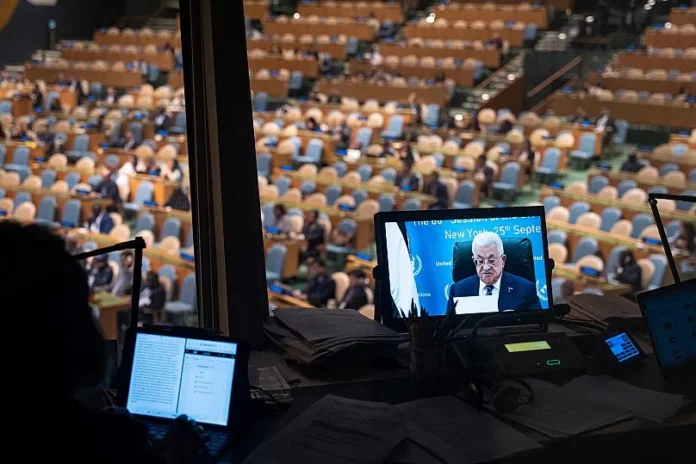
The United Nations General Assembly witnessed dramatic scenes on Friday as scores of diplomats staged a walkout during Israeli Prime Minister Benjamin Netanyahu’s address. The protest came in the wake of mounting international condemnation of civilian deaths in Gaza and widespread recognition of a Palestinian state by major powers. The incident underscored Israel’s growing isolation on the world stage, even as Netanyahu delivered a fiery defense of his government’s policies.
Meanwhile, in Washington and New York, U.S. President Donald Trump seized headlines of his own, denying accusations that he is pursuing a campaign of political retribution. Trump insisted there is no “enemies list,” despite the Department of Justice’s indictment of former FBI Director James Comey—a longstanding Trump critic. The developments converged to highlight an increasingly volatile intersection of Middle East conflict and American domestic politics.
Walkout Stuns UN Assembly
Netanyahu’s speech, delivered during the 80th session of the UN General Assembly, began with a hall already half-empty. By the time he launched into his defense of Israel’s actions in Gaza, delegations from Europe, Latin America, Asia, and Africa had streamed out in protest.
Australia, France, and the United Kingdom—each of which recently moved to formally recognize Palestine—were among those absent from the chamber. Their diplomats joined representatives from more than 40 countries who refused to listen.
The public gallery, however, was filled with Netanyahu’s supporters, many of whom applauded loudly throughout his remarks. The contrast between the packed gallery and empty chamber highlighted the stark divide between public solidarity and diplomatic alienation.
Netanyahu’s Defiance and Attack on Allies
In his address, Netanyahu lashed out at world leaders who backed Palestinian recognition. He accused Australia, Britain, France, and Canada of rewarding violence.
“By recognizing a Palestinian state unconditionally, you are telling the world that murdering Jews pays off,” Netanyahu declared, his voice rising as he scanned the rows of empty seats.
The speech came just days after international NGOs reported that civilian casualties in Gaza had surpassed 30,000, with food shortages and restricted humanitarian aid compounding the crisis. Netanyahu dismissed these claims, instead blaming Hamas for “manufacturing hunger” and using civilians as shields.
He further shocked diplomats by revealing that Israel had broadcast his speech directly into Gaza. Loudspeakers on the border, he said, carried his words across. Israeli officials later claimed the military had “taken control” of Palestinians’ mobile phones, although independent reports indicated only mass text messages with speech links were sent.
A QR Code and Political Theater
Observers were quick to note Netanyahu’s unusual attire. Pinned to his dark suit was a large badge emblazoned with a QR code. Israeli delegates wore the same insignia, and identical codes lit up billboards in Times Square.
“Hold up your phone, zoom in, and you will see why we fight,” Netanyahu instructed. Scanning the code directed viewers to a government website filled with hostage testimonials and videos of Hamas rocket attacks.
Critics described the move as “political theater,” accusing Netanyahu of exploiting modern gimmicks while ignoring the humanitarian toll. Opposition leader Yair Lapid branded the stunt “megalomaniacal madness,” warning that it trivialized Israel’s diplomatic standing.
Trump’s Parallel Drama in Washington
As Netanyahu courted controversy abroad, Donald Trump found himself at the center of a storm at home. His administration’s Department of Justice indicted former FBI Director James Comey on charges of obstruction of justice and lying to Congress. The indictment stunned legal experts, many of whom dismissed the case as flimsy.
Comey, who was fired by Trump during his first term, has long been a thorn in the president’s side. He led investigations into Russian interference in the 2016 election and accused Trump of pressuring him to drop inquiries into allies.
On Friday, Trump insisted the indictment was not personal. “It’s not revenge—it’s justice,” he told reporters. But he also hinted at more prosecutions to come: “There will be others.”
His remarks fueled speculation that he is pursuing a campaign of retribution against critics and opponents, despite his repeated denial of an “enemies list.”
Trump’s Targets: Schiff and James
In recent weeks, Trump has publicly named several individuals he would like to see prosecuted. Among them are Democratic Senator Adam Schiff, who spearheaded investigations into Trump’s dealings with Russia, and New York Attorney General Letitia James, who won a fraud case against his business empire.
Both Schiff and James are reportedly under federal investigation for alleged mortgage fraud—allegations they categorically deny. Critics argue these probes are politically motivated, warning they erode the independence of the U.S. justice system.
Benjamin Wittes, editor of the legal journal Lawfare, blasted the indictment of Comey as “outrageous behavior.” He accused Trump of installing unqualified prosecutors to build a weak case, calling the charges “horses***.” His blunt assessment underscored bipartisan unease about the weaponization of federal law.
Trump on Gaza: Hint of a Deal?
In a separate development, Trump suggested that progress was being made toward a resolution in Gaza. Speaking en route to the Ryder Cup golf tournament, he said: “It looks like we have a deal, very close to a deal.”
Netanyahu, however, made no mention of an imminent ceasefire in his UN speech. Instead, he reiterated Israel’s demand that Hamas release hostages and disarm before any negotiations could proceed. The gap between Trump’s optimism and Netanyahu’s conditions raised questions about whether Washington and Tel Aviv are truly aligned.
Australia Caught in the Crossfire
Australia emerged as a focal point in both Netanyahu’s and Washington’s criticism. Netanyahu’s attack on Canberra for recognizing Palestine was mirrored by U.S. Ambassador to Israel Mike Huckabee, who said allies like Australia had “violated the Oslo Accords.”
Foreign Minister Penny Wong defended Australia’s stance earlier in the week, insisting recognition of Palestine was necessary for a two-state solution. She called for “an urgent ceasefire, immediate humanitarian access, and meaningful negotiations.”
Canberra’s move aligns it with European powers but risks straining relations with Washington and Tel Aviv. Analysts say the Albanese government faces a delicate balancing act: maintaining its U.S. alliance while signaling independence in Middle East policy.
Melania Trump Incident Fuels Speculation
Adding to the swirl of political theater, footage of Trump and First Lady Melania Trump aboard Marine One circulated widely on social media. The president was seen wagging his finger as Melania shook her head.
While the White House offered no comment, speculation ran rampant. The couple had just returned from New York, where Trump addressed the UN alongside Netanyahu. The clip, though devoid of audio, captured the public’s fascination with the Trumps’ relationship amid political chaos.
Broader Implications: Diplomacy Under Strain
The diplomatic walkout and Trump’s controversial prosecutions reflect a shifting global order. For Israel, the exodus of diplomats highlighted the erosion of once-staunch support. Recognition of Palestine by Western powers signals growing impatience with Netanyahu’s hardline policies.
For the United States, Trump’s embrace of indictments against political foes raises alarms about democratic backsliding. Allies already unsettled by his confrontational style now face the added challenge of reconciling U.S. foreign policy with its internal political battles.
The convergence of these crises—Middle East conflict, legal warfare in Washington, and the erosion of multilateralism at the UN—marks a turning point. Both Israel and the United States find themselves under scrutiny, their leaders’ actions shaping not just domestic politics but the global order.
Looking Ahead
The coming weeks will be pivotal. Will Netanyahu’s defiance strengthen his domestic base or further isolate Israel internationally? Can Trump sustain claims of justice without fueling perceptions of authoritarian retribution? And will Australia and its allies hold firm on Palestinian recognition in the face of Israeli and American criticism?
Diplomacy is rarely neat, but Friday’s events exposed deep fractures. The walkout at the UN was more than symbolic; it was a collective rebuke of policies that many nations believe have reached a breaking point. Whether those fractures widen or narrow will depend on choices made in Jerusalem, Washington, and capitals across the world.
One thing is clear: the intersection of war, justice, and politics has rarely felt more combustible.

