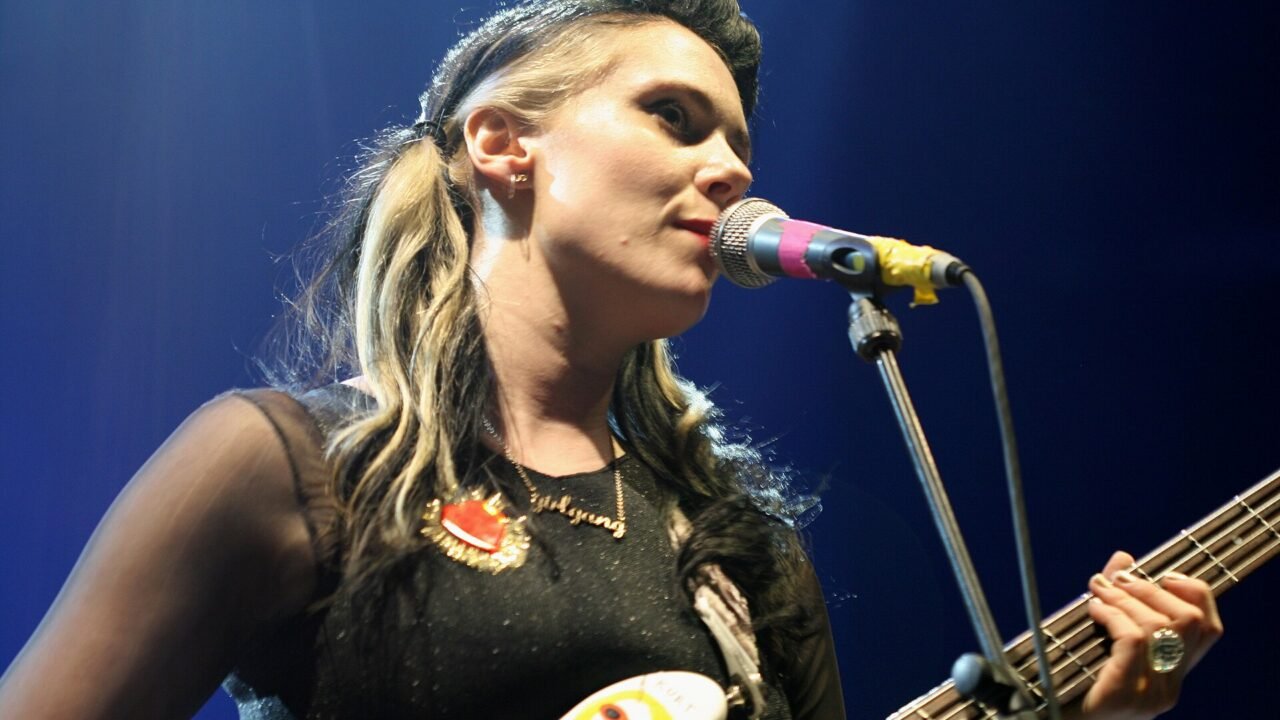
Kate Nash says she opened an OnlyFans account to help pay for touring after the costs of taking music on the road became difficult to meet. In 2024, she used the account as part of her “Butts for Tour Buses” campaign, staging a protest outside Spotify and Live Nation offices in London. The singer says the action drew attention to the pressure on working musicians, even as it risked damaging her relationship with the streaming service. [1]
The campaign remains relevant as Nash prepares to release Cailín, an album shaped by her Irish heritage and recorded on Ireland’s west coast. She has also spoken to a parliamentary select committee about Brexit’s financial impact on touring artists. Her account is a personal one, not a full measure of industry finances, but it highlights the gap she sees between music’s cultural value and the income many performers can rely on. [1]
What Kate Nash’s “Butts for Tour Buses” campaign involved
Nash launched her OnlyFans account to help fund a tour, then made the choice part of a public protest. In 2024, she stood on a fire truck in a showgirl outfit and used a loudhailer outside the London offices of Spotify and Live Nation. The truck carried a large image of her bum and the campaign slogan, “Butts for Tour Buses”. [1]
She later told her manager she felt she had thrown a metaphorical brick through Spotify’s window. Nash believed the protest might end her chances of being featured on the platform’s New Music Friday playlist. She says the feature did not happen. The interview does not establish why Spotify did not include her, so the timing alone should not be taken as proof that the protest caused the decision. [1]
Nash frames the stunt as an argument about pay, rather than an endorsement of a particular online platform. She says she has received both support and criticism for using OnlyFans to finance music. Her response is that music itself generates substantial economic value, but that income is not distributed fairly. That is her assessment of the system, rather than a figure or finding from an independent financial study. [1]
Her concern extends beyond her own tour. Nash says friends have sold instruments and furniture to cover touring costs, while others have not gone on the road and have become depressed. She worries that if smaller and mid-level acts cannot tour, audiences will have fewer chances to discover artists outside the mainstream. She argues that live shows help build fanbases and sustain culture. [1]
What the campaign does, and does not, show
The account Nash gives offers a direct example of one artist seeking an additional income source to make touring possible. It does not tell readers how much she earned, how much the tour cost, or what share of its funding came from OnlyFans. Nor does it establish that every touring artist faces the same conditions. Those details were not provided in the interview. [1]
For musicians weighing tour plans, Nash’s experience points to practical questions rather than a universal formula: what income is confirmed, which costs must be paid in advance, and whether a tour can proceed without taking on unsustainable financial risk. The source does not provide a budget or financial advice, so artists should not treat her campaign as evidence that any one platform will cover touring expenses.
From early fame to a more independent music career
Nash first became widely known in the Myspace era. Her debut album, Made of Bricks, topped the charts in 2007, but she has described the public attention as difficult. She recalls receiving a cruel message shortly before the album’s release and says attacks from tabloids and online users shaped her early experience of fame. Her account suggests that becoming known did not mean feeling at ease with the attention. [1]
After her second album, My Best Friend Is You, came out, Nash says her label dropped her by text. She later put out music independently and toured with a largely female team. A 2012 punk-influenced single, “Under-Estimate the Girl”, was described by NME as career suicide “and it sounds amazing”. Nash remembers the tour that followed as chaotic but creatively rewarding, including a show at Shepherd’s Bush Empire that she says felt more meaningful than playing a larger venue. [1]
Her career also included work as an actor. Nash moved to the United States after discovering that a former manager had misappropriated her money; she says the dispute ended in an out-of-court settlement after a lengthy legal process. She took a job in a comic shop while pursuing acting work, then joined the cast of Netflix series Glow, about female wrestlers in the 1980s. The series ended after three seasons, and Nash says the actors’ and writers’ strikes later left her without work for a period. [1]
She returned to London in late 2023 and refocused on music. Nash says she is now comfortable with not being an artist “for the masses”. Her account of that shift is useful context for the campaign: she describes success less as reaching the largest possible audience and more as having room to make work on her own terms. [1]
| Period | Confirmed event | What Nash says it meant |
|---|---|---|
| 2007 | Made of Bricks was released and topped the charts. | Fame brought attention, including hostile press and online messages. [1] |
| 2012 | Nash released “Under-Estimate the Girl” and later toured independently. | She says the tour helped her work with a team whose approach she valued. [1] |
| 2015 | She discovered financial misconduct by a former manager. | She says the dispute ended in an out-of-court settlement. [1] |
| 2024 | She used “Butts for Tour Buses” to draw attention to touring finances. | She says OnlyFans helped her fund a tour. [1] |
Why Cailín connects music, heritage and activism
Nash’s forthcoming album takes its name from the Irish word for “girl”. She recorded it in Spiddal, on Ireland’s west coast, and says she wanted to experiment with traditional Irish music rather than reproduce it unchanged. The sound combines uilleann pipes, flutes and tin whistle with punk and hip-hop. Nash has played the tin whistle since childhood. [1]
Her mother is Irish, and Nash grew up in an Irish-Catholic community in north-west London. She says she later realised she knew little about her own family history. During the recording process, she learned that her grandfather was among a group of men who tried to travel to Spain to fight Franco. They were intercepted and imprisoned at Curragh Camp in County Kildare, according to the family history she recounted in the interview. [1]
The album also includes Nash’s cover of Sinéad O’Connor’s “Famine”, a song about Ireland’s Great Hunger. Nash describes feeling a connection with O’Connor’s willingness to speak about injustice, while distinguishing their attitudes to fame: Nash says she wanted to be famous as a teenager, then found fame uncomfortable. [1]
For listeners, the release offers a new musical direction as well as a personal account of Nash’s Irish roots. For the artist, it sits alongside her public campaign about touring and fair pay. The interview does not present the album as a protest record alone; Nash describes a creative project that brings together family history, traditional instruments and contemporary styles. [1]
- For the release date: Nash’s interview says Cailín is due on 22 January through Kill Rock Stars. It does not specify a year, so check the label or artist’s official channels for the current release listing. [1]
- For the campaign: The “Butts for Tour Buses” action took place in 2024, and Nash says the OnlyFans account helped fund her tour. The interview gives no earnings or tour-budget figures. [1]
- For the wider argument: Nash has appeared before a parliamentary select committee to discuss Brexit’s financial impact on touring artists. The interview does not name the committee or provide its findings. [1]
Nash’s next confirmed step is the release of Cailín on 22 January through Kill Rock Stars; the interview does not state the year. Her broader question remains unresolved in the account: how can musicians at different career levels afford to tour while receiving a fair share of music’s value? [1]
Frequently Asked Questions (FAQ)
Why did Kate Nash open an OnlyFans account?
Nash says she used it to help fund touring. Her “Butts for Tour Buses” campaign connected the account to a protest about artists’ ability to earn enough to take music on the road. The interview does not disclose how much the account raised. [1]
When is Kate Nash’s album Cailín coming out?
The interview gives the release date as 22 January via Kill Rock Stars but does not state the year. Readers should check the artist’s or label’s official release information for any updated date. [1]
What is Cailín about?
Nash says the album explores her Irish heritage and blends traditional instruments, including uilleann pipes, flutes and tin whistle, with punk and hip-hop. It includes her cover of Sinéad O’Connor’s “Famine”. [1]
References
- Sturges F. ‘I have to sell my bum on OnlyFans to go on tour’: Kate Nash on fame, feminism and fighting the music business. The Guardian. 2026 Nov 16. Available from: https://www.theguardian.com/music/2026/nov/16/kate-nash-interview-cailin-spotify-bum-onlyfans.