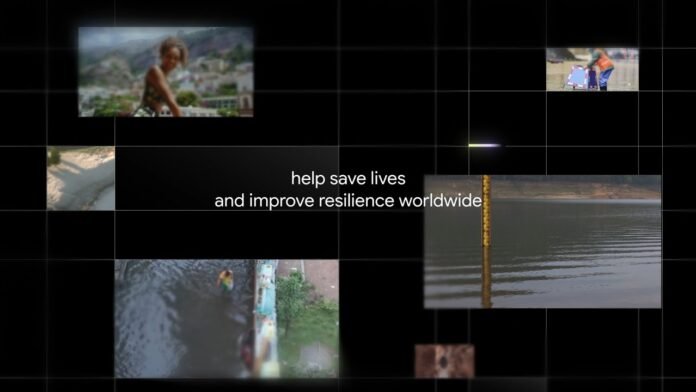
Flash floods arrive fast. They sweep through streets, villages, and farmland within minutes. For years, scientists struggled to forecast these events early enough to save lives and property. Now a new artificial intelligence system developed by Google researchers could change that reality. By analyzing millions of news reports and environmental records, the AI has learned to identify patterns that signal the early stages of flash flooding.
The breakthrough reflects a major shift in disaster prediction technology. Instead of relying only on weather sensors and satellite data, the system combines large language models, climate data, and historical reporting. The result is a tool that can detect warning signals earlier than many traditional models. Experts say the technology may help emergency planners act sooner, improve evacuation alerts, and reduce economic damage from extreme weather events.
How Google’s AI Learned to Predict Flash Flood Risks
Google’s research team trained the system using vast collections of historical data. The model reviewed millions of news articles, disaster reports, hydrological records, and environmental datasets. These sources contained valuable clues about how flash floods form, how communities respond, and how weather conditions escalate into disasters.
The learning process was complex but effective. The AI analyzed how rainfall patterns, terrain characteristics, and land use interact during extreme storms. It also examined how journalists and local reports described flooding events across different regions. These narratives often contained detailed observations that scientific datasets alone might miss. When combined with meteorological data, the information created a richer training environment for the model.
This approach allowed the system to detect subtle signals linked to flash floods. For example, it can identify patterns where intense rainfall interacts with steep terrain or urban infrastructure that cannot absorb water quickly. It also recognizes situations where storms move slowly across a region, releasing large volumes of rain over short periods.
Traditional flood forecasting systems rely heavily on river sensors and rainfall monitoring stations. While effective for larger river floods, these systems sometimes struggle with sudden flash floods that develop rapidly. AI models trained on broader data sources can fill that gap. By spotting warning signs earlier, emergency agencies gain valuable time to issue alerts and prepare responses.
Why Flash Flood Prediction Is One of the Hardest Problems in Weather Forecasting
Flash floods are among the most dangerous natural hazards worldwide. According to disaster research agencies and hydrological studies, they cause thousands of deaths each year and billions of dollars in damage. Unlike seasonal flooding, flash floods can occur within minutes after heavy rainfall. This makes them difficult to predict and even harder to manage.
Several factors contribute to the challenge. Geography plays a major role. Mountainous regions, narrow valleys, and urban areas with heavy pavement can accelerate runoff and overwhelm drainage systems. Weather dynamics also matter. Thunderstorms can produce intense rainfall over a small area while nearby regions remain dry.
Modern climate trends add another layer of complexity. Many climate studies have shown that warmer air holds more moisture. As global temperatures rise, storms are capable of producing heavier rainfall. This increases the risk of sudden flooding in regions that previously experienced moderate rainfall patterns.
In many parts of the world, early warning systems remain limited. Remote areas may lack weather stations or reliable communication networks. When heavy storms arrive, communities sometimes receive little advance notice. Researchers hope AI-driven forecasting tools can help bridge this gap by analyzing diverse datasets and identifying patterns that conventional systems might miss.
Improved prediction also supports better urban planning. Cities can use flood risk forecasts to upgrade drainage systems, manage stormwater, and plan infrastructure projects. Insurance companies may also benefit from more accurate risk assessments, helping them price policies and plan for future climate impacts.
Key Capabilities of the New AI Flood Prediction System
The new model combines several technologies to deliver its predictions. Each component plays a role in improving accuracy and speed.
- Large-Scale Data Analysis
The AI processes massive datasets, including news archives, weather observations, satellite imagery, and hydrological models. This allows it to learn how floods form across different regions and climates. - Natural Language Understanding
By reading millions of news articles, the model learns how past flooding events were described and documented. These reports often capture real-world impacts that scientific datasets may overlook. - Geospatial Pattern Recognition
The system maps rainfall data, terrain features, and land development patterns. This helps identify areas where water is likely to accumulate rapidly during storms. - Early Warning Signals
The AI can detect subtle changes in rainfall intensity and environmental conditions that precede flash floods. This capability helps generate earlier alerts compared with some traditional forecasting tools. - Scalable Forecasting Models
Because the system operates using cloud computing infrastructure, it can analyze data across large geographic regions simultaneously. This makes it suitable for global monitoring efforts.
These capabilities highlight why many experts see AI as a powerful addition to climate and disaster forecasting systems. By merging multiple data sources into a single predictive model, the technology provides insights that were previously difficult to obtain.
AI Flood Prediction System Overview
| Feature | Description | Practical Benefit |
|---|---|---|
| Data Sources | Millions of news articles, weather data, hydrological records | Provides broader understanding of flood patterns |
| Pattern Detection | Machine learning models analyze rainfall, terrain, and infrastructure | Identifies high-risk locations earlier |
| Natural Language Processing | AI reads historical reports describing past floods | Captures detailed event information |
| Early Warning Capability | Detects conditions linked to flash flood formation | Helps authorities issue alerts faster |
| Global Scalability | Cloud-based computing supports large geographic analysis | Enables worldwide monitoring systems |
What This Technology Means for Disaster Preparedness and Climate Resilience
The ability to predict flash floods earlier could significantly improve emergency response systems. When authorities receive accurate warnings, they can activate evacuation plans, prepare rescue teams, and secure infrastructure before floodwaters arrive. Even an additional hour of warning can make a meaningful difference for communities in high-risk regions.
Public safety agencies may benefit the most from this development. Disaster management teams can integrate AI forecasts into existing alert systems, combining them with weather radar and satellite monitoring. This layered approach creates stronger forecasting networks capable of detecting multiple hazard signals.
Infrastructure planning also stands to gain from improved flood prediction models. Governments often rely on historical flood records to design roads, bridges, and drainage systems. AI tools that analyze broader datasets can reveal hidden vulnerabilities in urban layouts. For example, they may identify neighborhoods where stormwater drainage is insufficient or where land development has increased runoff risks.
Insurance companies and financial institutions are also watching this technology closely. Climate-related disasters have become one of the fastest-growing sources of economic loss worldwide. Accurate flood forecasting could help insurers assess risk more precisely and encourage preventative investments in flood protection infrastructure.
Environmental researchers believe AI will play an expanding role in climate resilience strategies. As extreme weather events become more frequent, data-driven forecasting tools will help communities adapt. Governments may eventually integrate AI models into national early warning systems for floods, landslides, and other climate-related hazards.
Trending FAQ
How did Google train the AI to predict flash floods?
Researchers trained the model using millions of news articles, hydrological datasets, and weather records. The AI learned to identify patterns in rainfall, terrain, and flood descriptions across different regions.
Why are flash floods difficult to predict?
Flash floods develop rapidly after intense rainfall. They often occur in small geographic areas, making them harder to detect using traditional monitoring systems.
Can AI replace traditional flood forecasting systems?
No. Experts say AI works best when combined with existing meteorological tools such as satellite monitoring, weather radar, and river sensors.
How early can AI detect potential flood risks?
Early studies suggest that machine learning models can identify warning signals earlier than some conventional methods, potentially giving authorities additional preparation time.
Will this technology be used worldwide?
Because the system relies on cloud computing and large datasets, researchers believe it could support global flood monitoring efforts if integrated with national weather services.

