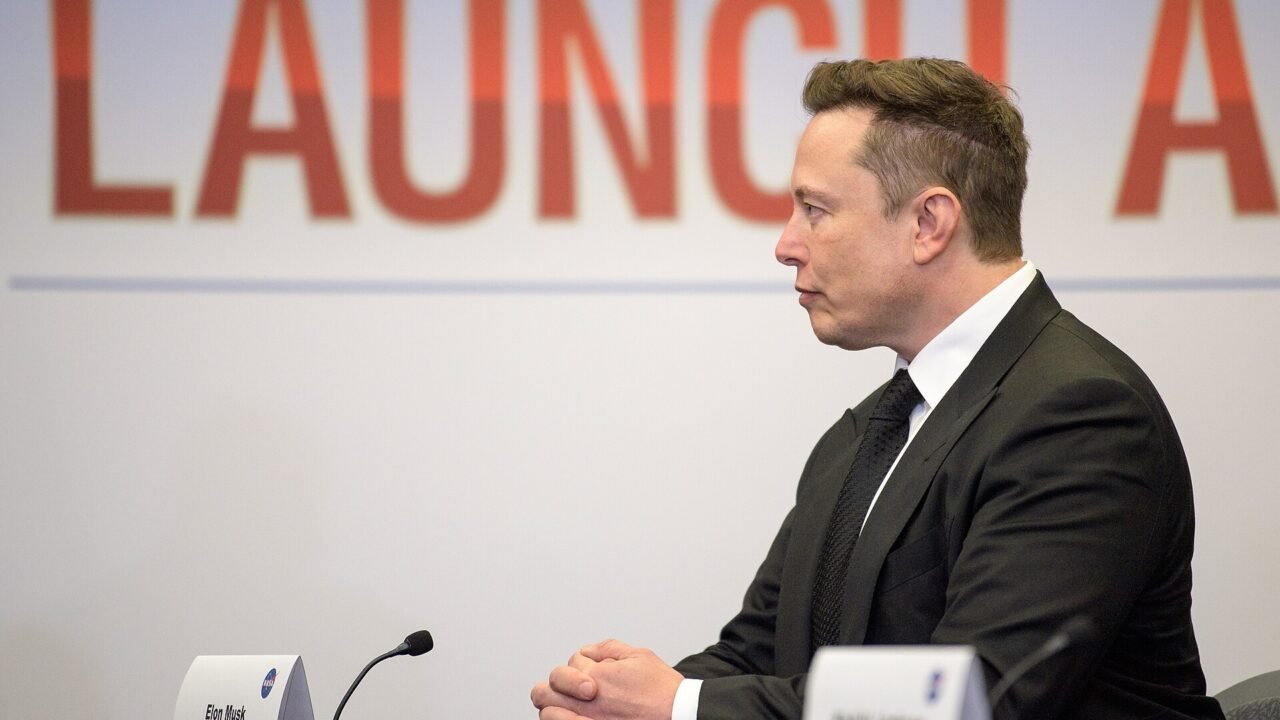
Elon Musk said he felt “pretty foolish” about the record sum he spent backing Republicans in the 2026 US midterm elections, according to the BBC. The Tesla and SpaceX chief executive was reported to have given $446m to support President Donald Trump’s party, but said he did not see much return for the money after Democrats won control of both houses of Congress.[1]
The remarks matter because Musk was the campaign’s top individual donor, and some of his spending supported candidates in Texas, where major Tesla and SpaceX operations are based. Democrat James Talarico defeated Republican Ken Paxton for a Texas Senate seat. BBC analysis said Musk spent at least $45m in support of Paxton.[1] The report does not provide a full breakdown of Musk’s spending or explain how the total was calculated.
What Musk said about the money and the Maga movement
Musk made the comments virtually at the New York Times DealBook Summit, a conference attended by business and political leaders. He said he did not identify as “Maga”, short for Make America Great Again, the political movement associated with Trump.[1]
“I’m not Maga,” Musk said. He added that if the term meant “blind adherence” to Republican Party policies, he did not have that kind of allegiance.[1] His remarks draw a distinction between supporting Trump’s election campaign and signing up to every Republican policy. The BBC report does not say that Musk withdrew his support for Trump or describe a change in his political views beyond those comments.
Musk also said he did not see much for the money he had spent on the Republican campaign. He qualified that assessment by saying candidates might have done worse without the spending.[1] That is his view of the counterfactual, not a measured estimate of how many votes the donations changed. The reported election results show the scale of the political setback, but do not establish what caused it.
The distinction is important for readers trying to interpret a large campaign-spending figure. A donor’s total is not the same as a record of how much a candidate personally received, and the supplied report does not itemise the routes or recipients for the full $446m. It does identify at least $45m in support of Paxton, based on BBC analysis.[1]
What changed in the midterms, and why Texas stands out
Democrats won control of both the Senate and the House, while Texas, Ohio and other states swung away from Trump, the BBC reported.[1] The report says Trump faced pressure over the effect of his policies on the cost of living. It does not give a state-by-state vote breakdown, margins or a detailed analysis of why voters shifted.
Texas is a notable test case in the story because it combines a major political contest with a close link to Musk’s business interests. The state hosts key operations for Tesla, his car company, and SpaceX, his rocket and technology firm.[1] Paxton lost the Senate race to Democrat James Talarico, despite Musk’s reported financial support for Paxton.
The BBC also noted that Democrats have vowed greater scrutiny of technology companies, including over the rollout of controversial data centres.[1] That is a stated political priority, not evidence that a particular law or regulatory action has already followed the election. The election outcome could shape the setting for future debates, but the report does not identify a specific measure, timetable or company decision that is now confirmed.
| Reported item | Figure or outcome | What the report establishes |
|---|---|---|
| Musk’s support for the Republican campaign | $446m (£339m) | BBC described him as the campaign’s top individual donor.[1] |
| Support for Ken Paxton | At least $45m | BBC analysis attributed this amount to support for Paxton.[1] |
| Texas Senate result | James Talarico defeated Ken Paxton | The race was one of the midterms’ notable Democratic wins, according to the report.[1] |
| Congressional control | Democrats won the House and Senate | The report describes a shift in control of both chambers.[1] |
What readers should check next
The $446m figure is a reported campaign-spending total, and the article does not provide a line-by-line ledger. Readers who want to assess the money behind a particular federal race can look for campaign finance filings in the Federal Election Commission’s public data system.[2] Those records can help distinguish candidate committees from other political committees and show reported transactions. A filing search should not be treated as a direct substitute for the BBC’s analysis unless the same spending categories and time period are being compared.
For the Texas result, official state election information is the appropriate place to check certified results and related election notices.[3] The source report names the winner and loser but gives no vote totals, margin or certification date. Until those details are checked against official records, it is better not to infer how close the race was or how much any single donor affected the outcome.
For readers following the political implications, the most useful questions are whether party control is formally reflected in the new Congress, whether lawmakers pursue the promised technology oversight, and what future campaign finance filings show. The report gives no dates for committee action, legislation or further disclosures, so none should be assumed from Musk’s comments alone.
- To follow the spending, compare the relevant federal campaign finance filings with the reported total and check what committee or form of support each entry represents.[2]
- To follow the Texas contest, use state election records for official results rather than relying on an unsourced vote total.[3]
- To follow technology policy, look for specific bills, hearings or agency actions; a campaign pledge by itself is not a change in the law.[1]
Musk’s comments put a striking figure beside a clear political reversal, but they do not settle how much his spending influenced the result. The BBC report confirms the reported totals and outcomes, while a complete assessment requires more detail on the spending and official election records. No next legislative step or date was identified in the report.
Frequently Asked Questions (FAQ)
How much did Elon Musk spend supporting Republicans?
The BBC reported that Musk gave $446m (£339m) to support Trump’s party and called him the campaign’s top individual donor. Its analysis said at least $45m supported Ken Paxton.[1]
Did Musk say he was leaving the Maga movement?
No. He said “I’m not Maga” and rejected the idea of blind adherence to Republican policies. The report does not say he announced a departure from Trump’s political efforts.[1]
Where can I check the election result and campaign finance records?
Use the Federal Election Commission’s public data system for federal campaign finance filings and the Texas election information site for state election records.[2][3] The BBC report does not include a full spending ledger or Texas vote totals.
References
- BBC News. Elon Musk says record spending on US midterms was ‘pretty foolish’ [Internet]. 2026 Nov 19. Available from: https://www.bbc.co.uk/news/articles/cm9q8j2z3gg8o
- Federal Election Commission. Campaign finance data [Internet]. Available from: https://www.fec.gov/data/
- Texas Secretary of State. Elections [Internet]. Available from: https://www.sos.state.tx.us/elections/