RosTrace

Health

Stay informed about medical breakthroughs, wellness tips, and public health updates to live your healthiest life.

More Health

Robin Hayes

GPs to Diagnose and Prescribe ADHD Medication Under NSW Reform

The New South Wales government today unveiled landmark reforms that will allow up to 1,000 general practitioners (GPs) to manage attention deficit hyperactivity disorder (ADHD) care for both children and adults. Historically, patients have needed referrals to specialist paediatricians or psychiatrists—often facing long wait times and high costs—to receive assessments, diagnoses, and ongoing prescriptions. The new measures aim to decentralise ADHD services, particularly benefitting families in regional areas who travel extensively or pay thousands for private assessments.

· 4 min read

Robin Hayes

TGA Greenlights Alzheimer’s Drug Donanemab for Early-Stage Patients

Australia’s Therapeutic Goods Administration (TGA) has officially approved donanemab, a monoclonal antibody therapy, for use in people with early-stage Alzheimer’s disease. Developed by pharmaceutical company Eli Lilly, donanemab has already secured approval in the United States and other jurisdictions. Its entry into the Australian market marks a significant milestone in dementia care—offering the first disease-modifying treatment option for individuals in the initial phase of Alzheimer’s.

· 4 min read

Robin Hayes

Experimental ALS Therapy Spurs Unprecedented Recoveries in Early Trials

In a remarkable departure from the typical expectations of neurodegenerative disease trials, an experimental therapy targeting a rare genetic form of amyotrophic lateral sclerosis (ALS) has yielded unprecedented functional recoveries in some patients. The therapeutic agent, ulefnersen—formerly known as jacifusen—was developed by Columbia University neurologist Dr. Neil Shneider in collaboration with Ionis Pharmaceuticals. Data published online in The Lancet reveal that two of the 12 patients treated for juvenile-onset FUS-mutant ALS experienced dramatic improvements, including the restoration of walking ability and respiratory independence, while another asymptomatic carrier has yet to develop disease signs after three years of continuous treatment.

· 5 min read

Robin Hayes

Australia Faces Unprecedented Early Surge in Flu Cases: What You Need to Know

Australia is currently experiencing record-breaking inter-seasonal influenza activity, with more than 83,000 laboratory-confirmed flu cases reported between January and May 2025. This figure surpasses the previous year’s total at the same point by over 10,000 cases, raising alarm among public health experts who warn that winter has not even begun. Health authorities and clinicians are urging all Australians to prioritise flu vaccination and take simple precautionary measures to curb transmission.

· 4 min read

Robin Hayes

WHO Launches Interactive Dashboards to Track Traditional, Complementary and Integrative Medicine Globally

In a landmark move coinciding with the 78th World Health Assembly in Geneva, the World Health Organization (WHO) unveiled its first-ever Traditional, Complementary and Integrative Medicine (TCIM) Dashboards on 21 May 2025. The new digital platform transforms previously static survey results into a real-time, interactive data hub that empowers Member States, researchers and health professionals to monitor TCIM policies, regulations and service integration at both global and national levels.

· 5 min read

Robin Hayes

Genetic Variations in Prader-Willi Syndrome Illuminate Links to Autism and Psychosis

Prader-Willi syndrome (PWS) is a rare genetic disorder occurring in approximately 1 in 16,000 to 1 in 76,000 births across all ethnicities and genders. Characterized by hypotonia, hyperphagia and distinct craniofacial features, PWS has also emerged as a valuable model for studying neurodevelopmental and psychiatric conditions. In a newly published Invited Expert Review in Genomic Press, researchers from the University of Haifa synthesize cutting-edge findings that reveal how PWS’s genetic subtypes correlate with divergent psychiatric outcomes—namely autism spectrum disorder (ASD) and psychotic spectrum disorders (PSD). These insights hold promise for unraveling the genetic architecture of neuropsychiatric vulnerability and advancing precision psychiatry.

· 5 min read

Robin Hayes

How AI Is Revolutionizing Dementia Detection in Hospitals

Dementia affects roughly 50 million people worldwide—a figure projected to triple by 2050, according to the World Alzheimer Report. In Australia, accurate counts of people living with dementia remain elusive, hindering effective health-service planning and resource allocation. While routine hospital data capture some dementia diagnoses, many cases go unrecorded, leaving patients at risk of inadequate care. Now, researchers from the National Centre for Healthy Ageing (NCHA)—a collaboration between Monash University and Peninsula Health—have developed a groundbreaking dual-stream algorithm that blends traditional record-coding with artificial intelligence (AI) to dramatically improve dementia detection in hospital electronic health records (EHRs).

· 5 min read

Robin Hayes

Personality Profiles May Predict Long‐Term Outcomes in Bipolar Disorder

In the era of personalized medicine, oncologists tailor cancer therapies to genetic mutations, and cardiologists adjust heart‐failure regimens to patients’ hemodynamics. Yet mental‐health care has lagged behind, often relying on trial‐and‐error prescribing and generic psychotherapy. Now, new research from the University of Michigan’s Heinz C. Prechter Bipolar Research Program suggests that detailed personality assessments could help clinicians forecast which individuals with bipolar disorder are most likely to experience recurrent depression or struggle with day‐to‐day functioning—and tailor their treatment plans accordingly.

· 6 min read

Robin Hayes

Australia’s Childhood Vaccination Rates Are Declining, Sparking Fears About Risk to Herd Immunity

Australia’s robust childhood immunisation program, long held up as a global benchmark, is showing troubling signs of backsliding. New figures released by the National Centre for Immunisation Research and Surveillance (NCIRS) reveal that vaccination coverage among infants, toddlers and adolescents has steadily fallen since the onset of the COVID-19 pandemic. With rates dipping below the thresholds required to maintain herd immunity against highly contagious diseases such as measles and whooping cough, experts warn that without swift and sustained intervention, preventable outbreaks—and even deaths—may follow.

· 6 min read

Robin Hayes

Animal Study Uncovers Distinct Metabolic Effects of Tirzepatide Versus Semaglutide

New preclinical research presented at the 2025 European Congress on Obesity (ECO) in Malaga, Spain, reveals that the anti-obesity drugs tirzepatide and semaglutide produce markedly different short-term metabolic responses in mice. While tirzepatide transiently increases energy expenditure, semaglutide initially suppresses it. Both agents, however, converge on enhanced fat oxidation and appetite suppression, with the most pronounced metabolic shifts occurring during active treatment and rapidly waning once dosing ceases.

· 5 min read

Robin Hayes

Hearing Aids May Help Older Adults Combat Social Isolation

Social isolation and loneliness have reached crisis levels among older Americans, with more than one in four seniors reporting little or no contact with others and a third feeling persistently lonely. Researchers and public health officials have linked these trends to a host of adverse outcomes—including depression, cognitive decline, heart disease and increased mortality. While factors such as mobility limitations and loss of loved ones play key roles, untreated hearing loss emerges as a significant contributor to diminishing social engagement.

· 6 min read

Robin Hayes

FDA Approves First At-Home HPV Test as Alternative to In-Office Pap Smear

On May 11, 2025, the U.S. Food and Drug Administration (FDA) granted approval for the country’s first at-home human papillomavirus (HPV) test designed as an optional alternative to the traditional in-office Pap smear. Manufactured by MedAware Diagnostics (a subsidiary of Hackensack Meridian Health), the test enables individuals with a cervix to collect their own vaginal sample via a soft, sponge-like swab. Following a telehealth consultation, patients mail their specimens to a central laboratory for HPV analysis. Those who receive a positive result are promptly referred for an in-office Pap smear and follow-up care, while patients testing negative can safely defer further screening for three to five years in accordance with established guidelines.

· 6 min read

Robin Hayes

Illicit Fentanyl Use in the U.S. Far Higher than Previously Reported

A groundbreaking new study by RAND Corporation and the University of Southern California reveals that illicit opioid use—particularly of nonprescription fentanyl—is far more widespread in the United States than official estimates have indicated. In an online survey of 1,515 American adults conducted in June 2024, researchers found that 11 percent reported using illicit opioids in the past year, and 7.5 percent reported use of illicitly manufactured fentanyl. These figures dwarf the 0.3 percent fentanyl prevalence reported by the National Survey on Drug Use and Health (NSDUH) in 2022, underscoring a critical need for more accurate, near–real-time monitoring tools to guide the nation’s response to the ongoing opioid crisis.

· 5 min read

Robin Hayes

Expanded Access to Influenza Vaccination as NSW Pharmacists Begin Immunising Children Aged Two and Above

The New South Wales Government has announced a significant expansion of its influenza vaccination program, permitting qualified pharmacists to administer flu shots to children as young as two years old. The move, welcomed by the Pharmaceutical Society of Australia (PSA), aims to increase immunisation rates among young families, reduce barriers to access and ultimately curb the seasonal surge in influenza cases. With vaccination coverage among the six-month to five-year age group declining in recent years, health authorities are calling on all immunisation providers—GPs, nurse practitioners and pharmacists—to collaborate in safeguarding New South Wales communities this winter.

· 7 min read

Robin Hayes

What Is a Blood Cholesterol Ratio? And What Should Yours Be?

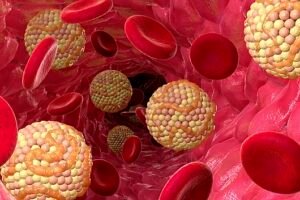
The results of a routine blood test can reveal more than just your total cholesterol level. Clinicians increasingly turn to blood cholesterol ratios—comparisons between different types of lipids in your bloodstream—to assess cardiovascular risk with greater precision. Unlike single biomarkers, these ratios integrate both “good” and “bad” cholesterol components, offering a more holistic view of arterial health. With heart disease remaining Australia’s leading cause of death, understanding and optimizing your cholesterol ratios could be the key to longer, healthier life.

· 5 min read

Robin Hayes

Teen Movement Matters: Norwegian Study Finds More Activity at 14 Slashes Depression Risk

A team at the Norwegian University of Science and Technology (NTNU) has delivered some of the strongest evidence to date that boosting physical activity during the mid‑teen years can help keep depression at bay. By following a birth cohort of 873 young people from childhood to adulthood, the researchers showed that adolescents who became more active between ages 14 and 18 were significantly less likely to develop depressive symptoms two years later. The peer‑reviewed findings appear in the Journal of the American Academy of Child & Adolescent Psychiatry (JAACAP).

· 4 min read