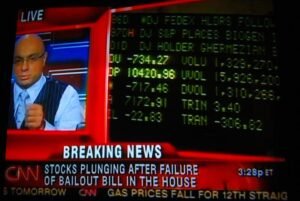
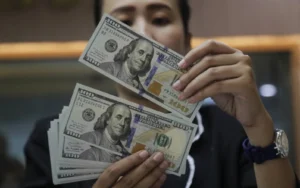
Global financial markets reeled on Friday as escalating trade tensions between the United States and China sent stock indexes plummeting and investors scrambling for safe havens.
Australia’s largest retirement fund, AustralianSuper, has confirmed it was hit with over 600 attempted cyber attacks in the past month, with four of its members losing a combined total of $500,000 from their retirement savings.
Millions of Australian mortgage holders may need to revise their expectations for interest rate relief in 2025. While financial markets and a majority of economists anticipate at least one more Reserve Bank of Australia (RBA) rate cut this year, Governor Michele Bullock and the central bank's language suggest otherwise.
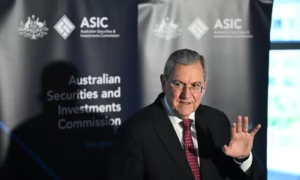
A grieving Indigenous woman was forced to wait more than 500 days to receive a death benefit payment following the death of her husband due to the "poor industry practices" of an unnamed superannuation fund, according to a landmark report released by the Australian Securities and Investments Commission (ASIC).
In a major announcement ahead of the federal election, the Labor government has vowed to make it illegal for supermarkets to engage in price gouging. Prime Minister Anthony Albanese is set to unveil plans this Sunday that include establishing a dedicated taskforce to investigate and regulate supermarket pricing practices—a move aimed at protecting Australian families amid rising living costs.
In a high-stakes announcement amid the federal election campaign, Opposition Leader Peter Dutton has vowed to impose a gas reservation policy on the east coast if his party wins office. The measure is designed to force more gas into the domestic market and drive down prices—from over $14 per gigajoule to under $10 per gigajoule—by compelling exporters to divert an extra 50 to 100 petajoules annually for local use. Dutton outlined the plan during his budget reply speech, declaring it “just the start” of a broader intervention aimed at curbing rising energy costs.
Embedded in Japan’s rich cultural heritage, sake has long been a symbol of tradition and conviviality. Yet despite its iconic status, this beloved rice wine remains shrouded in a cloud of misconceptions. At the Brisbane Sake Festival, sake educator Simone Maynard is on a mission to debunk five persistent myths that have misled many outsiders about what sake really is—and how best to enjoy it.
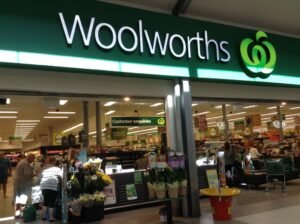
A new quarterly report by consumer advocacy group Choice has revealed a notable divergence in supermarket pricing trends over the past year. While the cost of an average basket of 14 common grocery items at Coles and Aldi has fallen, shoppers at Woolworths are paying significantly more.
In a move that could upend the global gas market, industry insiders suggest that gas giants may soon be compelled to divert a significant portion of their production to Australia’s domestic market. This proposal, part of a prospective gas reservation plan being developed by the Coalition, is being positioned as a means to secure more energy for Australians while driving down energy prices. With Labor expected to counter with its own version of such a policy, the issue is set to become a focal point in the upcoming election shootout.
In a tumultuous day on the markets, building materials supplier James Hardie shares tumbled over 14% after the company announced a $14 billion acquisition of US outdoor products manufacturer AZEK. Despite this setback, the broader ASX 200 managed to eke out a marginal gain, closing at 7,937 points, as investors weighed mixed signals ahead of the upcoming federal budget.
The British government has initiated a formal investigation into the nation’s “energy resilience” following an electrical substation fire that forced Heathrow Airport—Europe’s busiest air hub for international travel—to close for nearly 18 hours. The overnight blaze at the North Hyde substation, only 3.2 kilometres from the airport, not only severed electricity to Heathrow but also left more than 60,000 local properties without power. The resulting shutdown prompted over 1,300 flight cancellations and stranded approximately 200,000 people. While operations at Heathrow have since resumed, industry officials anticipate residual delays and disruptions for days to come, with some travellers still stuck.
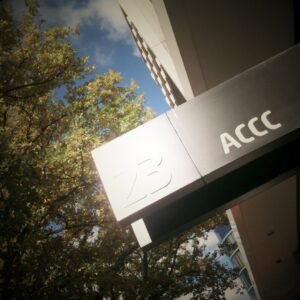
In today’s highly competitive supermarket sector, loyalty programs have evolved far beyond simple rewards systems. An extensive inquiry by the Australian Competition and Consumer Commission (ACCC) has raised concerns that the gamification of loyalty programs at major chains such as Coles and Woolworths may be influencing customer behavior in ways many shoppers do not even realise. With more than 85 percent of Australians now belonging to at least one loyalty program, these initiatives are not only shaping purchasing decisions but might also be obscuring the true value of deals offered to consumers.
The Australian Competition & Consumer Commission (ACCC) has delivered a sobering report on the country’s supermarket sector, revealing that giants Coles and Woolworths, which together command nearly 67% of national supermarket grocery sales, have little incentive to aggressively cut prices. Instead, both chains have been steadily increasing their earnings margins over recent years—with a more pronounced rise at Woolworths. Despite concerns over potential price gouging during the pandemic, the ACCC stopped short of declaring the market a duopoly, instead noting that the sector is distinctly oligopolistic with very few major competitors.
Australia’s renewable energy landscape is undergoing a significant transformation, with a marked surge in household battery storage installations. According to recent data, approximately 75,000 battery storage systems were installed last year—a 47% increase from 2023—bringing the total number of systems across the country to over 320,000. This impressive growth reflects a broader trend: as solar feed-in tariffs continue to plunge, more households are choosing to store their own solar energy rather than sell it back to the grid.
A new report from national housing campaign Everybody’s Home has delivered a stark warning: Australian renters now require an annual income of at least $130,000 to comfortably afford the median rent for a unit. The 2025 Priced Out report reveals that the current rental market has pushed housing costs to such an extreme that even those earning six-figure salaries in capital cities and many regional areas are burdened by rental expenses that exceed 30% of their income.
policy support from the world’s second-largest economy.
· 7 min read
Your privacy
We use essential cookies to run this site. With your permission, we and our advertising and analytics partners, including Google, also use cookies to measure readership and show more relevant ads. You can change your choice at any time from "Cookie settings" at the bottom of every page. Read our Privacy Policy
Accessibility
Adjust how this site looks and behaves for you. Your choices are saved on this device only.
Darker text and stronger lines, borders and links.
Shows text in the OpenDyslexic typeface.
More space between lines, letters and words.
Makes every link easy to spot.
A bold outline shows where you are when using a keyboard.
Turns off animations, transitions and autoplaying video.