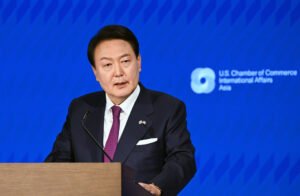
SEOUL, South Korea – In a landmark decision, South Korea’s Constitutional Court unanimously ruled on Friday to remove President Yoon Suk-yeol from office, citing a grave violation of constitutional rights following his controversial declaration of martial law last year.
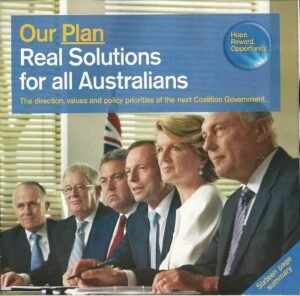
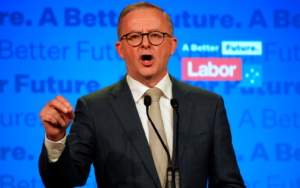
Labor, currently in government and led by Prime Minister Anthony Albanese, occupies the centre-left position in Australian politics. Its foundational values include:
Patients with active cancer who experienced blood clots, known medically as venous thromboembolism (VTE), showed favorable outcomes with a lower dose of apixaban. This was demonstrated by the recent API-CAT trial, which found that a reduced dose effectively prevented recurrence of VTE while substantially lowering the risk of bleeding, compared to the standard higher dose.
More than half a million Generation Z voters will cast their ballots for the first time in the upcoming federal election, marking a significant demographic shift. This group, alongside millennials, will surpass baby boomers as the largest voter bloc, dramatically reshaping how political campaigns target their audiences.
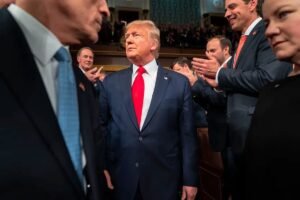
A Republican congressman with deep roots in America’s cattle industry is stirring up trade tensions ahead of President Trump’s next round of import tariffs. Marlin Stutzman, a fourth-generation farmer from Indiana, has introduced a bill proposing a 70% tariff on Australian Wagyu beef imports—a move aimed at pressuring Australia over its longstanding ban on American beef and perceived unfair trade practices.
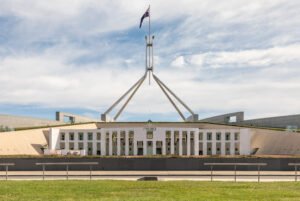
A group of eight Israeli lawmakers from both governing and opposition parties in the Knesset have called on Australian MPs to reject the country's longstanding two-state solution on Israel and Palestine. The letter, distributed at an event hosted at Parliament House in February, was handed to Queensland LNP backbencher Andrew Wallace by unidentified individuals.
The Prime Minister, Anthony Albanese, is expected to call a federal election on Friday morning, with polling day anticipated to be in early May. This strategic move is aimed at capitalising on the positive momentum from the recent federal budget announcements while diverting attention from Opposition Leader Peter Dutton’s budget reply speech, which is due to be delivered on Thursday night.
A new report from the Inter-Parliamentary Union (IPU) has laid bare the disturbing reality faced by women in politics across the Asia-Pacific region. Interviews with female Members of Parliament (MPs) and staff from 33 countries—including Australia, China, Indonesia, Thailand, India, and the Philippines—reveal that gender-based violence, harassment, and abuse have become all too common in parliamentary workplaces. The findings underscore an urgent need for reform to protect the women who serve in these democratic institutions and to ensure that parliaments remain safe havens for robust debate and law-making.
In a bold statement ahead of Wednesday’s Spring Statement, Deputy Prime Minister Angela Rayner stressed that working class people do not want government handouts—they want genuine support to secure employment and provide for their families.
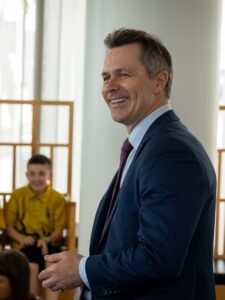
In a recent address that has stirred widespread debate, Education Minister Jason Clare warned that the rising trend of public school students failing to complete Year 12 is “a big challenge” for Australia. With significant reforms already underway—including a historic deal ensuring every public school will be fully funded by 2034—Clare’s comments underscore the urgent need to address student retention and academic engagement in the nation’s classrooms.
The South African ambassador to the United States, Ebrahim Rasool, returned to a jubilant reception in Cape Town on Sunday following his abrupt expulsion by the administration of US President Donald Trump. A lively crowd of supporters filled the arrivals area at Cape Town International Airport, applauding and chanting as the ambassador and his wife, Rosieda, made their way through the terminal under police escort.
During the turbulent months of Ramadan in 1974, the northern city of Lucknow in Uttar Pradesh, India, was a powder keg of communal tension. In an era when Shia-Sunni clashes threatened to tear apart the fabric of society, Hemwati Nandan Bahuguna—then the newly appointed chief minister of Uttar Pradesh and a stalwart of the Indian National Congress—took a bold step to forge peace. With communal tensions at a peak during a sacred period meant for reflection and unity, Bahuguna extended an olive branch to the Shia community by inviting Shia leader Ashraf Hussain to break his fast at his residence. Though Hussain initially declined due to religious obligations, Bahuguna’s insistence led him to accept the invitation, and the resulting iftar meal became a turning point in quelling the riots.
· 7 min read
Your privacy
We use essential cookies to run this site. With your permission, we and our advertising and analytics partners, including Google, also use cookies to measure readership and show more relevant ads. You can change your choice at any time from "Cookie settings" at the bottom of every page. Read our Privacy Policy
Accessibility
Adjust how this site looks and behaves for you. Your choices are saved on this device only.
Darker text and stronger lines, borders and links.
Shows text in the OpenDyslexic typeface.
More space between lines, letters and words.
Makes every link easy to spot.
A bold outline shows where you are when using a keyboard.
Turns off animations, transitions and autoplaying video.