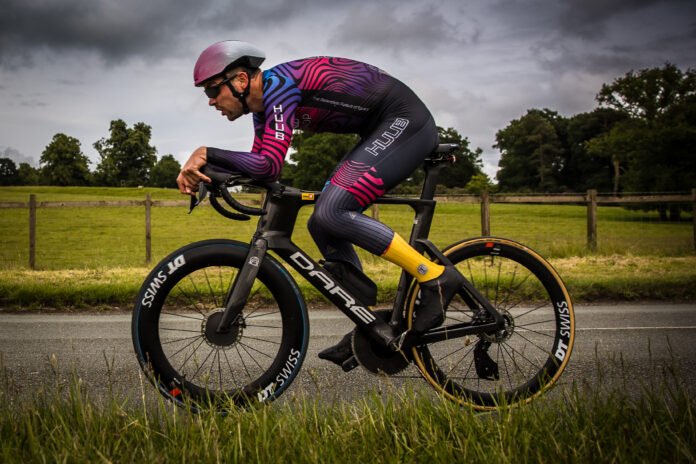
Australia delivered a dramatic and gutsy performance at the UCI Road World Championships in Kigali, Rwanda, retaining their mixed relay world title after edging out France and Switzerland in a nail-biting finish. The win, sealed by a razor-thin margin of just five seconds over France, highlighted the team’s resilience, depth, and capacity to rise under pressure despite limited preparation.
The victory marks back-to-back titles for the Australian squad, who came into the race with modest expectations but emerged triumphant on a demanding 42.4km course that combined altitude, heat, and tactical pressure from cycling’s strongest nations.
The Race That Came Down to Seconds
The format of the mixed relay is simple but brutal: three male riders complete the first lap before handing over to three women who race to the finish line. Australia fielded Luke Plapp, Michael Matthews, and Jay Vine for the men’s section, followed by Felicity Wilson-Haffenden, Brodie Chapman, and Amanda Spratt for the women’s leg.
The men established a crucial early lead, with Plapp and Vine setting a punishing pace and Matthews adding his veteran savvy to push the Australians to a commanding 40-second advantage over France. But in the second half, the French women staged a ferocious chase, reducing the gap meter by meter as the course climbed relentlessly toward Kigali’s city streets.
When Spratt, Chapman, and Wilson-Haffenden crested the final climb, the clock was ticking down. France was closing fast. The Swiss team, anchored by time-trial world champion Marlen Reusser, was also in striking range. Yet the Australians clung on, collapsing at the finish line as the scoreboard confirmed a five-second margin of victory over France, with Switzerland a further five seconds adrift.
How Preparation—or the Lack of It—Shaped the Victory
The Australians admitted their preparation was less than ideal. Many of the riders only arrived in Kigali two days earlier, with little chance to train together on the course. Matthews, a seasoned campaigner known by the nickname “Bling” for his diamond earrings and flamboyant flair, emphasized the importance of teamwork over training.
“It’s not often we get the chance to ride with a full Aussie team,” Matthews said post-race. “We only arrived a couple of days ago and didn’t ride out there until yesterday. But today, it all came good.”
The lack of rehearsal forced the riders to lean heavily on instinct, trust, and communication. In a discipline where smooth exchanges and pacing strategies can decide the outcome, the Australians relied on their shared experience and ability to suffer together.
Women’s Heroics Under Pressure
The women’s half of the relay proved decisive. By the time the baton passed, the French and Swiss teams were already calculating how to claw back Australia’s lead. In the sweltering heat and oppressive humidity, Chapman and Wilson-Haffenden dug deep, setting up Spratt to hold off the French charge on the final stretch.
Spratt described the experience as one of the hardest efforts of her career. “I knew it was going to be like hell. Brodie was strong and I held her wheel. I could hear them (the men) screaming ‘sprint, sprint, sprint’ coming into the close.”
The exhaustion was plain to see. All three women were dragged from their bikes at the finish, gasping for breath after leaving every ounce of energy on the road. Yet their agony turned to ecstasy when the result flashed up on the screen—Australia had done it again.
France and Switzerland Push Aussies to the Limit
For France, the silver medal was bittersweet. Nineteen-year-old Paul Seixas, riding on his birthday, turned heads with a blistering performance that showcased why many tip him as a future Tour de France winner. “It’s a good sign for the future,” Seixas said afterward, already turning his attention to Sunday’s brutal 265km elite men’s road race featuring 33 climbs.
Switzerland, too, came close to glory. Led by the indomitable Marlen Reusser—fresh off her women’s time trial gold—the Swiss overcame a costly mechanical failure that may have denied them the top step of the podium. Still, their bronze medal underscored their strength in depth and ability to adapt under pressure.
The Growing Significance of the Mixed Relay
Introduced in 2019 at the Yorkshire Worlds, the mixed relay has grown rapidly in popularity. With its blend of male and female riders, national pride, and tactical intrigue, it is fast becoming a centerpiece of the World Championships.
“Every year this event gets bigger with more and more people watching,” noted French rider Juliette Labous. “Long may that continue.”
This year’s edition featured 16 nations, including five from Africa—Benin, Ethiopia, Mauritius, Rwanda, and Uganda—reflecting the sport’s increasing global reach. For the host nation Rwanda, which will also stage the men’s and women’s elite road races, the event was a showcase of cycling’s power to inspire across continents.
What the Win Means for Australian Cycling
For Australia, the triumph cements its status as a mixed relay powerhouse. The back-to-back world titles serve as proof of both depth and balance across the men’s and women’s squads.
It also highlights the country’s ability to compete in varied conditions. Australian riders are more accustomed to racing in Europe, where cooler climates and familiar roads dominate. Winning at altitude in humid East Africa demonstrates adaptability—a key trait heading into the weekend’s longer, more grueling events.
Equally significant is the morale boost this victory provides. With the elite men’s and women’s races looming, confidence within the camp is soaring. Matthews and Plapp will return to action, joined by other top Australians, while Spratt and Chapman will carry the momentum into the women’s race.
Lessons for Competitors and the Broader Cycling Community
The Kigali race offered valuable insights not only for Australia but for all competing nations:
- Preparation is important, but adaptability is decisive. Australia’s limited practice forced them to rely on instinct and resilience. The outcome proves that mental toughness can compensate for logistical challenges.
- Women’s contributions are decisive. In a format where the men often establish an early lead, it is the women who ultimately determine victory. Their ability to manage pressure and sustain speed is critical.
- Mechanical reliability matters. Switzerland’s lost seconds due to a mechanical highlight the fine margins in cycling, where equipment can decide podium places.
- Emerging talent is reshaping the sport. Young stars like Paul Seixas underline that the next generation is ready to challenge veterans on the world stage.
Looking Ahead
Attention now shifts to Sunday’s elite men’s road race, a daunting 265km contest with 33 climbs that promises to test even the toughest riders. For the women, the prospect of tackling Kigali’s punishing terrain will come later in the week.
Australia’s camp is optimistic but cautious. Defending their relay crown has set a high bar, but the road races are longer, harder, and often unpredictable. Yet if Wednesday’s victory proves anything, it is that Australia thrives under pressure and knows how to dig deep when it matters most.
Cycling, at its heart, is about endurance, teamwork, and the ability to push past limits. In Kigali, Australia demonstrated all three in abundance, delivering a performance that will be remembered not only for the medal but for the sheer determination that earned it.
As the sun set over Rwanda’s hills, the image of exhausted Australian riders collapsing at the finish line captured the spirit of competition—grit, sacrifice, and the sweet reward of victory measured in seconds.

