
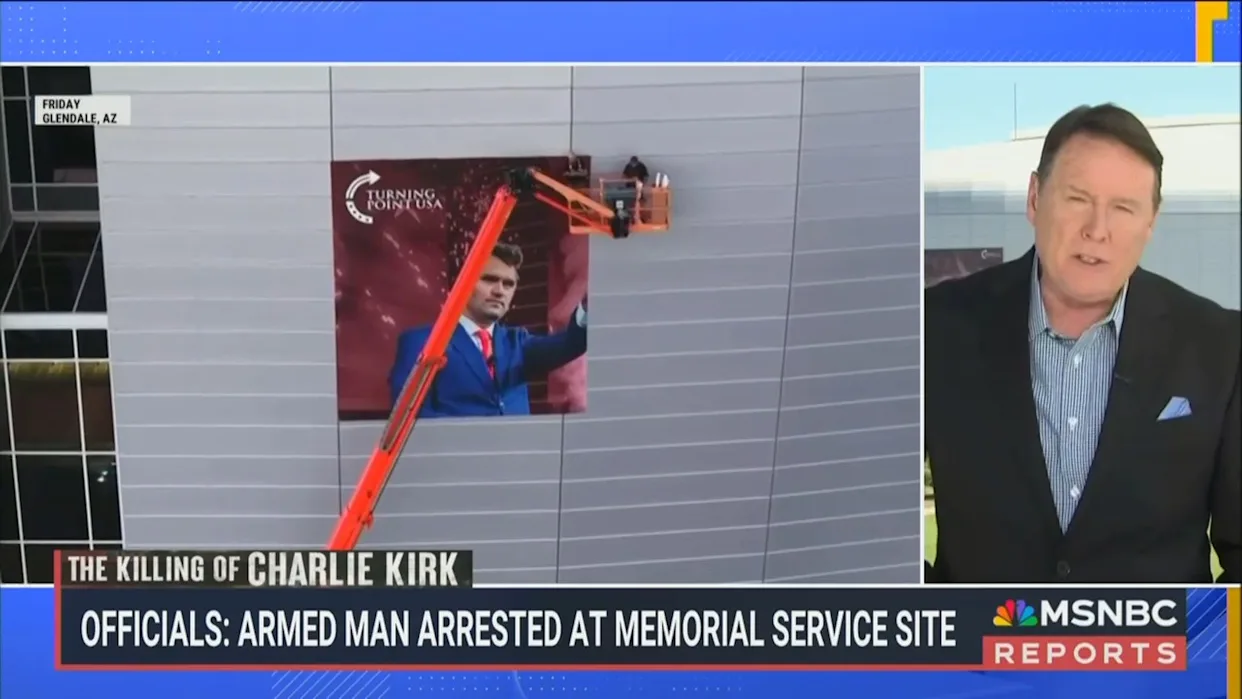
Authorities in Arizona have arrested an armed man at the site of conservative commentator Charlie Kirk’s memorial service, raising alarm just hours before one of the most high-profile political gatherings of the year. The incident unfolded at the State Farm Stadium in Glendale, where tens of thousands of mourners, dignitaries, and political leaders are expected to gather on Monday for a public tribute.
The man, who allegedly claimed to be a police officer, was taken into custody after displaying what security officials described as “suspicious behavior.” Officials confirmed that he was armed at the time of the arrest. Investigators have not yet disclosed the suspect’s identity, the type of weapon he carried, or whether he posed a direct threat to attendees. The matter remains under investigation, and police have assured the public that additional measures are being deployed to ensure safety.
The arrest comes as security preparations reach an unprecedented scale, with U.S. President Donald Trump, Vice President JD Vance, and other senior figures scheduled to attend. The memorial has been described as both a political flashpoint and a deeply emotional moment for supporters of Kirk, who was shot and killed earlier this month in a targeted attack that shook American political discourse.
A Memorial Under Heavy Guard
The service at State Farm Stadium is expected to draw one of the largest gatherings in recent memory for a non-state funeral. Organizers anticipate over 50,000 mourners, including political allies, faith leaders, and grassroots supporters of Turning Point USA, the organization Kirk founded.
Local law enforcement agencies, federal officers, and private security contractors have joined forces to create a layered security perimeter around the venue. Roads leading into Glendale will see traffic checkpoints, drones will patrol the skies, and attendees will face airport-level screenings before entry.
Officials from the Department of Homeland Security (DHS) have quietly labeled the memorial a “high-risk mass gathering,” according to security analysts familiar with the planning. The combination of Kirk’s assassination, his political prominence, and the attendance of Trump has created what experts describe as a “perfect storm” for potential security breaches.
The Arrest and Its Timing
The detained man reportedly attempted to gain access by presenting himself as law enforcement, an impersonation that immediately raised suspicion. Witnesses say he entered through a restricted gate before being stopped by officers conducting random secondary checks. His inconsistent answers to questioning prompted a swift search that revealed he was carrying a firearm.
Authorities have not stated whether the man’s intentions were malicious or if he was a supporter who misunderstood entry restrictions. However, the fact that he was armed while claiming to be an officer has amplified concerns. Analysts note that impersonation of police at high-profile political events is a known tactic used by extremists to bypass security.
With global media watching and emotions already raw, the arrest underscores the tension surrounding the memorial. Officials have urged calm, assuring the public that the situation is under control and that there is no immediate ongoing threat.
Why Security Is So Tight
Security at political events has become a recurring national conversation in the United States, particularly after the assassination of Charlie Kirk earlier this month. His killing, which federal officials have classified as a politically motivated attack, sparked calls for stronger protection not only for elected leaders but also for high-profile commentators.
Kirk’s memorial is unique because of the convergence of political, cultural, and emotional factors. President Trump is expected to deliver a eulogy, his first major public address since Kirk’s death, making the event a magnet for both supporters and opponents. Vice President JD Vance, long considered a protégé of Kirk’s, will also speak. Several governors, senators, and religious leaders are confirmed to attend.
The sheer scale of the gathering means organizers are preparing for both potential disruptions inside the venue and mass demonstrations outside. Groups opposed to Kirk’s political ideology have already announced protests, while counter-protesters have vowed to show up in defense of his legacy.
Public Reaction and Political Impact
News of the arrest spread quickly on social media, where supporters of Kirk and conservative figures expressed both relief and outrage. Many praised security for acting swiftly, while others used the incident to call for broader crackdowns on political violence.
On the other side, critics questioned whether the heightened focus on the memorial risks inflaming divisions further. Some civil liberties advocates worry about the balance between public safety and freedom of assembly, particularly as law enforcement expands surveillance at political gatherings.
The incident also highlights the fragile political climate heading into the 2026 election cycle. Kirk’s assassination and its aftermath have already become central talking points for both Republicans and Democrats. For conservatives, Kirk has been framed as a martyr for free speech and American values. For progressives, his death has raised uncomfortable questions about the rising tide of political extremism and gun violence.
Lessons From Past Incidents
The arrest at State Farm Stadium evokes memories of past high-risk memorials and political funerals where security was similarly tested. In 1968, the assassination of Senator Robert F. Kennedy led to sweeping changes in how campaigns were protected. More recently, the storming of the U.S. Capitol in 2021 reshaped the conversation around domestic threats at political gatherings.
Experts stress that while isolated arrests may not indicate a coordinated plot, they reveal vulnerabilities that cannot be ignored. “The fact that someone armed and posing as law enforcement got as far as he did is concerning,” one former Secret Service agent said. “It shows why layered security, redundancy, and human intuition remain critical.”
The Stakes for Organizers
For Turning Point USA, the organization Kirk founded and led until his death, the memorial is more than a farewell—it is a defining moment. Leaders within the group see it as both a unifying tribute and a launchpad for carrying Kirk’s message into a new era.
But the security challenges present risks to that mission. Any disruption, even a false alarm, could overshadow the solemnity of the event and shift the narrative. Organizers have been in constant contact with law enforcement to reassure attendees that safety is paramount.
The group has also emphasized transparency, encouraging attendees to report anything unusual. “We want everyone to honor Charlie in peace, but we also want eyes and ears open,” one spokesperson said.
What Happens Next
Authorities will continue to interrogate the man arrested at the memorial site to determine his motives and connections. Charges of impersonating an officer and unlawful possession of a firearm at a restricted event are likely. Depending on findings, federal charges could also follow.
Meanwhile, security operations are intensifying. Officials say attendees should prepare for long waits, multiple identification checks, and visible law enforcement presence at every stage of the event. While such measures may feel intrusive, security professionals insist they are necessary given the stakes.
The service itself will proceed as planned, beginning at 11 a.m. local time on Sunday, which translates to 4 a.m. Monday in Australia. The event will be broadcast live across major U.S. networks and streamed internationally.
A Moment Under the Microscope
As the nation watches, the arrest in Arizona will likely be remembered as part of the broader story of Kirk’s death and its ripple effects. For supporters, the swift police response is proof that his memorial will be protected from those who wish harm. For critics, it reinforces warnings about the dangerous intersection of guns, politics, and public grief.
Either way, Monday’s service is shaping up to be not just a farewell to a controversial but influential figure, but also a test of how America manages security, free speech, and political polarization in one of its most volatile periods.
The world’s eyes are on Glendale. What happens there—inside and outside the stadium—will send a message about the state of American democracy, its divisions, and its resilience in the face of violence.