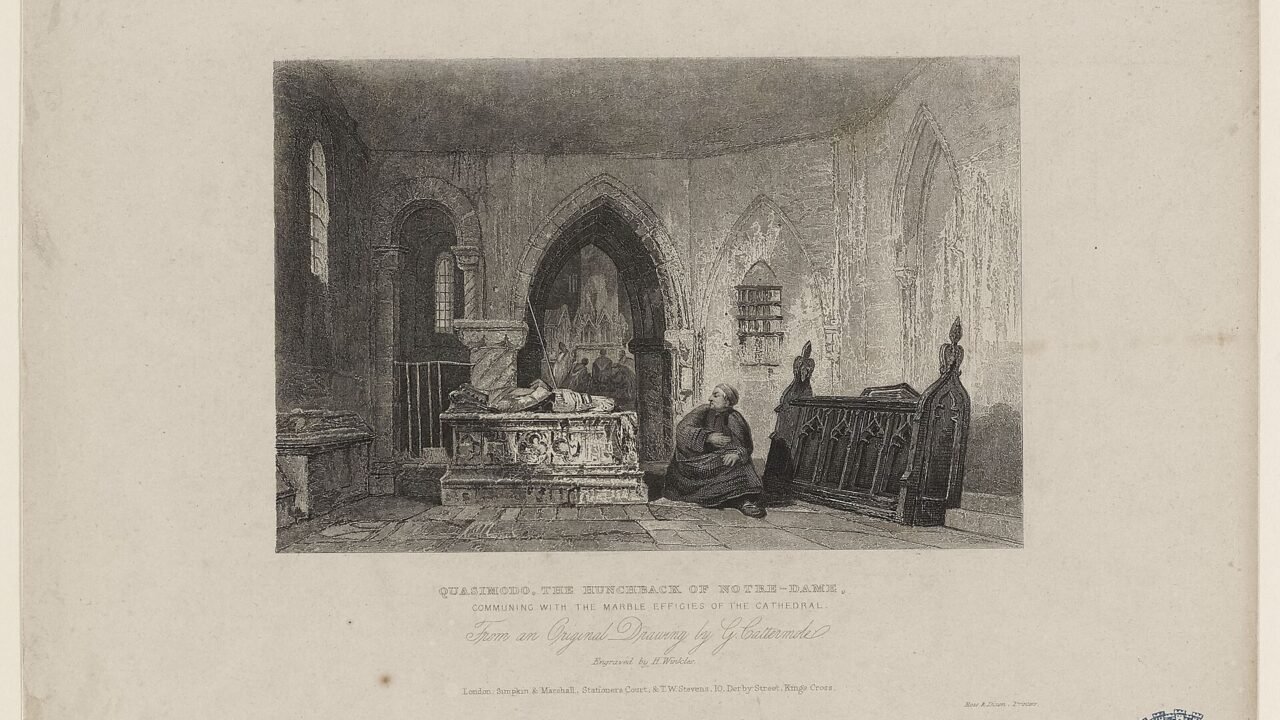
The Hunchback, Soul of Paris, a Netflix-presented prequel to Victor Hugo’s famous story, gives Quasimodo superhuman strength and places him in a tale of political repression, disease and scientific ambition. Variety’s review, published on Nov. 28, 2026, describes the film as a lavish but unnecessary origin story, with Vincent Cassel playing the hunchback and Jean-François Richet directing. [1]
The film is set before the events of Hugo’s novel and adds characters and story elements beyond that familiar tale, including a young street performer, Agnès, and a version of Les Misérables character Gavroche. The review’s key practical note for viewers is that this is a new, action-focused interpretation, not simply another adaptation of the original story. The review was published after an online screening on Nov. 27; the supplied information does not state a public release date or viewing price. [1]
What the film changes about Quasimodo
In the film’s opening, Quasimodo is held in a hospice during a cholera outbreak. A doctor, played by Benjamin Voisin, believes Quasimodo’s apparent resistance to the illness could help produce a vaccine. The hunchback escapes, using strength the film presents as superhuman, and finds refuge in Notre-Dame Cathedral. These details set up a conflict over whether his body should be treated as a scientific resource or whether he should be free. [1]
The story then introduces Agnès, played by Daphné Patakia. She is a street performer who becomes Quasimodo’s love interest, a relationship that the review says anticipates Esmeralda, the better-known figure in the Hunchback story. The doctor seeks Quasimodo with help from the corrupt police chief Coco-Lacour, played by Karim Leklou. Variety says that much of the film’s first hour gives limited attention to developing this pursuit, instead following Quasimodo as he protects Agnès and moves through the city. [1]
The most substantial departure is the superhero-like physical power. The film’s premise connects that power to the doctor’s interest in studying Quasimodo, while its fights draw on action-film conventions. Variety compares the idea to the comic-book worlds of X-Men and Captain America, and argues that the action feels familiar rather than fresh. That is the reviewer’s assessment, not a measure of audience response: the source provides no box-office results, viewer figures or audience polling. [1]
For readers deciding whether this version fits their expectations, the distinction is useful. Hugo’s 1831 novel, published as Notre-Dame de Paris, is the literary starting point for the character, while this film invents a prequel story and gives Quasimodo an added superhuman trait. [2] A reader can compare the new premise with Hugo’s text, which is available in English through Project Gutenberg. [3]
What Variety’s review says about the film’s execution
Variety’s Guy Lodge frames the film as a large-scale period adventure that uses familiar historical-drama imagery: sepia and brown tones, dusty interiors, sick patients, street children, laboratories, crowded streets and a formal dinner scene. The review says Richet’s approach presents Notre-Dame as a sacred symbol of Paris, with light and choir music giving the cathedral a heightened, almost angelic quality. [1]
That visual ambition sits alongside a political premise. The film’s opening narration describes a France where the king has recently introduced laws that restrict civil liberties, and presents Quasimodo as a representative of people who are scorned and oppressed. Lodge questions how convincingly the film follows through on that position. In the review’s view, its polished period spectacle and conventional set pieces soften the force of its stated concern for the poor. [1]
The review also points to a gap between the film’s cast and the depth of its characters. Cassel’s performance, Lodge writes, is constrained by the make-up and by limited characterization. Patakia is described as appealing and sensitive, but her role as Agnès is called thin. A scene in which the two characters bond on a cathedral rampart is singled out as an example of the film’s wider difficulty in building their relationship. [1]
Later, Quasimodo is captured and a skirmish spreads into a burning Paris. Variety says the battle scenes are carefully designed but lack energy. It also criticizes a slow-motion image of Agnès echoing Eugène Delacroix’s painting Liberty Leading the People, calling it an example of the film’s self-conscious visual style. These are critical judgments rather than production facts, but they help explain why the review sees the movie’s scale as more effective than its storytelling. [1]
Verified details at a glance
| Detail | What the source reports |
|---|---|
| Format and connection | A Netflix-presented prequel to the events of Hugo’s famous story. [1] |
| Director and lead | Jean-François Richet directs; Vincent Cassel plays Quasimodo. [1] |
| Runtime | 106 minutes. [1] |
| Review timing | Reviewed online Nov. 27, 2026; review published Nov. 28, 2026. [1] |
| Release date and price | Not provided in the supplied review information. [1] |
What viewers should know before looking for the film
The available information identifies the film as a Netflix presentation, but it does not confirm when it will appear in the service’s catalogue, which countries will carry it, or whether any theatrical release is planned. Viewers should check Netflix’s own catalogue or announcements for availability in their region rather than treating the review date as a release date. No subscription price, eligibility rule or ticket option is stated in the source. [1]
The review lists a 106-minute runtime, which may help viewers plan, and names the central cast as Cassel, Leklou, Patakia and Voisin. It also credits Noémie Lvovsky, Sébastien Pouderoux, Eli Nachmani and Alexis Rosenstiehl. The production information identifies Radar Films as the production company, Clément Miserez and Matthieu Warter as producers, and Edgar Marie and Éric Besnard as screenwriters, based on characters created by Hugo. [1]
For viewers choosing between the film and Hugo’s work, the central question is not whether the prequel reproduces the novel, but whether its new angle appeals. The film adds a scientific pursuit and superhuman strength, then frames Quasimodo as a defender of the vulnerable. Variety’s review suggests that audiences seeking a brisk, character-rich story may find the film’s slow build and familiar action less satisfying. Those conclusions belong to the reviewer; the source offers no audience survey or broader consensus. [1]
The confirmed next step for prospective viewers is to check Netflix for a regional listing, since the source gives no release date. The central point to keep in mind is that The Hunchback, Soul of Paris is presented as a prequel and a superhero-style reworking, not as a straightforward retelling of Hugo’s novel. [1]
Frequently Asked Questions (FAQ)
When does The Hunchback, Soul of Paris come out?
The supplied review information does not give a streaming or theatrical release date. It says the film was reviewed online on Nov. 27, 2026, and the review was published the next day. Check Netflix’s catalogue for confirmed regional availability. [1]
How long is the film, and who stars in it?
The listed runtime is 106 minutes. Vincent Cassel plays Quasimodo, with Karim Leklou, Daphné Patakia and Benjamin Voisin among the named cast. [1]
Is this a direct adaptation of Hugo’s novel?
No. The review describes it as a prequel to the novel’s events, with a new story, additional characters and a superhuman version of Quasimodo. Hugo’s Notre-Dame de Paris is the original literary work behind the character. [1] [2]
References
1. Lodge G. ‘The Hunchback, Soul of Paris’ Review: Quasimodo Gets an Origin Story, for Some Reason. Variety. 2026 Nov 28. Available from: https://variety.com/2026/film/reviews/the-hunchback-soul-of-paris-review-1236959927/. Accessed 2026 Nov 28.
2. Encyclopaedia Britannica. The Hunchback of Notre-Dame, novel by Hugo. Available from: https://www.britannica.com/topic/The-Hunchback-of-Notre-Dame-novel-by-Hugo. Accessed 2026 Nov 28.
3. Hugo V. Notre-Dame de Paris. Project Gutenberg. Available from: https://www.gutenberg.org/ebooks/2610. Accessed 2026 Nov 28.