
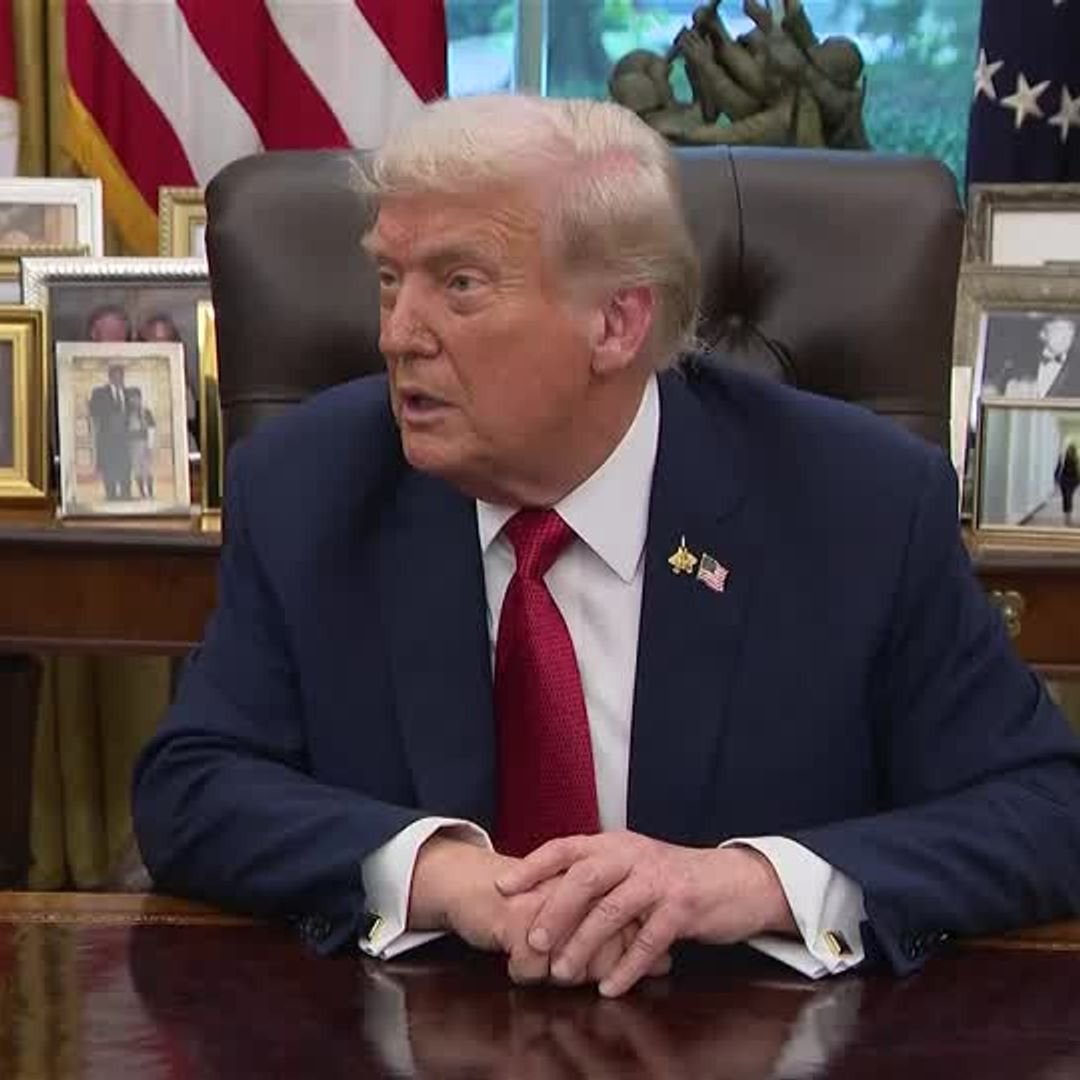
U.S. President Donald Trump has announced that he will “not allow” Israel to annex parts of the West Bank, a statement that marks one of the clearest lines his administration has drawn on Middle East policy since returning to office in 2025. Speaking in the Oval Office after consultations with Israeli Prime Minister Benjamin Netanyahu, Trump told reporters that “it’s time to stop” and suggested that any unilateral annexation could carry consequences for the U.S.–Israel relationship.
This intervention, coming just days after his high-profile speech at the 80th United Nations General Assembly in New York, adds a new layer of complexity to U.S. foreign policy in the Middle East. It also signals a recalibration in how Washington seeks to manage its closest regional ally and its role in the Israeli–Palestinian conflict.
Why Trump’s Statement Matters
Israel has long weighed annexation of portions of the West Bank, particularly settlement blocs regarded as strategically important. The move is fiercely opposed by Palestinians, most of the international community, and even some within Israel who see it as politically and diplomatically risky.
Trump’s warning shifts expectations. During his first term, his administration recognized Jerusalem as Israel’s capital and endorsed Israeli sovereignty over the Golan Heights, steps widely viewed as supportive of Israel’s territorial ambitions. By contrast, this new stance implies the U.S. is willing to apply pressure to restrain Netanyahu’s coalition, which includes pro-annexation voices.
For Palestinians, the message offers a rare diplomatic opening. It signals that Washington, while still firmly backing Israel’s security, is unwilling to give a blank check to annexation policies that would further complicate the prospects for a two-state solution.
Context of the Oval Office Remarks
Trump’s comment came amid a week of high-stakes diplomacy. At the UN General Assembly, he criticized what he called “global inaction” on conflicts in Gaza and Ukraine but insisted the U.S. would not abandon allies. His subsequent meeting with Netanyahu was expected to showcase unity. Instead, the public statement introduced a new friction point.
Reporters pressed Trump on whether the U.S. would consider sanctions or aid restrictions if Israel proceeded with annexation. He avoided specifics but repeated that “annexation is off the table under my watch.” This ambiguity reflects a deliberate balancing act: signaling limits while avoiding a direct confrontation with a key ally.
Reactions in Israel
Inside Israel, reactions have been divided. Members of Netanyahu’s governing coalition, particularly those aligned with far-right parties, immediately criticized Trump’s statement. Finance Minister Bezalel Smotrich called the U.S. stance “a mistake that ignores our historic rights to Judea and Samaria,” while others argued Israel should assert sovereignty regardless of Washington’s position.
Yet several senior Israeli security officials quietly welcomed Trump’s intervention. Former IDF Chief of Staff Gadi Eisenkot noted that annexation could “undermine coordination with international partners and inflame tensions on the ground.” For Netanyahu, the political calculus is now more complicated. He must weigh the demands of coalition partners against the risk of jeopardizing Israel’s most crucial foreign relationship.
Palestinian Leadership Response
For Palestinian Authority officials in Ramallah, Trump’s words were cautiously welcomed. A spokesperson for President Mahmoud Abbas said the statement “must be followed by concrete measures to restrain Israel,” urging Washington to revive negotiations based on the 1967 borders.
However, skepticism runs deep. Palestinian negotiators recall previous U.S. positions that shifted abruptly, especially under Trump’s earlier administration. “We have heard strong words before,” one official said, “but without sustained pressure, Israel will continue its expansion.”
International Reaction
The international community has been quick to react. The European Union praised Trump’s stance, calling it “an important step toward preserving the viability of a two-state solution.” UN Secretary-General António Guterres echoed the sentiment, emphasizing that annexation “would be a clear violation of international law.”
Regional powers offered mixed responses. Jordan, which has warned that annexation could destabilize its fragile peace treaty with Israel, welcomed the statement as a “necessary correction.” Meanwhile, Saudi Arabia issued a more cautious note, urging “all parties to avoid unilateral actions that undermine peace prospects.”
Russia and China, both keen to expand influence in the Middle East, framed Trump’s intervention as evidence of U.S. inconsistency. Moscow suggested that “Washington shifts its policies depending on domestic politics rather than international law,” while Beijing highlighted its own initiatives promoting multilateral dialogue.
Implications for U.S. Politics
Domestically, Trump’s move has sparked debate. Republican hawks criticized the president for appearing to constrain Israel, a stance that could alienate pro-Israel voters. Senator Tom Cotton called the remarks “a troubling departure from America’s unwavering support.”
Democrats, on the other hand, cautiously welcomed the message but demanded more. Senator Chris Murphy argued that “if the president is serious, he must pair words with enforceable conditions on U.S. aid.” Progressive groups also pushed for binding measures to prevent Israeli settlement expansion.
The broader political calculus is tied to Trump’s re-election strategy. By positioning himself as a dealmaker willing to say “no” even to allies, he may be seeking to appeal to centrist voters who are wary of endless foreign entanglements but still value U.S. leadership.
What This Means for the Peace Process
Trump’s words do not signal a revival of negotiations, at least not yet. The peace process remains moribund, with both Israeli and Palestinian leaderships deeply divided and trust in U.S. mediation low.
Still, the U.S. president’s statement creates a new baseline. It suggests that annexation is a red line Washington is willing to enforce, at least rhetorically. This could slow settlement expansion and preserve the diplomatic framework needed for future talks.
Analysts stress that preventing annexation does not equate to resolving the conflict. Palestinian displacement, settlement growth, and ongoing violence continue to fuel instability. Yet halting annexation may prevent conditions from deteriorating further.
A Shift from Trump’s First Term
Observers have noted the contrast with Trump’s earlier presidency. Then, his administration often aligned with Israel’s right-wing agenda, culminating in the 2020 “Peace to Prosperity” plan, which effectively endorsed Israeli control over large parts of the West Bank. That plan was rejected by Palestinians and quietly shelved.
This time, Trump appears more cautious. Analysts suggest two drivers: first, a desire to stabilize U.S. relations with Arab states that are key energy and security partners; second, a recognition that annexation could ignite unrest just as Washington seeks to reduce its direct footprint in the Middle East.
Possible Scenarios Ahead
Several scenarios now loom:
- Israel backs down: Netanyahu could quietly shelve annexation plans under U.S. pressure, preserving relations with Washington while maintaining settlement growth under the radar.
- Defiance from the coalition: Far-right members of Netanyahu’s government might push annexation bills anyway, daring Trump to act. This could trigger a diplomatic standoff and even lead to cuts in military or economic cooperation.
- A new U.S. initiative: Trump could use his stance as a springboard to propose a broader negotiation framework, seeking to reset U.S. credibility as a mediator. However, this would require significant political capital and buy-in from skeptical partners.
Each path carries risks. The next few months will test whether Trump’s declaration is a rhetorical warning or the start of a sustained diplomatic campaign.
Conclusion
Trump’s declaration that he will not allow Israel to annex the West Bank is more than a passing remark. It reflects a calculated shift in U.S. foreign policy, one that balances domestic politics, international law, and regional stability. While its long-term impact remains uncertain, the statement sets a new boundary line in a conflict where boundaries—literal and political—remain at the heart of the struggle.
For now, Washington has placed annexation squarely in the category of unacceptable actions. Whether this translates into concrete pressure or remains a symbolic gesture will determine its true significance for Israelis, Palestinians, and the broader Middle East.