
England’s selectors have taken a calculated gamble ahead of the 2025–26 Ashes, handing a recall to all-rounder Will Jacks while placing continued faith in captain Ben Stokes’ recovery from a shoulder injury. The 26-year-old, more widely recognised for his white-ball exploits, returns to the Test fold for the first time in nearly three years as part of a 16-man squad that will tour Australia for the five-Test series beginning November 21 in Perth.
The announcement underscores the fine balance England is striking between proven performers and calculated risks. Jacks, who has played only two Tests, is a surprise inclusion, while Stokes remains the central figure—though questions linger about whether he will be fit enough to bowl in the cauldron of an Ashes summer Down Under.
Stokes Remains the Focal Point
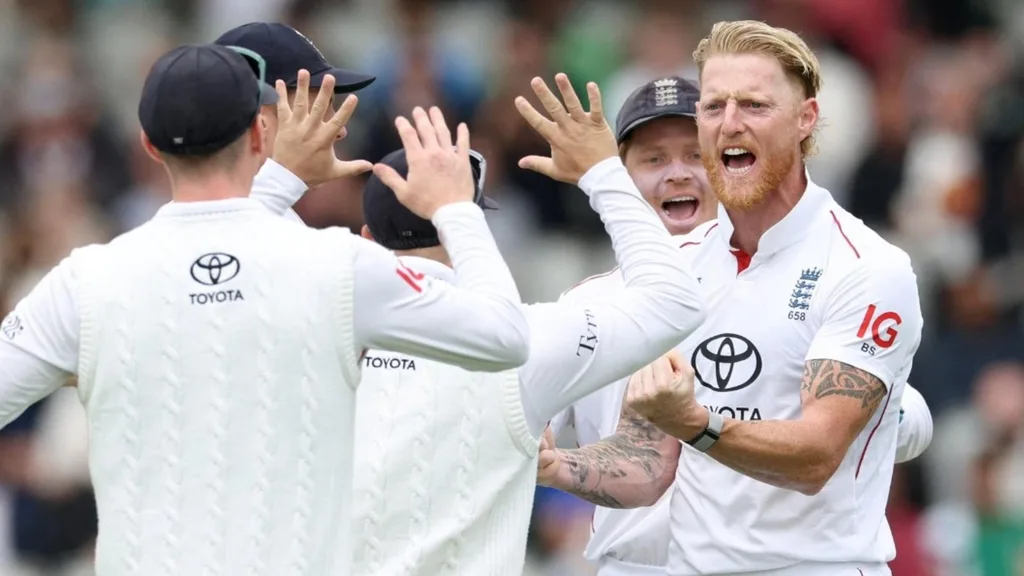
Ben Stokes’ health has been the foremost concern for England since he injured his shoulder during the India series earlier this year. He missed the final Test at the Oval as India squared the contest 2–2, and while his batting is expected to hold up, doubts persist about his ability to deliver overs with the ball. Selectors, however, insist he is “on track” to be available from the first Test in Perth.
The talismanic all-rounder’s role as captain, motivator, and match-winner makes his participation non-negotiable. Even if limited to batting duties, Stokes’ presence is viewed as essential in galvanising a side chasing its first Ashes series win in Australia since 2010–11. The challenge lies in how England structures its bowling resources if their captain cannot shoulder a full all-rounder’s workload.
Jacks’ Recall and Its Implications
Will Jacks’ recall has raised eyebrows given his Test record is limited to two caps earned in Pakistan almost three years ago. Traditionally seen as a white-ball hitter, Jacks’ first-class bowling average of 42.22 with 49 wickets hardly screams specialist spinner. Yet England’s selectors have opted to back his versatility, identifying him as a back-up option to Shoaib Bashir rather than recalling experienced names like Jack Leach, Liam Dawson, or Rehan Ahmed.
Jacks’ selection reflects England’s ongoing experiment with spin depth. With Bashir back from a finger injury, the inclusion of a part-time spinner who can offer middle-order runs suggests England’s strategy leans toward batting insurance rather than sheer bowling firepower. Jacks’ capacity to shift momentum with both bat and ball may have tipped the scales in his favour.
A Strengthened Pace Battery
The fast-bowling department shows signs of cautious optimism. Durham’s Mark Wood, sidelined for the entire domestic season with a knee problem, has returned. His raw pace remains a potential game-changer in Australian conditions, though fitness reliability is always in question.
Jofra Archer’s comeback story also continues. Having endured four years of injury setbacks, Archer has managed just two Tests since returning to the format. His pace and hostility could be decisive in Australian conditions, but management will have to juggle his workload carefully to prevent further breakdowns.
Matthew Potts, who last featured in December 2024, is another inclusion. Known for accuracy and seam movement, he bolsters depth, ensuring England has multiple seam-bowling options to cover the long tour. Gus Atkinson and Josh Tongue add further variety, creating a pool of quicks capable of adapting across five different venues.
Harry Brook as Vice-Captain
Harry Brook’s rise continues as he replaces Ollie Pope as vice-captain. The Yorkshire batter, already tipped as a future leader, has demonstrated temperament and consistency across formats. His appointment signals a generational shift in England’s leadership group, with selectors entrusting him to support Stokes in one of cricket’s most demanding roles.
Brook’s form with the bat has been prolific since his debut, and England hopes his aggressive yet composed style will translate into pivotal innings against Australia’s formidable attack. His promotion above Pope, who remains in the squad as a specialist batter, reflects England’s long-term vision for leadership succession.
Balancing Experience and Youth
The squad is a blend of veterans and emerging names. Joe Root anchors the batting order, continuing as England’s most reliable performer in overseas conditions. Zak Crawley and Ben Duckett will likely open, with Pope, Brook, and Stokes forming the middle order. Jamie Smith has been entrusted with wicketkeeping duties, offering both stability behind the stumps and runs down the order.
Jacob Bethell, another youthful pick, highlights England’s desire to blood emerging talent on the biggest stage. His inclusion, like Jacks’, underscores selectors’ willingness to take calculated risks to broaden the player pool for the future.
Historical Context and Recent Form
England’s Ashes record in Australia has been grim in recent decades. Their last series victory Down Under came in 2010–11, when Andrew Strauss led the team to a 3–1 triumph. Since then, Australia has dominated at home, exploiting conditions that magnify pace and bounce.
The most recent Ashes in 2023 ended 2–2 in England, a result widely seen as a moral victory for Stokes’ side after being 2–0 down. But replicating that competitiveness in Australia will require a near-flawless combination of fitness, form, and adaptability.
Venues and Schedule
The 2025–26 Ashes begins at Optus Stadium in Perth, renowned for its pace-friendly surface, before moving to the Gabba in Brisbane, the Adelaide Oval for the pink-ball Test, and then the marquee Boxing Day Test at the MCG. The series concludes at the SCG in Sydney. These venues traditionally favour Australia’s fast-bowling attack, meaning England’s selections will face immediate and sustained scrutiny.
White-Ball Tour of New Zealand as Preparation
Before heading to Australia, England will play three T20s and three ODIs in New Zealand. That tour provides crucial game time for players like Jacks, Brook, and Atkinson to fine-tune their skills, though the formats differ. The condensed schedule also tests squad depth and fitness management, with selectors needing to ensure the Ashes squad remains fresh for the marquee series.
Australia’s Likely Response
While England has confirmed their squad, Australia will soon announce theirs. Historically, the Australians rely on a core group of fast bowlers—Pat Cummins, Josh Hazlewood, and Mitchell Starc—supplemented by spinners like Nathan Lyon. England’s decision to go with a relatively untested spin back-up may embolden Australia to prepare fast, bouncy pitches, forcing the visitors to rely heavily on their seam attack.
Risks and Opportunities
The major risks for England lie in fitness and unproven spin depth. Stokes’ ability to bowl could dictate the balance of the XI. Archer and Wood, both explosive but injury-prone, must be managed carefully. Jacks and Bashir remain untested in the harshest environments for spin.
On the opportunity side, Brook, Crawley, and Root offer batting strength, while Archer and Wood’s pace could match Australia’s firepower if they remain fit. England’s aggressive mindset under Stokes may also unsettle Australia, particularly if they can seize early momentum in Perth or Brisbane.
England’s Ashes Squad in Full
- Ben Stokes (capt)
- Jofra Archer
- Gus Atkinson
- Shoaib Bashir
- Jacob Bethell
- Harry Brook (vice-capt)
- Brydon Carse
- Zak Crawley
- Ben Duckett
- Will Jacks
- Ollie Pope
- Matthew Potts
- Joe Root
- Jamie Smith (wkt)
- Josh Tongue
- Mark Wood
The Bigger Picture
England’s approach to this Ashes squad reflects a blend of pragmatism and boldness. They have leaned on seasoned performers like Root and Stokes while offering younger players the chance to prove themselves on cricket’s grandest stage. The inclusion of Will Jacks may appear a gamble, but it signals England’s willingness to think beyond the conventional.
The Ashes remain the ultimate test of nerve, resilience, and adaptability. For England, success will depend not just on the names on the team sheet but on whether those individuals can withstand the physical and psychological demands of an Australian summer. The road to reclaiming the urn Down Under is steep, but with a mixture of experience, raw pace, and emerging talent, England has given itself a fighting chance.