
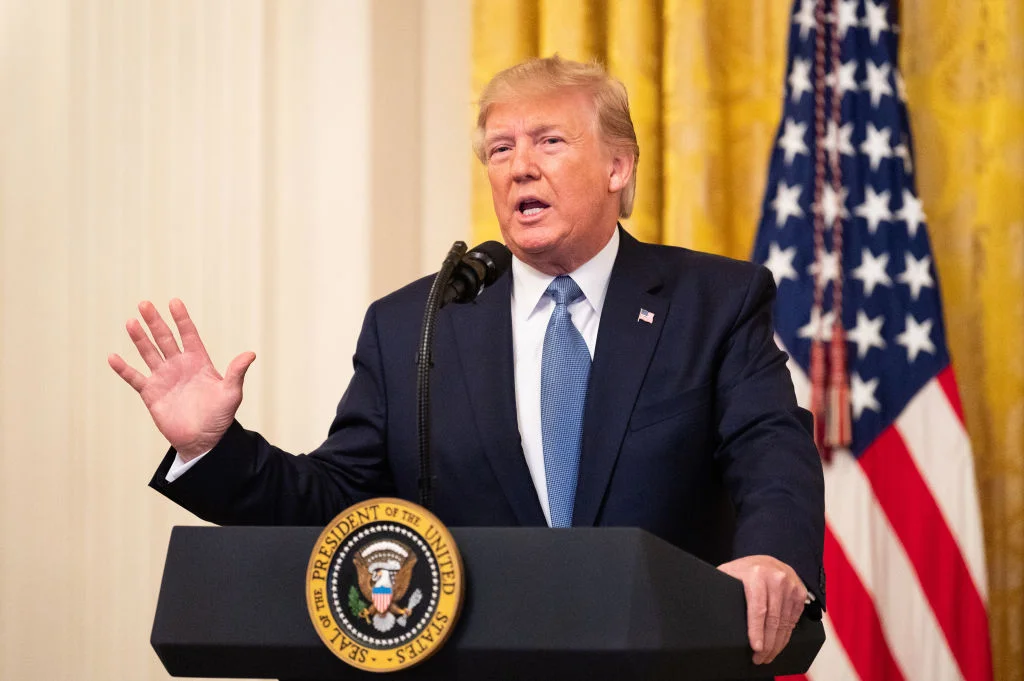
US President Donald Trump reignited controversy at the United Nations General Assembly this week, dismissing climate change as “the greatest con job ever” and doubling down on his administration’s commitment to fossil fuels. The nearly hour-long address delivered in New York drew sharp criticism from scientists, environmental advocates, and world leaders, particularly as it came just a day before UN Secretary-General António Guterres convened a major climate summit urging countries to accelerate emissions reductions.
Trump’s rhetoric was unapologetic. He mocked renewable energy as a “joke,” praised “clean, beautiful coal,” and boasted about his administration’s rollback of clean energy tax credits. The speech, laced with attacks on immigration, the UN’s credibility, and international climate agreements, underscored his alignment with the fossil fuel industry, which funneled hundreds of millions into his 2024 campaign.
Attacking the Foundations of Climate Science
Central to Trump’s speech was his rejection of decades of scientific consensus. “Climate change—it’s the greatest con job ever perpetrated on the world,” he declared, adding that the idea of a “carbon footprint” was invented by “people with evil intentions.”
While Trump’s remarks resonate with segments of his political base, the scientific record tells a different story. The Intergovernmental Panel on Climate Change (IPCC) has documented a clear link between human activity—especially fossil fuel combustion—and global warming, supported by extensive peer-reviewed data. Studies have shown global average surface temperatures rising by approximately 1.2°C since the pre-industrial era, with 2023 recorded as the hottest year globally, according to NASA and the National Oceanic and Atmospheric Administration (NOAA).
Trump’s dismissal of the “carbon footprint” concept also ignores its historical context. The term gained traction in the mid-2000s when oil major BP launched a public relations campaign encouraging individuals to calculate their personal emissions. Critics say the move shifted accountability away from corporations, which remain the primary drivers of greenhouse gas emissions.
Fossil Fuels at the Center of US Policy
Trump positioned fossil fuels as the backbone of American prosperity. He boasted that his administration had “unleashed massive efforts to drill for new oil, gas, and coal reserves,” rolling back regulations on drilling and mining. He further touted new trade deals embedding the sale of US liquefied natural gas (LNG) and threatened to penalize countries that comply with international carbon-pricing mechanisms for shipping.
In practice, these policies represent a reversal of prior climate efforts. During his first term, Trump withdrew the US from the Paris Agreement. In his second, Washington has not only abandoned emissions reduction goals but has actively obstructed multilateral climate initiatives.
The administration has also gone after renewable energy directly. Wind energy, in particular, has faced new permitting barriers. “They’re pathetic, they don’t work, they’re too expensive,” Trump said of wind projects. This stands in stark contrast to independent analyses: the International Energy Agency (IEA) reported in 2024 that solar and wind are now the cheapest sources of new power generation across much of the world.
A Global Split: China Pushes Green Exports
The timing of Trump’s attack was significant. On Wednesday, China is expected to announce updated climate commitments, including expanded exports of solar panels, batteries, and electric vehicles. This competing vision underscores the geopolitical dimension of climate policy: while the US under Trump embraces fossil fuels, China is positioning itself as the global supplier of green technology.
This divergence could shape trade and energy security for decades. Analysts at BloombergNEF project that the global clean energy market will exceed $2 trillion annually by 2030. By sidelining renewables, the US risks ceding economic leadership in sectors driving future growth.
Scientific and Advocacy Communities Respond
Experts reacted with alarm. “President Trump and his administration continue to spew lies and disinformation about climate science and the overwhelming benefits of clean energy, a grave disservice to the American people,” said Rachel Cleetus of the Union of Concerned Scientists. “Climate change is here, it’s costly, and people need real solutions, not propaganda designed to boost fossil fuel profits.”
The costs are already visible. The US National Centers for Environmental Information (NCEI) documented 28 billion-dollar weather disasters in 2023 alone, ranging from hurricanes and floods to wildfires, totaling $93 billion in damages. Insurance companies are raising premiums or pulling coverage entirely from high-risk areas, while communities face escalating recovery costs.
Political Calculus at Home
Domestically, Trump’s climate rhetoric reflects a political strategy. Fossil fuel industries remain deeply intertwined with US politics, particularly in states like Texas, West Virginia, and North Dakota. Campaign donations from oil and gas corporations surged during his 2024 re-election bid, fueling claims that policy is being crafted to serve donor interests.
Polling reveals a more complex picture. Surveys from Pew Research Center show that while Republican voters are more skeptical of climate science, two-thirds of Americans overall support transitioning to renewable energy. Younger voters, including those in conservative regions, show strong interest in clean energy jobs and sustainability initiatives.
This generational divide could reshape the political landscape. Analysts suggest that Trump’s hardline fossil fuel stance may energize his base but risks alienating suburban and younger voters who view climate change as an urgent issue.
International Fallout
World leaders watching Trump’s address were quick to note the contrast with US allies. The European Union remains committed to its Green Deal, which aims for net-zero emissions by 2050. Australia, Canada, and Japan continue to expand renewable portfolios, while the African Union has called for a “green industrial revolution.”
By rejecting climate cooperation, the US under Trump isolates itself in global negotiations. Observers warn this could weaken international institutions and undermine coordinated efforts to prevent global warming from exceeding 1.5°C above pre-industrial levels—a threshold scientists say is critical to avoiding catastrophic climate impacts.
The Stakes Ahead
The UN Secretary-General has urged countries to submit stronger emissions reduction targets by the end of 2025. Trump’s speech makes clear the US will not be among them. Instead, Washington appears poised to use its economic and political clout to defend fossil fuel markets and block international climate regulations.
For businesses, investors, and policymakers, the uncertainty poses risks. Global energy markets are shifting, with trillions flowing into clean technologies. US companies may face trade disadvantages as other nations adopt carbon tariffs and green industrial policies. Farmers, insurers, and municipalities are already grappling with the escalating costs of extreme weather.
Conclusion
Trump’s UN speech was more than a rejection of climate science—it was a declaration of ideological battle lines. By dismissing renewables, praising coal, and calling climate change a “con job,” he aligned US policy with fossil fuel interests at a moment when the rest of the world accelerates toward clean energy.
The fallout will be global. Economies may diverge, trade disputes could intensify, and the climate crisis will continue to escalate. As scientists warn of shrinking windows for action, the US now finds itself not only absent from the fight against climate change but actively obstructing it.
The question for America—and for the world—is whether short-term fossil fuel gains can outweigh the long-term consequences of inaction. For now, the evidence suggests the costs are mounting, and history may judge this moment as a turning point where politics triumphed over science.