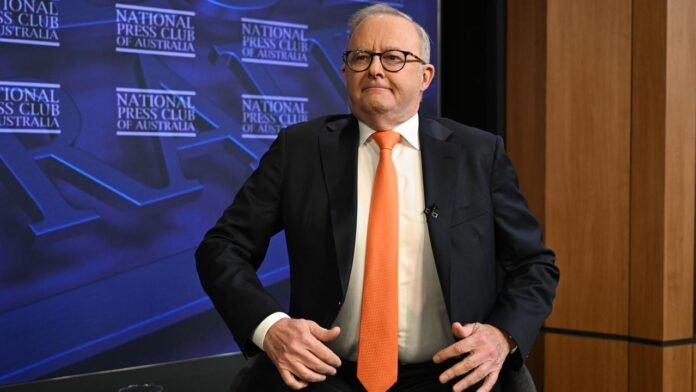
Anthony Albanese begins the week on the world stage, but his government is also bracing for a tough stretch of economic scrutiny at home. The prime minister’s packed itinerary takes him to the United States, the United Kingdom, and the United Arab Emirates, underscoring a dual reality: Australia’s global commitments are expanding while domestic challenges demand sharper answers.
The journey starts in New York, where Albanese is attending the United Nations General Assembly. His presence comes days after Australia joined dozens of countries in recognising Palestine as a sovereign state. The move has been welcomed by some international partners but sparked fierce debate at home. The UN itself is grappling with deeper questions. Donald Trump, back in power, is set to deliver a speech asserting what he calls a renewed unilateral U.S. authority. Observers expect Trump to highlight cuts to American contributions to the UN budget and his administration’s months-long failure to appoint an ambassador to the organisation. Albanese will be in the room for the address — a symbolic convergence that may or may not lead to direct engagement with Trump.
On Wednesday, Albanese will take the podium at the UN to reinforce Australia’s stance on conflict, peace, and international cooperation. Officials indicate he will also highlight the government’s new social media restrictions for teenagers, a policy already stirring debate at home. By the end of the week, he will hold talks with UK Prime Minister Keir Starmer before heading to the UAE to meet President Sheikh Mohammed bin Zayed Al Nahyan for free trade discussions. The trip will test the prime minister’s ability to balance diplomacy with the pressing demands of Australia’s domestic economy.
Economic Pressures Back Home
While Albanese is abroad, Australia’s economic managers will be under the spotlight. The Reserve Bank of Australia (RBA) is due to front the parliamentary economics committee. Their testimony is expected to focus on inflation trends, interest rate settings, and the resilience of households grappling with cost-of-living pressures.
On Wednesday, the Australian Bureau of Statistics (ABS) will release the monthly consumer price index, a figure watched closely by markets and policymakers. Thursday brings quarterly data on financial and capital accounts, providing insight into how international investment flows are shaping the economy. Together, these updates will test the government’s economic narrative: that while pressures remain high, the fundamentals of the economy are strong enough to support households and businesses.
Economists say the CPI release could shape expectations for the next RBA meeting. A higher-than-expected figure may reignite speculation about further rate rises, while a softer outcome could bolster the case for stability. Either way, the numbers will feed into a political conversation already dominated by questions about wages, affordability, and productivity.
Domestic Politics in Focus
Queensland Premier David Crisafulli will deliver a “state of the state” address on Tuesday. His government’s “safe and peaceful neighbourhoods” policy, announced last month, has been heavily criticised by housing advocates. Critics argue it risks evicting vulnerable tenants from public housing and shutting them out of future applications. Crisafulli’s speech will be closely monitored not only for its policy detail but also for how it sets the tone ahead of Queensland’s next election.
At the national level, the conversation on gender equality is set to gain momentum. On Wednesday, Sex Discrimination Commissioner Anna Cody will address the National Press Club, outlining her vision for advancing equity across workplaces, schools, and public life. Her speech is expected to emphasise structural reform, not just symbolic commitments, at a time when debates about workplace culture and pay equity continue to dominate headlines.
Foreign Policy Tests
Albanese’s tour comes at a sensitive moment in international relations. The recognition of Palestine by Australia aligns Canberra with a growing bloc of countries pressing for a two-state solution. Yet the decision also exposes the government to criticism from domestic opponents and questions about its consistency on human rights.
In the UK, Albanese’s meeting with Keir Starmer will cover security, trade, and climate cooperation. The two leaders share centre-left political leanings but also face similar pressures from restless electorates worried about economic stagnation. For Albanese, the UK leg offers a chance to strengthen ties in a post-Brexit environment where Australia is still negotiating the fine print of its trade arrangements.
In the UAE, trade talks will focus on energy, investment, and market access. The Gulf region is becoming increasingly significant for Australia’s export strategy, especially as demand shifts away from traditional partners. Any progress in Abu Dhabi could bolster Albanese’s claim that his government is broadening Australia’s economic base.
Global Stage, Local Stakes
The prime minister’s international focus will not shield him from domestic scrutiny. Critics have already warned that his absence during a week of key economic updates risks reinforcing perceptions that the government is more comfortable on the global stage than in addressing household pressures. Supporters counter that effective diplomacy underpins national prosperity, particularly as trade, security, and climate cooperation shape Australia’s long-term interests.
Political analysts say Albanese’s speeches this week will be judged on both content and tone. At the UN, reiterating support for a rules-based order will play well with allies, but the government will also be pressed on why it continues to avoid using the term “genocide” in relation to Israel’s actions in Gaza. At home, the unfolding economic narrative could shape not only policy settings but also the political climate heading into the next election cycle.
A Balancing Act Ahead
This week encapsulates the Albanese government’s central challenge: managing Australia’s role as a mid-sized power in an unstable world while keeping faith with voters squeezed by cost-of-living pressures.
Diplomatic wins abroad may not translate into political gains at home unless they are tied to tangible outcomes — new trade opportunities, stronger security ties, or visible progress on global challenges like climate change. On the other hand, weak economic figures or growing frustration with domestic policies could overshadow any successes on the international stage.
As Albanese travels from New York to London to Abu Dhabi, the story of his week will be told not only by the photos and speeches but also by the numbers released back in Canberra. Those numbers will help determine whether his government is keeping Australia on steady footing or leaving households to bear the weight of global uncertainty alone.
For Albanese, the stakes could not be clearer: prove that Australia can walk confidently on the world stage without stumbling at home.

