
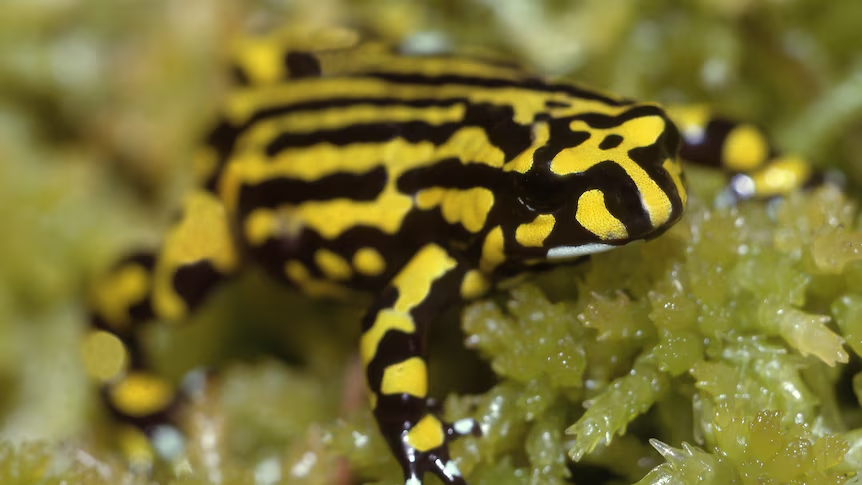
Australia’s wildlife is under siege. From chytrid fungus devastating frog populations to invasive cane toads pushing native predators like the northern quoll to the brink, the survival of many species hangs in the balance. Now, a Melbourne-based scientist is trialling a controversial but potentially groundbreaking solution: splicing alpaca genes into frogs. The goal is simple but profound—create resistance where nature has failed. Some hail it as a lifeline, while others warn of a “Frankenstein science” moment. The debate is fierce, the science is complex, and the stakes could not be higher.
The Killer Fungus Wiping Out Frogs
Chytridiomycosis, caused by the chytrid fungus Batrachochytrium dendrobatidis (Bd), is one of the deadliest wildlife diseases ever recorded. First detected in Australia in the late 1970s, it has since spread worldwide, responsible for the decline of over 500 amphibian species and the extinction of at least 90. In Australia alone, once-common frogs like the southern corroboree and gastric-brooding frogs have been driven to near or complete extinction.
The fungus attacks keratin in frogs’ skin. Because amphibians absorb water and electrolytes through their skin, infection disrupts essential bodily functions. Death often follows within weeks. Unlike most fungal infections, Bd thrives in cool climates, making Australia’s mountain streams and rainforests prime breeding grounds for the pathogen.
The Alpaca Antibody Solution
Here’s where alpacas enter the picture. Alpacas, like camels and llamas, produce a unique type of antibody called nanobodies. These antibodies are much smaller than conventional ones but equally powerful, able to target specific pathogens with precision. Scientists in Melbourne have genetically engineered frogs to express alpaca-derived nanobodies that bind to and neutralize the chytrid fungus before it can take hold.
The process involves inserting the gene coding for the alpaca nanobody into frog embryos. The hope is that future generations of frogs will naturally carry and pass on this resistance. It’s not about making frogs “half-alpaca,” but rather equipping them with a borrowed immune tool that evolution did not provide in time.
Potential to Save More Than Frogs
The project doesn’t stop at amphibians. Northern quolls, small carnivorous marsupials native to northern Australia, are also at risk—from cane toads. When quolls attempt to eat the toxic toads, they die from poisoning. Researchers are exploring whether genetic modification, possibly using the same antibody-based principles, could one day render quolls resistant to cane toad toxins. If successful, this could safeguard one of Australia’s most iconic predators.
The same science could extend to other species facing invasive diseases, from bats hit by white-nose syndrome to corals battling bleaching events.
The Frankenstein Dilemma
Critics, however, argue this is a dangerous path. Introducing foreign genes into native species raises fears of unintended consequences. What happens if genetically engineered frogs interbreed with wild populations? Could resistance genes spread in unpredictable ways? Will the ecological balance be altered in unforeseen directions?
Ethicists warn that once we begin altering native wildlife to save them, we may slide into a world where nature is increasingly synthetic. What if conservation becomes less about protecting ecosystems and more about engineering them?
Yet supporters counter that the crisis is already here. Without intervention, many species face extinction within decades. The choice, they argue, is not between “pure nature” and “genetically engineered nature,” but between extinction and survival.
Lessons From Previous Gene Interventions
This is not the first time genetic modification has been proposed as a conservation tool. In Hawaii, scientists released mosquitoes infected with Wolbachia bacteria to reduce populations carrying avian malaria, which was killing native birds. In the United States, CRISPR is being investigated to make coral more resilient to rising sea temperatures. And in New Zealand, gene drive technologies are under discussion to control invasive rats that devastate bird populations.
Each example reveals both promise and peril. Gene technologies can move faster than ecosystems, and unintended outcomes remain difficult to predict. Still, in cases where conventional conservation methods have failed, they may offer the only chance left.
The Regulatory and Public Trust Hurdle
For such projects to succeed, regulation and public trust will be critical. Australia’s Gene Technology Regulator would need to approve any release of genetically modified frogs. Rigorous environmental risk assessments would be mandatory. Indigenous groups, conservationists, and the broader public would need to be engaged transparently.
Surveys show the public is cautious but not outright hostile. When gene editing is framed as a way to save endangered species rather than to create commercial profit, acceptance levels rise. Clear communication, openness about risks, and evidence of ecological monitoring are key.
What Success Could Look Like
Imagine a decade from now: chytrid-resistant frogs repopulating streams where they had vanished, northern quolls hunting safely despite the presence of cane toads, and genetic tools stabilizing ecosystems once thought doomed. That vision is what motivates scientists to push the boundaries of biotechnology.
But success will not be measured only in scientific achievement. It will depend on whether society can navigate the ethical, ecological, and regulatory challenges that come with rewriting nature’s code.
Conclusion: Lifeline or Leap Too Far?
The alpaca-frog project is more than an experiment. It is a test case for how far humanity is willing to go in using genetic engineering to solve environmental crises of our own making. Some will always see it as meddling with forces we do not fully understand. Others will see it as a necessary adaptation in an age where climate change, invasive species, and pathogens collide to reshape ecosystems at breakneck speed.
One thing is certain: doing nothing is no longer an option. The frogs are dying now. The quolls are disappearing now. And for scientists in Melbourne and beyond, the real question is not whether to intervene, but how—and whether the rest of us are ready to live with the consequences.