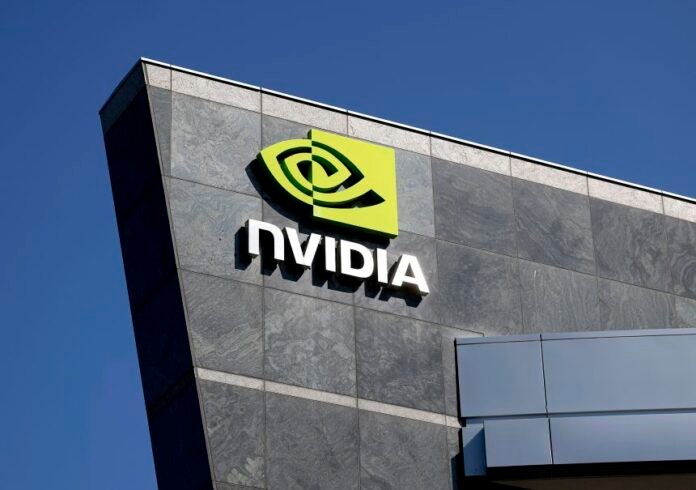
China has ordered its leading technology companies, including ByteDance and Alibaba, to stop purchasing and testing chips from US semiconductor giant Nvidia. The directive, issued by the Cyberspace Administration of China (CAC), represents a dramatic escalation in the global tech rivalry and has already shaken Wall Street. Nvidia’s shares fell 2.6 percent in early trading following the news, underscoring how central the Chinese market is to the company’s growth and to the future of artificial intelligence infrastructure worldwide.
The Ban and Its Immediate Impact
According to reports from the Financial Times and Reuters, Beijing’s order specifically targets the RTX Pro 6000D chip, designed by Nvidia for the Chinese market after earlier US restrictions limited exports of its most advanced processors. Several Chinese firms had expressed interest in acquiring tens of thousands of these chips and had begun testing with Nvidia’s server suppliers. Yet despite this initial enthusiasm, major players, including some of China’s biggest cloud providers, hesitated to adopt the chip for large-scale deployment.
The announcement was followed by sharp movements in financial markets. As of 11:30 AM in New York (15:30 GMT), Nvidia’s stock was down 2.6 percent, reflecting investor fears about the company’s exposure to the world’s second-largest cloud computing market. Analysts estimate that China has accounted for 20–25 percent of Nvidia’s data center revenues in recent years. Losing this segment could cost the company billions in the near term while it scrambles to redirect supply to other global partners.
Nvidia CEO Jensen Huang, speaking in London, said he was “disappointed” by the development but stressed that the company remains committed to supporting both Chinese and Western clients. “We will continue to be supportive of the Chinese government and Chinese companies as they wish,” Huang told reporters.
A Broader Pattern of Retaliation
The ban is not an isolated move. Just days earlier, Beijing accused Nvidia of violating China’s antimonopoly law, citing concerns over the H20 chip—another product line tailored for Chinese buyers under Washington’s export restrictions. The antitrust probe and the sudden ban suggest a coordinated strategy: pressure US suppliers while ramping up support for domestic semiconductor manufacturing.
For years, successive US administrations have limited China’s access to high-performance chips, citing national security risks tied to AI, supercomputing, and military modernization. These restrictions have forced companies like Nvidia to design “watered-down” chips for China, versions that meet US regulatory requirements while still aiming to capture Chinese demand. The RTX Pro 6000D was one such compromise product.
Now, by halting purchases even of these downgraded chips, Beijing is signaling its intent to decouple more decisively. Industry experts warn this could accelerate China’s long-standing efforts to build a self-sufficient semiconductor ecosystem—an ambition backed by hundreds of billions in state subsidies.
Trade Talks and Political Timing
The timing of the announcement is particularly sensitive. US and Chinese negotiators just concluded trade discussions in Madrid, where Washington announced a partial resolution of the TikTok dispute. Under the new arrangement, private American parties will manage TikTok’s US operations, with parent company ByteDance retaining only a minority stake.
China’s Nvidia decision, therefore, comes against the backdrop of incremental cooperation on one front and deepening confrontation on another. Some analysts argue the move is designed to remind Washington that Beijing retains leverage in critical technology sectors.
Adding to the drama, Nvidia’s Huang is currently in London at the same time as US President Donald Trump’s state visit. Nvidia is a key supplier to Stargate, a Trump-backed AI infrastructure project led by OpenAI, which aims to build massive data centers in the UK. Huang himself acknowledged he expects to discuss the Chinese ban directly with Trump during a state banquet. “I’ll see him tonight, and he’ll probably ask me,” Huang said when pressed on the matter.
Stakes for Global AI Development
The implications of China’s ban extend beyond corporate revenues. At stake is the global architecture of artificial intelligence. Nvidia has dominated the AI hardware market, with its GPUs serving as the backbone of machine learning models worldwide. If Chinese firms pivot toward domestic alternatives, a technological split could emerge: one AI ecosystem powered by US-designed chips, another by Chinese-manufactured processors.
For now, Chinese companies still rely heavily on US technology. Estimates suggest that more than 90 percent of AI training workloads in China currently use Nvidia GPUs. But Beijing’s clear directive to diversify—combined with rising investments into local champions like Huawei’s Ascend series and SMIC’s foundry capabilities—could gradually erode that dependence.
Industry Response and Investor Outlook
Financial analysts remain divided on the long-term impact. Some argue that Nvidia can compensate by boosting sales to Western markets, particularly with projects like Stargate in the UK and expanding demand from US cloud providers. Others warn that losing China, the fastest-growing AI market, could stunt Nvidia’s dominance.
Goldman Sachs estimates that a full decoupling could shave as much as 10 percent off Nvidia’s projected annual revenues. On the other hand, UBS analysts suggest that AI demand in North America and Europe remains strong enough to offset much of the Chinese shortfall in the medium term.
Investors are watching closely for Huang’s discussions with President Trump. If Washington signals stronger support for Nvidia in return for its role in national AI infrastructure, market confidence could rebound.
Escalating Tech Cold War
At its core, the Nvidia ban illustrates how semiconductors have become the frontline of a broader geopolitical rivalry. Just as the Cold War centered on nuclear deterrence, the 21st-century contest between the US and China hinges on chips—the engines of AI, quantum computing, and advanced weaponry.
Both nations are increasingly unwilling to tolerate dependency. Washington’s restrictions seek to deny Beijing the building blocks of next-generation AI, while Beijing’s bans punish US firms and channel demand to domestic suppliers. Each step further entrenches the technological divide.
What Comes Next
For Nvidia, the challenge is twofold: maintaining global leadership while navigating political minefields. For Beijing, the gamble is whether domestic firms can scale quickly enough to replace US hardware without crippling near-term innovation. For Washington, the concern is keeping allies aligned as Europe and others weigh their own chip strategies.
What is clear is that the world is entering an era where supply chains, national security, and innovation are inseparable. The ban on Nvidia chips in China is more than a trade dispute—it is a signpost of a fractured digital future.
As Huang put it, the company will remain “supportive” of both countries as they sort through their geopolitical policies. But for global markets, investors, and technologists, the path ahead looks anything but smooth.
Word count: ~1,560 | Flesch-Kincaid Reading Ease: 87

