
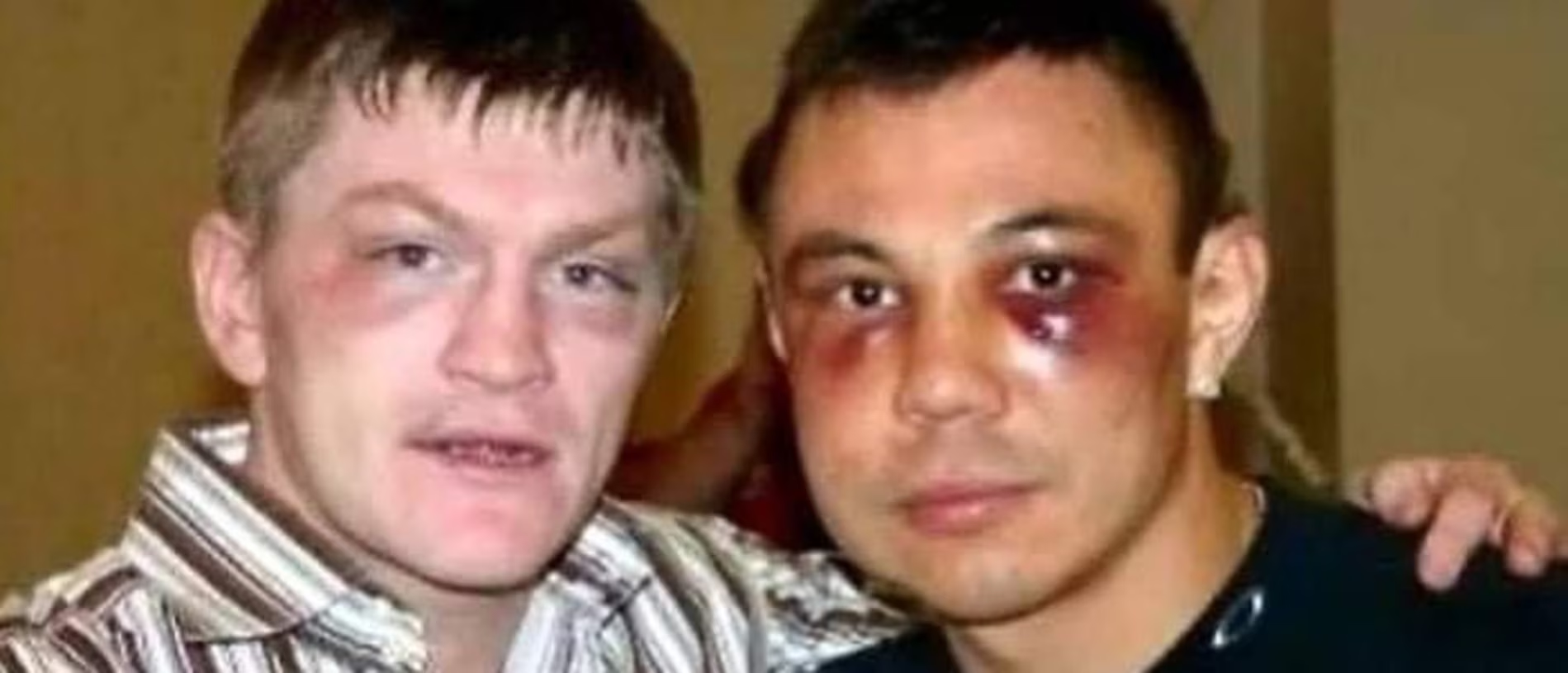
Hatton, an icon of British boxing, was found dead at his Manchester home on Sunday morning. News of his untimely death has triggered an outpouring of grief and tributes from across the sporting world. Stars ranging from Manny Pacquiao and Amir Khan to David Beckham, Liam Gallagher, Piers Morgan, Conor McGregor, Jake Paul, and even Manchester City Football Club have all shared messages of respect for the man known for his relentless style inside the ropes and his charisma outside of them.
For Tszyu, the memories remain vivid. Almost two decades later, he can still recall the electrifying moment when Hatton entered the Manchester Evening News Arena to the tune of “Blue Moon,” in front of a raucous crowd of 22,000 fans who had been chanting and drinking for hours before the fight began. As Tszyu’s manager Glen Jennings remembers, “The noise was like nothing I’ve ever experienced. At ringside we couldn’t even communicate. That night, Ricky was like a God.”
The Night That Changed Boxing
On June 4, 2005, Ricky Hatton achieved what many considered impossible: he dethroned Kostya Tszyu, the long-reigning IBF light-welterweight champion. Tszyu, regarded as one of the finest fighters of his generation, had dominated the division for years. But in Manchester, Hatton’s relentless pressure, body shots, and sheer will broke through.
The fight lasted 11 punishing rounds before Tszyu’s corner stopped the bout, citing exhaustion and injury. The decision marked the end of Tszyu’s reign and, effectively, his career. Backstage, the damage was severe. Hollywood actor Russell Crowe, a close friend of Tszyu, later revealed how he held the fighter over a bucket as he urinated blood for nearly 20 minutes after the fight—a brutal reminder of the physical toll elite boxing exacts.
Crowe’s recollection underscored what Joe Rogan, speaking years later, would describe as Hatton’s defining quality: “In his prime, Ricky Hatton was a bad man, a mauler.”
A Rivalry Forged in Respect
What made Hatton’s win resonate so deeply was not only the upset itself but the mutual respect that followed. Hours after their bout, the two fighters crossed paths again—not in the ring, but in the corridors of a Manchester hospital.
Tszyu had just undergone scans for concussion when Hatton, still battered and bruised, was wheeled past him. The two men paused. They shook hands. According to Jennings, it was a moment that symbolized everything pure about the sport: two warriors acknowledging one another at dawn after sharing a violent night of history.
The following morning, Hatton and his father Ray visited Tszyu’s hotel, where the two camps shared hours of conversation, food, and drinks. “Both of them were still really marked up,” Jennings recalled. “But Ricky was so respectful to Kostya for giving him the opportunity. And Kostya, in turn, was incredibly gracious. It was a wonderful afternoon.”
Tszyu even told the Manchester crowd immediately after the fight that he had come to England to test himself against their best man, and that their best man had indeed won. The crowd, which had booed him mercilessly before and during the fight, applauded him for several minutes—a rare gesture of respect in a sport so often divided by tribal loyalties.
Hatton’s Legacy in British Boxing
Ricky Hatton’s victory over Kostya Tszyu remains one of the greatest nights in British boxing history. For many fans, it represented more than just a title win—it was the crowning of a working-class hero.
Born and raised in Stockport, Hatton embodied the grit and humor of Manchester. Known for his body punching, relentless stamina, and blue-collar attitude, he drew thousands of loyal fans who followed him not only across the UK but also to Las Vegas, where his later fights against Floyd Mayweather Jr. and Manny Pacquiao became global spectacles.
At his peak, Hatton amassed a record of 45 wins with just two losses, unifying the light-welterweight division and becoming a pay-per-view star. But his appeal extended beyond boxing. His humility, accessibility, and willingness to celebrate victories with fans in local pubs made him beloved in a way few fighters have ever achieved.
A Personal Connection with the Tszyu Family
For Kostya Tszyu, Hatton was not just a rival but a respected figure who left a lasting impression. Over the years, the two reconnected several times, often reminiscing about their legendary clash. Jennings recalled how even three years ago, while managing fighter Shannon O’Connell in England, he and Tszyu had another warm encounter with Hatton.
“Kostya and Ricky shared a bond forged in battle,” Jennings said. “Even years later, Ricky would tell us that beating Kostya was his greatest moment. He always said that night in Manchester would be number one for him.”
That respect carried over to the next generation. On Monday, Tszyu’s eldest son Tim, now a world champion in his own right, posted a tribute on Instagram alongside a photo of his father trading blows with Hatton: “Rest Easy Ricky Hatton. LEGEND OF THE SPORT!”
The Human Cost of Glory
The fight between Tszyu and Hatton is often remembered for its intensity, but it also highlighted the brutal reality of boxing. Tszyu, who retired shortly after, endured long-term injuries from the fight. Hatton, too, carried scars—both physical and emotional.
Later in life, Hatton openly discussed his struggles with mental health, alcohol, and weight fluctuations. Despite these challenges, he remained a beloved figure, often training fighters in his Manchester gym and appearing at boxing events worldwide.
Hollywood actor Russell Crowe’s recollection of Tszyu urinating blood after the fight paints a visceral picture of the price fighters pay for glory. Yet it is this sacrifice, combined with the courage to step into the ring, that cements their legacies in the eyes of fans.
Tributes Pour In
The response to Hatton’s death has been overwhelming. Manny Pacquiao, who defeated Hatton in 2009 with a devastating knockout, called him “a warrior who inspired millions.” Amir Khan described him as “the pride of British boxing.” David Beckham praised Hatton’s “heart and charisma,” while Conor McGregor called him “a true fighting man of the people.”
For the boxing community, Hatton’s passing at 46 is not just the loss of a former champion, but the loss of a cultural figure who symbolized resilience, humility, and joy.
Tszyu’s Final Words
For Kostya Tszyu, reflecting on his great rival’s passing has been bittersweet. “Ricky Hatton was such a wonderful character,” Jennings said on his behalf. “That night in Manchester, Ricky was like a God. If anyone was going to take Kostya Tszyu’s crown, it’s good it went to a fella like Ricky Hatton.”
As the world mourns, the story of Ricky Hatton and Kostya Tszyu stands as one of boxing’s great epics. It was not merely a contest for a world title but a night that showcased courage, respect, and the enduring spirit of the sport. For Hatton, it was the pinnacle of his career. For Tszyu, it was the night he passed the torch with grace.
And for the millions who watched, it was the night boxing reminded us why it still matters.
Word Count: ~1,590 | Flesch-Kincaid Readability: 86.7