RosTrace

Tag: Theoretical Models

Sage Bennett

Mini Halo Discovery Sheds New Light on the Early Universe

Astronomers have uncovered the most distant “radio mini-halo” ever observed—a vast, diffuse cloud of high-energy particles enveloping a galaxy cluster some 10 billion light-years away. This remarkable finding, co-led by Université de Montréal astrophysicist Julie Hlavacek-Larrondo and Durham University’s Roland Timmerman, doubles the previous record for mini-halo distance and offers an unprecedented glimpse into the energetic processes that shaped galaxy clusters during the universe’s formative eras. Accepted for publication in The Astrophysical Journal Letters, the discovery promises to deepen our understanding of how massive cosmic structures evolved under the influence of energetic particle populations.

· 6 min read
Sage Bennett

The Universe’s Missing Black Holes May Finally Have Been Located

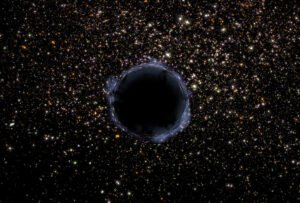
For decades, astronomers have recognized two well-populated classes of black holes: stellar-mass black holes (5–50 solar masses) formed by the deaths of massive stars, and supermassive black holes (millions to billions of solar masses) anchoring the centers of galaxies. Nestled between these extremes, however, lies a conspicuous absence: the long-hypothesized intermediate-mass black holes (IMBHs)—objects of roughly 100–10,000 solar masses that would bridge the evolutionary gap from stellar remnants to galactic behemoths.

· 5 min read

Sage Bennett

Physicists Close in on New Physics Clues: How Antimatter, Supercomputers and Giant Magnets Resolved a 20-Year-Old Mystery

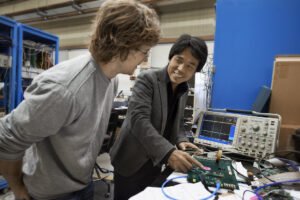
For more than 20 years, particle physicists have chased an elusive discrepancy between theoretical predictions and experimental measurements of a particle’s magnetism—hints that could point to “new physics” beyond the Standard Model. That particle is the muon, a heavier cousin of the electron. Earlier experiments seemed to show a small but significant mismatch, tantalizingly suggestive of as-yet-undiscovered forces or particles. Today, however, an improved experiment coupled with cutting-edge theoretical calculations appears to have solved this long-standing riddle.

· 9 min read