RosTrace

Tag: Space Telescopes

Sage Bennett

The Universe’s Missing Black Holes May Finally Have Been Located

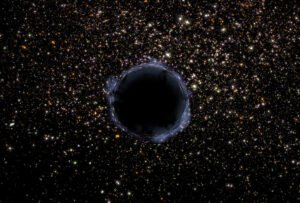
For decades, astronomers have recognized two well-populated classes of black holes: stellar-mass black holes (5–50 solar masses) formed by the deaths of massive stars, and supermassive black holes (millions to billions of solar masses) anchoring the centers of galaxies. Nestled between these extremes, however, lies a conspicuous absence: the long-hypothesized intermediate-mass black holes (IMBHs)—objects of roughly 100–10,000 solar masses that would bridge the evolutionary gap from stellar remnants to galactic behemoths.

· 5 min read
Sage Bennett

Webb Telescope Reveals Hidden Structures in the Sombrero Galaxy

The James Webb Space Telescope (Webb) has once again demonstrated its transformative power by capturing a near-infrared portrait of the Sombrero galaxy (Messier 104). Located approximately 30 million light-years away at the edge of the Virgo Cluster, the Sombrero galaxy’s distinctive shape—an enormous bulge of stars surrounded by a thin, dark dust lane—has long captivated astronomers and stargazers alike. While Hubble’s visible-light images revealed the galaxy’s sweeping, edge-on disk and luminous central bulge, and Webb’s mid-infrared observations in late 2024 showcased the dust glowing warmly, this latest near-infrared image provides fresh insights into the interplay between stars and dust. By examining the galaxy at multiple wavelengths—visible, near-infrared, and mid-infrared—researchers can piece together a more complete narrative of the Sombrero’s formation, evolution, and turbulent history.

· 13 min read

Sage Bennett

Rice Scholars Reveal Life Signs on Exoplanet K2-18b

Following news that astronomers have detected a potential life signature from K2-18b, a planet 120 light-years away, Rice University's Luis Campos and Scott Solomon are offering historical and scientific perspectives on what the discovery could mean.

· 2 min read