RosTrace

Tag: risk assessment

Maya Winters

Texas Floods Reveal Limitations of Disaster Forecasting Under Climate Crisis

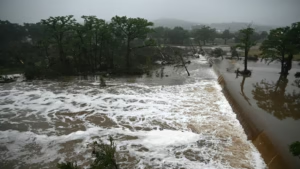
Central Texas, known as "flash flood alley," faced another disaster over the Independence Day weekend. Torrential rains from Tropical Storm Barry dumped up to 14 inches of rain in under six hours, flooding the region's steep creeks and rivers. In Kerr County, at least 69 people died, including many children from a riverside summer camp, and hundreds were rescued from the floodwaters. Rescue teams are still searching for over a dozen missing people. This repeated flooding highlights the increasing difficulty of predicting and preparing for extreme weather in a warming world.

· 5 min read
Robin Hayes

Food Insecurity Tied to Higher Death Risk in Cancer Survivors

Cancer survivors lacking access to nutritious food face higher death rates than those with secure food access, reveals new research from the University of Pennsylvania Perelman School of Medicine. Published in JAMA Health Forum, this study is the first large-scale analysis connecting food insecurity to survival outcomes in cancer patients. With nearly 18 million cancer survivors in the U.S., these findings highlight the critical need to include social health factors, especially access to healthy food, in cancer care.

· 4 min read

Robin Hayes

New European Guidance Urges Targeted Antithrombotic Strategies for Chronic Limb-Threatening Ischemia Patients

A Critical Unmet Need in Peripheral Artery Disease Chronic limb-threatening ischemia (CLTI) represents the most severe manifestation of peripheral artery disease (PAD), affecting tens of thousands of Europeans each year. Characterized by rest pain, non-healing ulcers and gangrene in the lower extremities, CLTI carries exceptionally high rates of major adverse limb events (MALE) and major adverse cardiovascular events (MACE). Despite advances in revascularization techniques—ranging from minimally invasive angioplasty to open bypass surgery—post-procedural thrombosis continues to undermine patient outcomes. Until now, clinicians have extrapolated antithrombotic regimens from broader PAD guidelines, but the specific vulnerabilities of CLTI patients have remained unaddressed in a dedicated statement.

· 4 min read

Robin Hayes

Kennedy’s HHS Sent Congress ‘Junk Science’ to Defend COVID-19 Vaccine Rollback, Experts Say

A document circulated by the U.S. Department of Health and Human Services (HHS) to justify Secretary Robert F. Kennedy Jr.’s abrupt policy change on COVID-19 vaccines has drawn fierce criticism from leading medical experts. Titled “COVID Recommendation FAQ,” the memo was sent to members of Congress who questioned Kennedy’s decision to remove routine recommendations for pregnant women and healthy children—an action that bypassed the Centers for Disease Control and Prevention’s (CDC) established review process. According to multiple specialists, the HHS briefing misrepresents legitimate peer-reviewed research, cites unpublished or disputed studies, and omits key evidence demonstrating vaccine safety, amounting to what one prominent OB-GYN professor labeled “willful medical disinformation.”

· 6 min read

Sloane Powers

Netanyahu’s Long-Awaited Strikes on Iran’s Nuclear Sites: Ambition Meets Risk

For decades, Israeli Prime Minister Benjamin Netanyahu has openly vowed to thwart Iran’s nuclear ambitions by any means necessary. Those long-held threats culminated this week in “Operation Rising Lion,” a series of coordinated airstrikes against Iranian military and nuclear infrastructure. While Netanyahu’s carefully cultivated reputation as “Mr. Security” may have compelled him to pull the trigger, the strikes carry profound strategic, diplomatic, and domestic risks. As rescuers sift through the rubble in Tehran and world leaders scramble for a response, the true costs of confronting Iran head-on are only beginning to surface.

· 7 min read

Robin Hayes

Young Cannabis Users Face Higher Heart Attack Risk

Two recent studies have raised serious concerns about the cardiovascular health of young cannabis users. Despite the widespread legalization and increasing use of cannabis, emerging evidence suggests that even otherwise healthy individuals under 50 who consume cannabis may face a significantly higher risk of heart attacks compared to non-users. One large-scale retrospective study found that cannabis users were more than six times as likely to experience a heart attack, while a meta-analysis of 12 previous studies indicated a 50% increased risk.

· 5 min read

Ash Cooper

Red vs. White Wine: New Study Reveals Little Difference in Overall Cancer Risk

A recent meta-analysis conducted by researchers in the United States has shed light on the relationship between wine consumption and cancer risk, particularly focusing on red and white varieties. The study encompassed a comprehensive review of 42 observational studies, which collectively included a significant number of participants across various demographics and geographic locations. This extensive dataset served as the foundation for the researchers' analysis and conclusions.

· 5 min read

Maya Winters

The Connection Between California Wildfires and Power Lines: A Closer Look

This article explores the impact of power lines on the increasing frequency and severity of wildfires in California, linking electrical infrastructure to devastating incidents like the Camp Fire and the recent Eaton Fire. It discusses the historical context, legal implications for utility companies, and the need for enhanced safety measures and community preparedness. With climate change amplifying fire threats, it emphasizes the crucial role that utility companies must play in adopting advanced technologies and ensuring better infrastructure maintenance to safeguard vulnerable communities.

· 5 min read

Sage Bennett

Unraveling the Secrets of Yellowstone: Why the Supervolcano is Not Primed to Erupt

Discover the complex volcanic history of Yellowstone National Park, home to one of the world’s largest supervolcanoes. This blog delves into the park's significant supereruptions, current research by geophysicists on magma reservoirs, and the dynamics affecting volcanic activity. Learn about the unique geological features shaped by historical events and the importance of monitoring to ensure public safety. Understand how scientific insights help mitigate fears and prepare communities for potential volcanic threats.

· 5 min read