RosTrace

Tag: paleoanthropology

Sage Bennett

Mammal Ancestors Walk Upright Later Than We Thought: New Study Reveals Complex Evolutionary Path

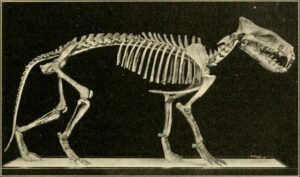
A groundbreaking new analysis of fossil forelimb bones has upended longstanding ideas about when and how the ancestors of mammals shifted from sprawling, reptile-like locomotion to the upright gait characteristic of modern mammals. Published today in PLOS Biology, the study led by Dr. Robert Brocklehurst and Professor Stephanie Pierce of Harvard University shows that the evolution of parasagittal (upright) posture was neither a simple, linear progression nor an early adaptation—but rather a late, dynamic radiation of diverse postural strategies among stem mammals.

· 4 min read
Sage Bennett

Harbin Skull Discovery Links Denisovans to Northeast China Landscape

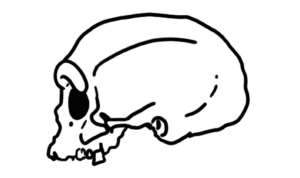
A nearly complete hominin skull unearthed near Harbin in Northeast China has been confirmed as belonging to the Denisovan lineage. Using groundbreaking palaeoproteomic and ancient DNA techniques, researchers from the Chinese Academy of Sciences and Hebei GEO University have dated the specimen to at least 146,000 years ago. This finding dramatically expands our understanding of Denisovan range and morphology, offering the most complete glimpse yet of this mysterious human cousin.

· 4 min read

Sage Bennett

Lost World Emerges Beneath the Waves: Underwater Fossils Uncover Ancient Human Habitat

In an astonishing turn of events, construction work on a new artificial island off the coast of Java, Indonesia, has dredged up a treasure trove of ancient fossils—more than 6,700 specimens in total—from a sunken landscape once known as Sundaland. Among the abundant fish, reptile, and mammal remains, two hominin skull fragments have emerged as the first evidence of Homo erectus beyond Java, reshaping our understanding of early human dispersal in Southeast Asia.

· 4 min read

Sage Bennett

‘Red Princess’: Mysterious Skeleton With Dyed Teeth Is a Scientific First

A recently unearthed skeleton from an ancient Silk Road cemetery in Xinjiang, China, has captivated archaeologists worldwide with its unique and startling feature: the intentional staining of teeth with cinnabar. This brilliant red pigment—an unusual and toxic form of mercury sulfide—has never before been found deliberately applied to human remains, making the “Red Princess” a scientific first that challenges our understanding of ancient cultural practices and trade networks.

· 6 min read

Sage Bennett

Unveiling Homo Juluensis: A New Chapter in Human Evolution

The discovery of Homo juluensis offers groundbreaking insights into human evolution, revealing complex interrelationships among early hominins. Research led by the University of Hawaii highlights the species' unique adaptations, advanced tool-making, and social structures. This find prompts a reevaluation of migration theories and underscores the importance of ongoing research in understanding our lineage. Explore the implications of this newly identified species and its relevance to modern humans.

· 5 min read