RosTrace

Tag: environmental monitoring

Sage Bennett

NASA’s Arcstone Mission to Revolutionize Earth-Observing Satellite Calibration

NASA is set to revolutionize space-based Earth observations with the Arcstone mission, launching in June as a CubeSat rideshare. Arcstone will be the first spacecraft dedicated to measuring lunar spectral reflectance from orbit. By using the Moon as a stable calibration source, scientists aim to create a universal, SI-traceable standard for Earth-viewing instruments. This innovative method promises to improve data quality and consistency across governmental and commercial satellite platforms.

· 5 min read

Sage Bennett

Fossil Corals Reveal Alarming Potential for Accelerated Sea-Level Rise

A landmark study published June 13 in Science Advances warns that future sea-level rise may occur more abruptly and reach greater heights than previously anticipated. Led by Professor Andrea Dutton of the University of Wisconsin–Madison and doctoral candidate Karen Vyverberg of the University of Florida, researchers analyzed fossil corals from the Seychelles islands to reconstruct precise sea-level changes during the Last Interglacial period—when global temperatures were comparable to today’s. Their findings underscore the potential for rapid, multi-meter rises in coming decades, posing urgent questions for coastal planners and policymakers worldwide.

· 5 min read

Sage Bennett

Planet’s Darkening Oceans Threaten Marine Life

Great swathes of the world’s oceans have become significantly darker over the past two decades, shrinking the critical photic zone where the majority of marine life thrives, a new study warns. Researchers used satellite data and advanced modelling to reveal that between 2003 and 2022 more than one-fifth of the global ocean has lost enough light penetration to push its photic zone shallower by at least 50 metres in some regions.

· 2 min read

Sage Bennett

Harnessing AI for the Conservation of the Great Barrier Reef

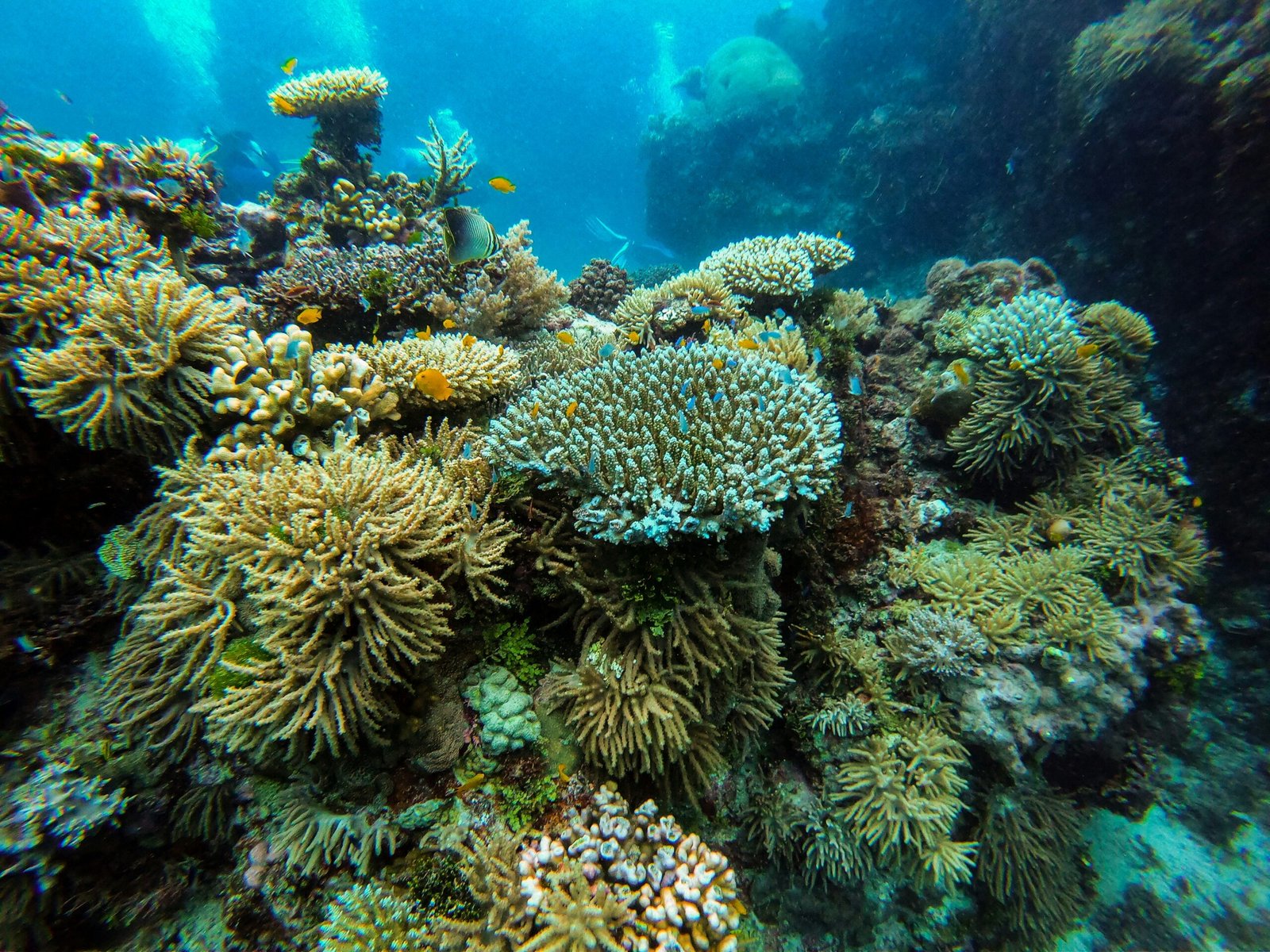
The Great Barrier Reef, a UNESCO World Heritage Site, faces a severe crisis due to climate change, pollution, and invasive species. Rising sea temperatures lead to coral bleaching, threatening marine biodiversity and the tourism industry. Innovative solutions, such as artificial intelligence, are being utilized for real-time monitoring and predictive models to enhance conservation efforts. Collaborative approaches involving government, science, and local communities are crucial to safeguard this iconic ecosystem. Urgent action is imperative to preserve the ecological integrity and economic significance of the reef for future generations.

· 5 min read

Sage Bennett

Catastrophic Coral Bleaching: The Great Barrier Reef’s Alarming Decline

Beyond the immediate physical damage, the impact of this coral bleaching incident extends to the broader marine ecosystem. Coral reefs serve as vital habitats for millions of marine species, and their decline can disrupt the delicate balance of surrounding marine environments. The loss of such biodiversity can lead to cascading effects that threaten not only marine life but also the livelihoods of communities dependent on these ecosystems for fishing and tourism.

· 5 min read