RosTrace

Tag: Dark Matter

Sage Bennett

Mini Halo Discovery Sheds New Light on the Early Universe

Astronomers have uncovered the most distant “radio mini-halo” ever observed—a vast, diffuse cloud of high-energy particles enveloping a galaxy cluster some 10 billion light-years away. This remarkable finding, co-led by Université de Montréal astrophysicist Julie Hlavacek-Larrondo and Durham University’s Roland Timmerman, doubles the previous record for mini-halo distance and offers an unprecedented glimpse into the energetic processes that shaped galaxy clusters during the universe’s formative eras. Accepted for publication in The Astrophysical Journal Letters, the discovery promises to deepen our understanding of how massive cosmic structures evolved under the influence of energetic particle populations.

· 6 min read
Sage Bennett

The Universe’s Missing Black Holes May Finally Have Been Located

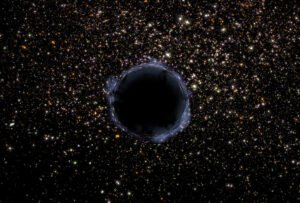
For decades, astronomers have recognized two well-populated classes of black holes: stellar-mass black holes (5–50 solar masses) formed by the deaths of massive stars, and supermassive black holes (millions to billions of solar masses) anchoring the centers of galaxies. Nestled between these extremes, however, lies a conspicuous absence: the long-hypothesized intermediate-mass black holes (IMBHs)—objects of roughly 100–10,000 solar masses that would bridge the evolutionary gap from stellar remnants to galactic behemoths.

· 5 min read

Sage Bennett

Hubble and Gaia Data Cast Doubt on Inevitable Milky Way–Andromeda Collision

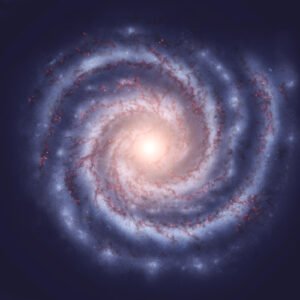
For decades, astronomers have described the impending head-on collision between our Milky Way and the neighboring Andromeda galaxy as a foregone conclusion. Early measurements of Andromeda’s motion, combined with gravitational models, suggested the two galaxies would merge in roughly five billion years, triggering spectacular bursts of star formation and fundamentally reshaping the Local Group. However, a new study that synthesizes the latest observational data from NASA’s Hubble Space Telescope and the European Space Agency’s (ESA) Gaia mission finds that a direct collision may be far less certain than previously believed.

· 9 min read