Nine large data centres proposed for Australia could produce 39 million tonnes of greenhouse gas emissions over 10 years if powered mainly by fossil fuels, the Climate Council says. The estimate, set…
University of Sydney researchers have developed a revolutionary method to produce ammonia without fossil fuels. Using artificial "lightning" plasma and a membrane-based electrolyser, they created a two-step process that turns air into ammonia gas. This innovation could significantly reduce the carbon emissions of ammonia production, decentralize its manufacturing, and transform renewable energy and fertilizer supply chains.
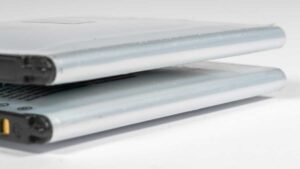
Beltsville, Md., June 24, 2025—In a modest industrial park just outside Washington, D.C., a small team of scientists and engineers is challenging decades of conventional wisdom in the battery industry. Ion Storage Systems, a spin-out of University of Maryland research, has begun producing novel solid-state lithium batteries at its pilot factory in Beltsville. Backed by Energy Department funding and investors such as Toyota Ventures and ARPA-E, the company’s hydrogen-inspired approach promises energy densities up to 50 percent higher than today’s best lithium-ion cells, faster charging, and dramatically improved safety. As the global race for advanced batteries intensifies, Ion’s progress suggests the U.S. could close the gap with China’s battery giants—if the technology scales as hoped.
Green hydrogen—hydrogen produced via water electrolysis powered by renewable energy—emerges as a cornerstone of a decarbonized future. It serves as both an energy carrier and a raw material, enabling industries to transition away from fossil fuels. By relying on electricity generated from solar or wind farms, green hydrogen production can be nearly climate-neutral. However, large-scale deployment faces a persistent challenge: the need for efficient, low-cost catalysts to drive the oxygen evolution reaction (OER) and hydrogen evolution reaction (HER) at both electrodes of an electrolyzer. Until recently, precious metals such as iridium and platinum were the benchmarks for catalytic activity. Their scarcity and exorbitant cost impede the widespread adoption of green hydrogen. Consequently, research efforts have pivoted toward catalysts comprised of earth-abundant elements.
Australia’s renewable energy landscape is undergoing a significant transformation, with a marked surge in household battery storage installations. According to recent data, approximately 75,000 battery storage systems were installed last year—a 47% increase from 2023—bringing the total number of systems across the country to over 320,000. This impressive growth reflects a broader trend: as solar feed-in tariffs continue to plunge, more households are choosing to store their own solar energy rather than sell it back to the grid.
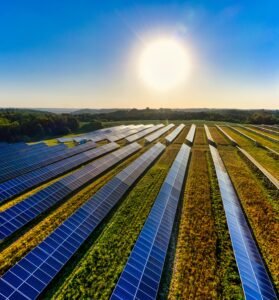
Construction has officially commenced on the first large-scale battery energy storage system in the New England region of New South Wales. The project is being developed alongside the 720MW New England Solar Farm, which remains the largest solar project in Australia.
Discover Australia's largest electric vehicle (EV) charging site under construction in Goulburn. This groundbreaking facility will feature a state-of-the-art 20-stall Tesla supercharger, designed to enhance the EV infrastructure across New South Wales. By strategically increasing charging capacity and accessibility, the project aims to alleviate range anxiety and promote the adoption of electric vehicles. With modern amenities and convenient locations nearby, this site exemplifies the future of sustainable transport in Australia, addressing the pressing need for expanded charging networks as more Australians transition to electric vehicles. Explore the implications for the environment and the automotive landscape.
· 5 min read
Your privacy
We use essential cookies to run this site. With your permission, we and our advertising and analytics partners, including Google, also use cookies to measure readership and show more relevant ads. You can change your choice at any time from "Cookie settings" at the bottom of every page. Read our Privacy Policy
Accessibility
Adjust how this site looks and behaves for you. Your choices are saved on this device only.
Darker text and stronger lines, borders and links.
Shows text in the OpenDyslexic typeface.
More space between lines, letters and words.
Makes every link easy to spot.
A bold outline shows where you are when using a keyboard.
Turns off animations, transitions and autoplaying video.