RosTrace

Tag: astronomy news

Sage Bennett

Hubble and Gaia Data Cast Doubt on Inevitable Milky Way–Andromeda Collision

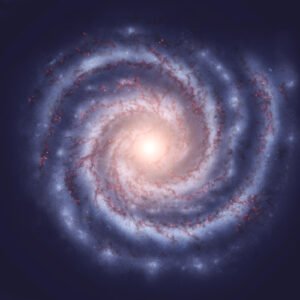
For decades, astronomers have described the impending head-on collision between our Milky Way and the neighboring Andromeda galaxy as a foregone conclusion. Early measurements of Andromeda’s motion, combined with gravitational models, suggested the two galaxies would merge in roughly five billion years, triggering spectacular bursts of star formation and fundamentally reshaping the Local Group. However, a new study that synthesizes the latest observational data from NASA’s Hubble Space Telescope and the European Space Agency’s (ESA) Gaia mission finds that a direct collision may be far less certain than previously believed.

· 9 min read
Sage Bennett

NASA’s Lucy Spacecraft Captures Stunning Images of Asteroid Donaldjohanson

In a thrilling milestone for planetary science, NASA's Lucy spacecraft has successfully imaged asteroid Donaldjohanson, revealing intricate geological features and a surprising shape during its second asteroid flyby. The close encounter, which occurred on April 20, 2025, saw Lucy pass just 600 miles (960 km) from the asteroid, capturing detailed observations that may unlock secrets of our solar system's ancient past.

· 4 min read

Sage Bennett

Get Ready for a Partial Solar Eclipse Across Europe, North America, and Africa

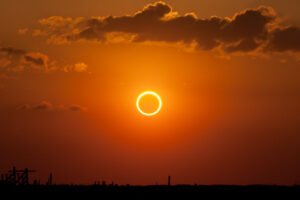
A spectacular partial solar eclipse is set to sweep across the Northern Hemisphere this weekend, promising a mesmerizing display as the moon takes “bites” out of the sun. The event will be visible across Europe, western Africa, eastern North America, and northern Asia, with the most dramatic effect expected in the northeastern United States, Greenland, and eastern Canada.

· 4 min read

Sage Bennett

Mysterious Radio Pulses from Space Tracked Down – And the Source is Not What Astronomers Expected

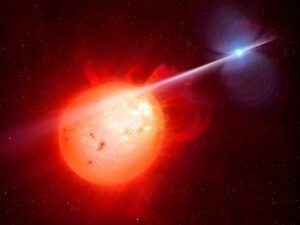
In an exciting breakthrough for the field of astronomy, a team of researchers has managed to track down the source of a mysterious type of radio pulse emanating from deep space, and the discovery is far from what astronomers had anticipated. For the past three years, astronomers have been grappling with the enigmatic phenomenon of long period transients – objects that emit bright radio signals at intervals ranging from a few minutes to several hours. These objects were puzzling, as they did not align with known sources like pulsars or white dwarfs, leaving the scientific community to wonder what exactly could be producing these peculiar emissions.

· 5 min read