RosTrace

Tag: Astronomical discovery

Sage Bennett

Rock Fragments Reveal the Moment the Moon Turned Solid

Scientists have uncovered new details about the Moon’s early history, pinpointing the time it solidified into its current state. By analyzing Apollo mission rock samples, researchers at the University of Chicago have determined that the Moon’s crust formed approximately 4.43 billion years ago—coinciding with Earth’s transformation into a habitable planet.

· 1 min read

Sage Bennett

Groundbreaking Discovery: Western Sydney University Detects Most Energetic Elementary Particle Ever Recorded

Western Sydney University researchers have made a groundbreaking discovery with the identification of the most energetic elementary particle ever recorded—an ultra-high-energy neutrino. Collaborating with the KM3NeT project, they utilized advanced detection technology to capture this elusive particle, providing vital insights into cosmic events and astrophysical processes. This significant achievement challenges existing models in particle physics and paves the way for future research directions in neutrino astronomy, enhancing our understanding of the universe.

· 5 min read

Sage Bennett

Euclid Space Telescope Captures Stunning Einstein Ring in Galaxy NGC 6505

An international team working with the European Space Agency’s (ESA) Euclid space telescope has made an extraordinary discovery: a rare Einstein Ring, located in the galaxy NGC 6505. This phenomenon, previously hidden from sight, was unveiled thanks to the telescope’s high-resolution instruments.

· 3 min read

Sage Bennett

NEID Spectrograph Confirms First Planet Found Through Gaia Data

Discover the NEID spectrograph's pivotal role in exoplanet detection and its collaboration with the Gaia mission. This state-of-the-art instrument enhances our ability to conduct precise radial velocity measurements and confirm exoplanet candidates. Explore groundbreaking discoveries, including Gaia-4b and Gaia-5b, and learn how these advancements deepen our understanding of planets in their habitable zones. The synergy between NEID and other cutting-edge spectrographs exemplifies the importance of modern observational techniques in astrophysics, providing insights into the cosmos and the potential for life beyond Earth.

· 5 min read

Sage Bennett

Dying exoplanet develops a comet-like tail in its “orbit of death”

Explore the intriguing world of exoplanets, focusing on the unique case of BD 05 4868 AB, a 'doomed world' located 29 light-years away in the constellation Cetus. This blog post delves into the discovery of BD 05 4868 AB through the Transiting Exoplanet Survey Satellite (TESS), its extreme environmental conditions due to its proximity to its host star, and the fascinating comet-like tails formed by intense solar interactions. We also look ahead to potential future research with the James Webb Space Telescope, offering insights into the complexities of exoplanet dynamics and eventual destruction. Join us as we unravel the mysteries of distant worlds and their lifecycles.

· 5 min read

Sage Bennett

Mysterious Fast Radio Bursts Traced to Ancient Dead Galaxy

Discover the mysterious world of Fast Radio Bursts (FRBs), particularly the groundbreaking FRB 20240209A observed in February 2024. This blog explores the nature of FRBs, their origins in ancient galaxies, and the complex mechanisms behind their emission. Learn about the distinctions between repeating and non-repeating FRBs, and how recent advancements in observational techniques are reshaping our understanding of the cosmos. Dive into the latest findings that challenge previous assumptions, including the role of neutron stars and magnetars in generating these enigmatic signals, and what it all means for the future of astrophysics.

· 5 min read

Sage Bennett

Record-Shattering 20,000 mph Winds Detected on Wild Alien Planet Wasp-127b

Explore Wasp-127b, a gas giant exoplanet located 330 light-years away known for its extreme environmental conditions and unique weather patterns. Discovered in 2016, Wasp-127b exhibits remarkable features such as being tidally locked with one side facing its star, leading to dramatic temperature variations and supersonic winds reaching 20,000 mph. This blog post delves into the atmospheric dynamics of Wasp-127b, its discovery, and the implications for our understanding of planetary formation and habitability. Join us on a journey to uncover the complexities of this extraordinary exoplanet.

· 5 min read

Sage Bennett

A Swarm of Black Holes Detected in the Milky Way: Insights from Gaia

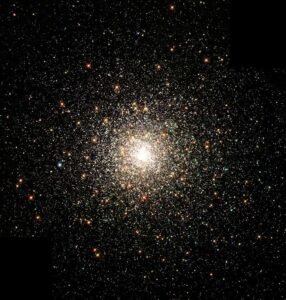
Explore the fascinating study of Palomar 5, a globular cluster in the Milky Way, and its relationship with black holes and stellar streams. Discover how recent advancements in astronomical observations are unveiling the complexities of star dynamics, gravitational interactions, and the implications for dark matter and cosmic structure. This blog delves into the discovery of multiple black holes within Palomar 5 and their impact on our understanding of stellar evolution and galactic history.

· 5 min read