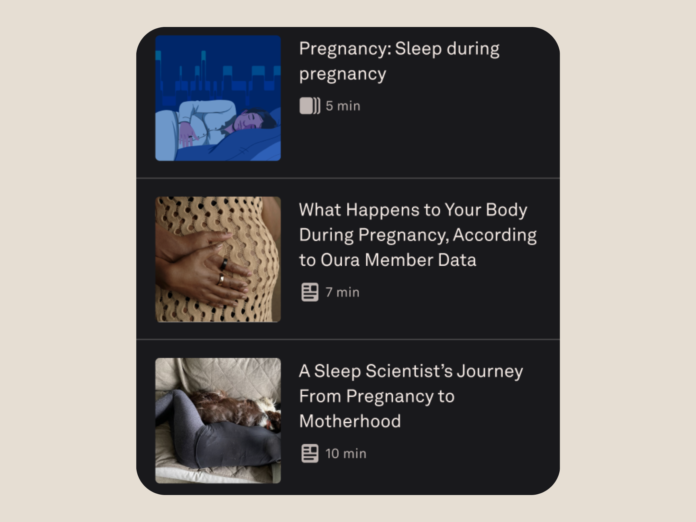
Oura is moving beyond sleep scores and recovery metrics. In a recent executive interview with MobiHealthNews, leaders at Oura Health outlined a focused push into pregnancy insights and electronic health record integration, a shift that could reshape how consumer wearable data enters mainstream clinical workflows. The strategy links continuous biometric tracking with obstetric care and hospital systems.
This development answers a clear market demand. Clinicians want more timely patient data. Expectant mothers want reassurance and personalization. Health systems want scalable digital tools that improve outcomes without adding friction. By combining pregnancy specific algorithms with secure EHR connectivity, Oura aims to bridge the gap between lifestyle wearables and regulated healthcare environments.
From Consumer Wearable to Maternal Health Companion
Pregnancy is dynamic. Hormones fluctuate. Heart rate, temperature, sleep patterns, and stress responses shift week by week. Oura’s smart ring already measures nightly body temperature trends, resting heart rate, heart rate variability, respiratory rate, and sleep stages. The company is now refining these metrics to support pregnant users with stage specific insights that reflect normal physiological changes.
This is not about replacing prenatal visits. It is about adding context between appointments. Continuous data can highlight deviations from personal baselines rather than generic population averages. For example, a sustained rise in resting heart rate or a significant change in sleep quality may prompt a user to seek advice earlier. Early awareness matters. Timely intervention saves lives.
Maternal health remains a global concern. According to the World Health Organization, approximately 287,000 women died from pregnancy related causes worldwide in 2020. Many complications develop gradually. Data that tracks subtle changes may support earlier detection when combined with clinical oversight.
Oura executives emphasized collaboration with medical advisors and research partners. Pregnancy insights are being built with attention to safety, validation, and responsible messaging. The goal is to inform, not alarm. That distinction is critical in maternal care, where anxiety can run high and information must be accurate and clear.
Why EHR Integration Changes the Stakes
Wearables generate data. Hospitals rely on structured records. The missing link has long been interoperability. Oura’s push into EHR integration aims to close that gap by allowing relevant metrics to flow into clinician dashboards within established systems.
Electronic health records such as Epic Systems and Oracle Health manage millions of patient files globally. When wearable data sits outside these platforms, clinicians rarely review it. Integration changes that. It places continuous biometric trends alongside lab results, imaging reports, and visit notes.
The implications are significant. Clinicians could review longitudinal temperature or heart rate variability trends before an appointment. Risk stratification models could incorporate passive data streams. Remote monitoring programs may expand without issuing separate devices. This is especially relevant for value based care models that reward prevention and proactive management.
Oura’s leadership signaled a phased approach. Data sharing must comply with privacy regulations such as HIPAA in the United States and GDPR in Europe. Consent frameworks need to be transparent. Data must be standardized and clinically interpretable. Integration is not just a technical task. It is a governance challenge.
Key Steps for Health Systems Considering Wearable Integration
- Define clinical use cases clearly
Start with focused programs such as prenatal monitoring or high risk pregnancies. Avoid broad deployments without outcome metrics. - Establish data governance protocols
Confirm patient consent, data ownership terms, and retention policies before connecting consumer devices to clinical systems. - Train clinicians on data interpretation
Continuous biometric streams differ from episodic vital signs. Staff need guidance on thresholds and escalation pathways. - Pilot before scaling
Use controlled pilots to measure impact on appointment frequency, patient satisfaction, and early detection rates.
Market Context and Competitive Landscape
Oura is not alone in exploring health system integration. Companies such as Apple Inc. and Fitbit have expanded health features over the past decade. However, pregnancy specific analytics remain an emerging frontier. Few wearables provide tailored insights that reflect gestational stages.
The global wearable medical devices market continues to grow. Industry analysts estimate multi billion dollar expansion over the next five years, driven by chronic disease management and remote patient monitoring. Maternal health represents a focused and meaningful subset of this broader trend. It carries clinical urgency and clear outcome metrics.
Oura’s ring form factor also plays a role. Rings are discreet. They require no charging during the day. Compliance rates tend to be higher than wrist based devices for some users. In pregnancy, comfort and ease matter. Devices that integrate seamlessly into daily life are more likely to produce consistent data streams.
Yet challenges remain. Clinical validation is ongoing. Not all biometric changes are pathological. Over interpretation could create unnecessary visits. Health systems must balance innovation with evidence. Regulators will likely scrutinize claims that border on medical diagnosis. Clear labeling and responsible communication will shape trust.
Comparing Wearable Features for Pregnancy Support
| Feature Category | Oura Ring | Typical Fitness Tracker | Clinical Remote Monitoring Device |
|---|---|---|---|
| Continuous Temperature Trends | Yes, nightly baseline tracking | Limited or absent | Yes, often medical grade |
| Heart Rate Variability | Yes | Yes | Yes |
| Pregnancy Specific Insights | In development with tailored algorithms | Rare | Typically condition specific |
| EHR Integration Pathway | Active integration efforts | Limited | Standard in hospital programs |
| User Comfort | Ring form factor, discreet | Wrist based | Varies, often bulkier |
Strategic Implications for Digital Health Leaders
The integration of wearable data into EHR systems signals a shift in digital health strategy. Consumer technology companies are no longer content with wellness apps alone. They seek relevance within clinical ecosystems. That requires partnerships with hospitals, payers, and obstetric practices.
For digital health executives, the message is clear. Data silos limit value. Interoperability expands it. Pregnancy insights illustrate a broader principle that personalized, longitudinal metrics can complement episodic care. The same framework could extend to menopause, fertility, or chronic disease.
Investors are watching closely. Maternal health innovation attracts both public attention and funding. Outcomes are measurable. Cost savings from early detection can be modeled. Health systems operating under tight margins may view wearable integration as a lever for improved quality metrics.
Still, success will depend on evidence. Peer reviewed studies, real world pilots, and transparent reporting will shape adoption curves. The path from consumer gadget to clinical tool is complex. Oura’s latest moves show ambition. Execution will determine impact.
How Expectant Mothers and Providers Can Use These Insights
For pregnant individuals considering wearable support, clarity is essential. Devices should complement medical advice, not replace it. Users should discuss data sharing with their providers. If EHR integration is available, confirm what metrics are visible and how they will be used.
Healthcare providers can prepare by reviewing digital health policies. Identify whether current EHR systems support wearable imports. Engage IT teams early. Establish clear communication with patients about what wearable trends mean and what they do not mean.
The broader opportunity is trust. When technology companies collaborate transparently with clinicians and regulators, patients benefit. Pregnancy is deeply personal. Data can empower. It must also reassure.
Trending FAQ
What pregnancy metrics can Oura track today?
Oura currently tracks body temperature trends, resting heart rate, heart rate variability, respiratory rate, and sleep metrics. Pregnancy specific interpretations are being refined to reflect gestational changes.
Is Oura’s pregnancy feature a medical device?
Oura is positioned as a consumer health wearable. Any clinical use depends on regulatory classification and how features are marketed. Users should not treat wearable data as a diagnosis.
How does EHR integration work?
Integration allows selected wearable metrics to be securely transmitted into electronic health record systems, where clinicians can review trends alongside other medical data.
Why is temperature tracking important in pregnancy?
Basal body temperature shifts can reflect hormonal changes. Continuous tracking may help establish personal baselines and identify deviations that warrant clinical discussion.
Will insurers cover wearable based monitoring?
Coverage varies. Some remote monitoring programs are reimbursed under specific billing codes. Broader wearable integration is still evolving within reimbursement frameworks.
Oura’s expansion into pregnancy insights and EHR connectivity marks a decisive moment. It reflects a growing convergence between personal health technology and institutional medicine. The next phase of digital health may not be about more data. It may be about better connected data.

