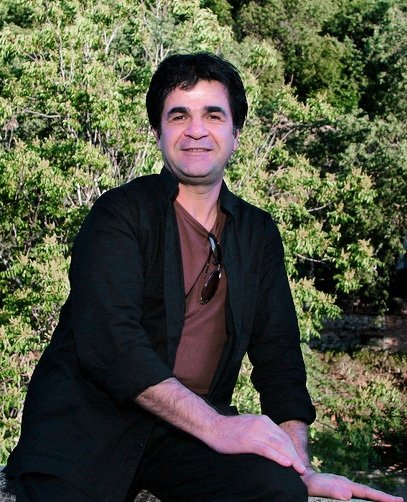
Jafar Panahi, one of only four filmmakers to claim life’s top three festival honors, made a surprise appearance at the Sydney Film Festival on June 10, opening his Palme d’Or–winning film It Was Just an Accident. Banned at home and twice imprisoned for refusing to conform to Iran’s state doctrine, Panahi flew into Sydney under strict confidentiality, arriving just hours before the gala screening at the State Theatre. Festival artistic director Nashen Moodley withheld his name until Panahi took the stage to thunderous applause, ensuring both the director’s safety and the integrity of his first Australian visit.
A Career Forged in Defiance
Panahi emerged in the 1990s under the tutelage of Abbas Kiarostami and quickly became the voice of a generation, blending documentary realism with fiction to expose life’s complexities under Iran’s theocratic regime. Early films such as The White Balloon (1995) and The Circle (2000) tackled children’s perspectives and women’s rights, winning international awards—and Tehran’s ire. His refusal to solicit official permits led to a 2009 conviction: a 20-year filmmaking ban and six years’ house arrest, which he countered by crafting cinematic “taxis” (Taxi, 2015) and “bears” (No Bears, 2022) that defied both censorship and genre.
It Was Just an Accident: A Veiled Autobiography
In It Was Just an Accident, Panahi turns the lens inward. The film dramatizes a nightmarish scenario in which a director, held overnight by agents he cannot identify, confronts moral choices about retribution and forgiveness. Loosely based on Panahi’s own 2009 detention, the movie unfolds in real time, its claustrophobic tension a direct challenge to authoritarian power. At Cannes in May, the jury cited Panahi’s “unwavering commitment to artistic freedom,” awarding him the Palme d’Or and marking the first such honor for an Iranian filmmaker in over two decades.
Smuggled In, Screened Under the Radar
Months of clandestine liaison preceded Panahi’s Sydney visit. Festival staff coordinated with European cultural attachés and Panahi’s French producers to secure travel documents quietly—critical, given that Iran’s authorities had only just, in April, allowed him to leave the country for Cannes. “We used every precaution,” Moodley told ABC. “If word got out in Tehran, he might have been barred again.” Only after Panahi passed immigration and private security cleared the State Theatre did organizers reveal his attendance.
Onstage at the State Theatre
Introduced simply as “our guest of honor,” Panahi—dressed in his trademark black suit and shades—received a standing ovation. In a brief opening statement, he thanked Festival Director Nashen Moodley and audiences “for supporting cinema when it must speak truth to power.” Speaking through a translator, he warned: “Everywhere, artists face walls built by fear. When we tear them down with our stories, we set each other free.”
Conversation over Coffee: Panahi’s Reflections
Two days later, Panahi sat down for a rare public interview—with the condition that local journalists not record location—to discuss art, exile, and hope. Over coffee at Darling Harbour, he appeared both animated and wary, his signature cool composure edged by urgency. Key highlights from the conversation include:
- On the Spark for It Was Just an Accident: “When they held me in that cell, the fear stung me. I thought: ‘If this can happen to me, it can happen to anyone.’ I had to make a film about what we do when our lives are stolen.”
- On Cinema as Resistance: “If you see a crack in a wall, you tell the world it’s there. If enough people see it, the wall will fall. That’s the duty of art.”
- On Exile and Belonging: “I’ve traveled far, but my heart remains in Tehran. I could never pretend anything else.”
- On the Future: “I have thousands of stories to tell. If one is banned, I’ll find another way to show it.”
Risk and Rewards: The Politics of Panahi’s Return
Panahi’s decision to travel carries real peril. During his last imprisonment, a surgeon warned him that continued drug smuggling by guards could kill him. The Iranian government has shown no mercy to dissident artists; previously, Panahi avoided international festivals to protect his collaborators. His Cannes triumph forced Tehran to relent—partly due to diplomatic pressure from France, Italy, and Spain—and now, Sydney’s safe harbor proves festival diplomacy can carve out breathing room for censored voices.
Festival Retrospective: “Cinema in Rebellion”
Alongside It Was Just an Accident, the Sydney Film Festival is presenting Jafar Panahi: Cinema in Rebellion, a complete retrospective of his nine feature films and seminal shorts. From the child’s-eye wonder of The White Balloon to the meta-theatre of Offside (2006), audiences can trace Panahi’s evolution: a poet of quotidian struggles who transforms simple premises into subversive fables.
Global Solidarity and the Road Ahead
Panahi’s appearance resonates beyond cinema circles. Human rights groups, including PEN International and Amnesty, hailed his visit as a victory for free expression. Iranian diaspora communities in Sydney gathered at a public screening, waving homemade signs reading “Art Cannot Be Silenced.” Cultural Minister Don Harwin pledged continued support for exiled artists and announced a government-funded Panahi scholarship for Iranian filmmakers at the University of Sydney.
Conclusion: Cinema’s Unfinished Revolution
In a world where autocrats bully artists into silence, Panahi’s secret journey to Sydney stands as proof that cinema can pierce borders and crack the walls of oppression. His courage revitalizes a festival ethos that prizes the meeting of minds over the dictates of power. As Panahi returns to Tehran with his Palme d’Or in hand, he carries with him not only personal vindication but a rallying cry: that even in the darkest cells, stories endure, and hope endures longer still.
READ MORE: Kamasi Washington on Composing for Anime, “Fearless Movement” and His Australian Tour

