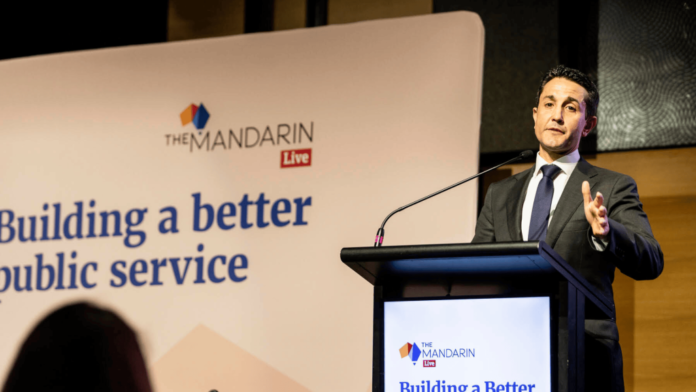
Queensland’s public service has been thrown into the spotlight after Opposition Leader David Crisafulli’s sweeping overhaul plan ignited widespread debate. The Liberal National Party (LNP) policy, framed as a decisive push to “modernise and streamline” the bureaucracy, has instead triggered a storm of criticism from unions, advocacy groups, and ordinary citizens online. What was initially pitched as a cost-saving and efficiency measure has quickly morphed into a flashpoint of political controversy.
Critics argue that the proposed changes are heavy-handed, risk undermining institutional independence, and could erode trust between government and frontline workers. Supporters, however, defend the policy as a necessary reset to tackle what they see as decades of entrenched inefficiency.
The policy rollout is already reshaping the state’s political conversation. It has sparked heated discussions in workplaces, town halls, and social media feeds, highlighting the sharp divide between those who welcome reform and those who fear job insecurity, reduced services, and politicisation of the public sector.
What the Policy Proposes
At the heart of Crisafulli’s overhaul is a structural reorganisation designed to give the executive more direct control over senior public service appointments. The plan includes:
- Performance-based contracts for senior bureaucrats, replacing traditional tenure models.
- Reductions in middle-management layers to “flatten” the structure and improve accountability.
- Independent audits of departments to cut duplication of roles and resources.
- Enhanced ministerial authority over senior staffing decisions.
Crisafulli has argued that these changes will curb bureaucratic bloat, deliver faster decision-making, and ensure government priorities are implemented without resistance. “Queenslanders deserve a public service that is accountable, agile, and responsive,” he stated during the rollout.
Union Pushback
The reforms have met fierce resistance from the Queensland Council of Unions (QCU) and other worker representatives. They claim the proposals risk turning the public service into a political tool and jeopardise job security for thousands of employees.
QCU Secretary Michael Clifford criticised the move as “an attack on the impartiality of the state’s institutions,” warning that performance-based contracts may lead to a culture of fear and discourage frank advice. “Public servants must feel free to give fearless, evidence-based advice,” he said, “not advice tailored to please ministers.”
Teachers, nurses, and police representatives have voiced similar concerns, noting that cuts to middle management could overload frontline workers already struggling under pressure.
Social Media Meltdown
The announcement unleashed a wave of online commentary. Twitter and Facebook feeds lit up with hashtags like #HandsOffOurPublicService and #CrisafulliCuts.
- Some users shared personal stories about relying on public services and voiced fears that budget-driven changes would mean slower responses in health, education, and emergency services.
- Others framed the move as overdue, arguing that taxpayers should not foot the bill for bloated structures.
On TikTok, short videos mocking the reforms went viral, while professional groups on LinkedIn debated whether the changes would align Queensland with corporate efficiency standards or weaken its democratic safeguards.
Comparisons with Other States
Queensland is not alone in pursuing public sector reform. Similar moves in New South Wales and Victoria have had mixed results.
- In NSW, a push for performance contracts was partially rolled back after criticism that it eroded trust in government departments.
- In Victoria, restructuring led to efficiency gains in some agencies but also drew complaints about reduced independence.
Analysts suggest that Queensland risks repeating these missteps unless safeguards are put in place to preserve impartiality and worker protections.
Political Fallout
The LNP is betting that voters will embrace the reforms as a symbol of fiscal discipline. Yet Labor has seized on the backlash, warning that the policy represents “American-style politicisation of the public service.”
Premier Steven Miles accused Crisafulli of “putting ideology over evidence” and argued the reforms would “weaken the backbone of service delivery for everyday Queenslanders.”
With an election on the horizon, the controversy is likely to become a defining battleground issue. Polling suggests that while some voters welcome efficiency promises, many remain wary of perceived threats to job security and service quality.
Economic Rationale
Supporters highlight potential savings. Independent think tanks estimate that flattening departmental structures could save Queensland hundreds of millions of dollars annually by reducing duplication and streamlining processes.
Advocates argue that these savings could be reinvested in infrastructure, healthcare, and education. “It’s about better outcomes for taxpayers, not just cutting jobs,” LNP spokespersons insist.
However, economists warn that efficiency-driven reforms can backfire if they neglect the long-term costs of demoralising staff and undermining institutional expertise. Productivity gains may be short-lived if morale and trust collapse.
Expert Views
Policy experts remain divided:
- Dr. Maria Panagiotidis, a governance specialist at Griffith University, cautioned that “efficiency must not come at the expense of independence. A strong democracy needs a fearless public service.”
- Professor Alan Keating of the University of Queensland argued that “some disruption is necessary. Queensland’s public service has grown unwieldy. Reform, if implemented with checks and balances, could drive overdue change.”
Both agreed that the rollout’s tone—seen by many as adversarial—has fuelled the social backlash.
A Cultural Shift
Beyond technical changes, the policy signals a cultural shift. For decades, Queensland’s public service has prided itself on impartiality and stability. By introducing performance-linked contracts and greater ministerial authority, Crisafulli’s plan redefines the relationship between elected officials and bureaucrats.
This shift is at the core of the public anxiety. Many fear it could erode the long-standing principle that the public service works for the people, not the party in power.
What Happens Next
The LNP has promised further consultation, but unions plan to escalate opposition with protests and campaigns. Some legal experts predict challenges in court, especially regarding ministerial influence over appointments.
Meanwhile, everyday Queenslanders are left to wonder how the changes will impact the services they rely on daily—from hospital waiting lists to school classroom sizes.
Conclusion
Crisafulli’s public service overhaul has achieved one clear result: sparking a state-wide conversation about the balance between efficiency, independence, and accountability. Whether the policy delivers the promised benefits or entrenches deeper division will depend on execution, safeguards, and the ability of leaders to rebuild trust with a sceptical public.
For now, the backlash is a reminder that reform in the public service is never just about structures or savings—it is about people, trust, and the very foundations of how a state is governed.

