Circulose has joined the industrial consortium led by Spinnova to speed up the commercial scale up of next generation textile fibre technology. The move brings a specialist in textile to textile recycling into a group that already includes global fashion brands and innovation platforms. The goal is clear. Scale circular fibre solutions faster and reduce the textile sector’s reliance on virgin raw materials.
The development links two technology driven players at a time when the global fashion industry faces rising regulatory pressure, volatile raw material markets, and investor scrutiny over climate impact. According to the European Environment Agency, textiles are among the top sources of pressure on water and land use in Europe, and they rank high for greenhouse gas emissions across product categories. The industry is under strain. Commercial scale solutions are no longer optional.
Why the Circulose and Spinnova Partnership Matters for Circular Fashion
Spinnova, headquartered in Finland, has developed a patented process that turns wood based pulp and other cellulose feedstocks into fibre without harmful solvents. The company states that its technology avoids dissolving cellulose in the way traditional viscose production does. That matters. Conventional viscose has faced criticism for chemical use and wastewater discharge, as noted by environmental assessments from organizations such as the Changing Markets Foundation.
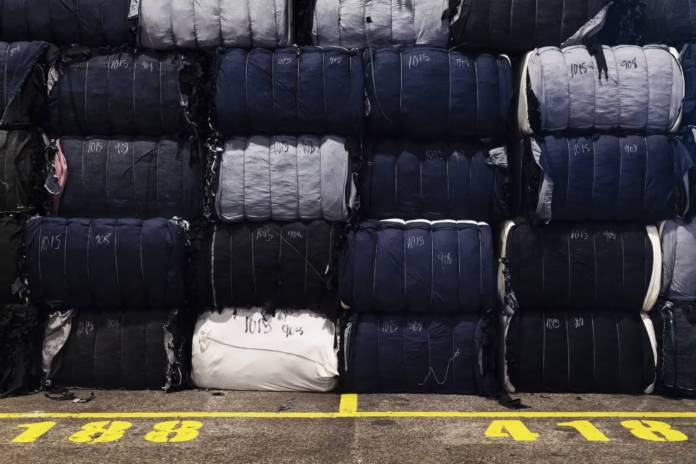
Circulose, formerly known as Renewcell, focuses on recycling cotton rich textile waste into a dissolving pulp branded as Circulose. This pulp can then be used to produce new fibres such as viscose, lyocell, modal, and potentially Spinnova fibre blends. The Swedish company has positioned itself as a textile to textile recycling specialist, addressing one of the sector’s core weaknesses. According to the Ellen MacArthur Foundation, less than 1 percent of textile material is recycled back into new textiles at scale. Most garments are downcycled or landfilled.
By joining the consortium, Circulose becomes part of a supply chain wide effort to connect waste feedstock, fibre production, brand demand, and commercialization. The consortium already includes fashion brands such as Tommy Hilfiger and Armedangels, as well as innovation platform Fashion for Good. The structure is practical. Brands signal demand. Technology companies scale production. Recycling firms secure feedstock. The result could be a more stable pipeline for circular fibres.
For professional stakeholders, this is not just a symbolic partnership. It signals a shift from pilot projects to integrated industrial ecosystems. Scale is the hard part. Technology exists. Demand is rising. The gap has been infrastructure and coordination. This consortium is designed to close that gap.
Key Implications for Brands, Manufacturers, and Investors
The partnership has direct consequences across the textile value chain. It affects sourcing, compliance, capital allocation, and long term risk planning.
- Improved Access to Recycled Feedstock
Brands seeking higher recycled content can tap into Circulose’s textile waste based pulp, reducing dependence on virgin cotton and wood pulp. This supports alignment with Science Based Targets initiative commitments and corporate climate disclosures. - Lower Regulatory Risk in the EU
The European Union is advancing the Ecodesign for Sustainable Products Regulation and expanding Extended Producer Responsibility for textiles. A fibre solution built on recycled content may help brands prepare for stricter reporting and durability standards. - Diversification of Fibre Supply
Cotton markets remain exposed to climate shocks and water scarcity. According to the World Bank, cotton production is highly sensitive to drought and extreme weather. Alternative cellulose fibres offer a hedge against volatility. - Capital Market Signaling
Investors increasingly track environmental performance. MSCI ESG Research has noted that textile companies face rising exposure to environmental and social risk. Participation in verified circular supply chains can strengthen ESG ratings and investor confidence.
These points are not abstract. They affect procurement strategy, factory planning, and even product design. Fibre choice shapes cost structures and carbon footprints. It also shapes brand reputation.
Commercial Scale and Technology Integration Across the Supply Chain
Scaling fibre innovation requires more than lab results. It requires coordination across recycling, pulping, spinning, fabric production, and garment manufacturing. That is complex. It also demands capital.
Spinnova has already moved toward industrial scale through joint ventures and pilot production facilities in Finland. Its process, which mechanically refines cellulose rather than dissolving it, is designed to reduce chemical use and water intensity. According to company disclosures and public sustainability reports, the process aims to lower environmental impact compared with traditional viscose production. Independent verification and lifecycle assessments remain critical, and stakeholders will watch closely as production volumes increase.
Circulose’s recycling model focuses on collecting and processing post consumer cotton rich textiles. This addresses a long standing challenge in fashion waste management. The European Commission estimates that each EU citizen discards around 11 kilograms of textiles per year. Much of this ends up in mixed waste streams. Textile to textile recycling can redirect part of that flow into new fibre production, provided sorting and collection systems improve.
The consortium approach may also ease financing challenges. Fibre plants require significant upfront investment. When brands commit to offtake agreements, risk declines. That improves bankability. It also shortens the path from pilot to commercial output.
Consortium Structure and Strategic Roles
| Consortium Member | Core Expertise | Strategic Role in Scale Up | Expected Impact on Market |
|---|---|---|---|
| Spinnova | Mechanical cellulose fibre technology | Fibre innovation and production scaling | Lower chemical use and diversification of cellulose fibres |
| Circulose | Textile to textile cotton recycling | Supply of recycled dissolving pulp | Increased recycled content in mainstream collections |
| Tommy Hilfiger | Global fashion brand | Demand signaling and commercial adoption | Acceleration of market acceptance |
| Armedangels | Sustainable fashion brand | Early adoption and product integration | Proof of concept for circular collections |
| Fashion for Good | Innovation platform | Ecosystem building and validation | De risked collaboration and knowledge sharing |
This structure reflects a systems view. Each actor plays a defined role. That clarity can speed execution.
What This Means for Textile Sustainability Strategy in 2026 and Beyond
The textile sector faces mounting pressure from regulators, consumers, and capital markets. Climate risk is real. So is resource scarcity. According to the Intergovernmental Panel on Climate Change, industrial emissions must decline sharply this decade to align with global climate targets. Fibre production is part of that equation.
For brands, the Circulose and Spinnova partnership offers a potential pathway to increase recycled content without sacrificing performance. It also offers a chance to align with EU waste reduction goals and circular economy action plans. For manufacturers, it creates new sourcing options. Mills may need to adapt spinning processes to handle new fibre blends. That requires testing. It also requires training and quality control upgrades.
For policymakers, such collaborations demonstrate how private sector coordination can support public environmental objectives. Yet scale remains the test. Pilot runs and capsule collections are not enough. The industry needs millions of tonnes of alternative fibres to shift global supply dynamics.
Stakeholders should track three indicators in the coming years:
- Verified lifecycle assessment data comparing environmental impacts to conventional fibres
- Production capacity growth and plant commissioning timelines
- Long term offtake agreements between brands and fibre producers
These metrics will reveal whether the consortium delivers measurable change or remains a promising experiment.
Why This News Matters for Decision Makers Now
Executives in sourcing and sustainability roles need practical information. They must decide whether to enter long term agreements, invest in new fibre blends, or adjust procurement standards. This consortium provides a real world case study of ecosystem level collaboration. It is not a marketing campaign. It is an industrial alignment effort.
Investors should evaluate how participation in circular fibre ecosystems affects risk exposure. Textile firms with access to recycled feedstock may show greater resilience under carbon pricing schemes or waste levies. Manufacturers should begin assessing machinery compatibility with new fibre inputs. Early movers can gain experience advantages.
The market is shifting. Slowly, but clearly.
Trending FAQ
What is Circulose and how does it work?
Circulose is a recycled textile pulp made primarily from cotton rich textile waste. The material is processed into a dissolving pulp that can be used to produce new regenerated cellulose fibres such as viscose or modal.
What is Spinnova’s fibre technology?
Spinnova has developed a mechanical process that converts cellulose based raw materials into fibre without dissolving them in harmful solvents. The aim is to reduce chemical use and water intensity compared with conventional viscose production.
Why is textile to textile recycling important?
According to the Ellen MacArthur Foundation, less than 1 percent of textiles are recycled into new textiles globally. Increasing this rate can reduce landfill waste, lower demand for virgin resources, and cut environmental impact.
How does this affect fashion brands?
Brands gain access to higher volumes of recycled fibre inputs. This can support climate targets, regulatory compliance, and consumer demand for more sustainable products.
Is the technology already at full commercial scale?
Production is scaling but not yet dominant in global fibre markets. The consortium aims to accelerate expansion through coordinated demand and supply agreements.

