
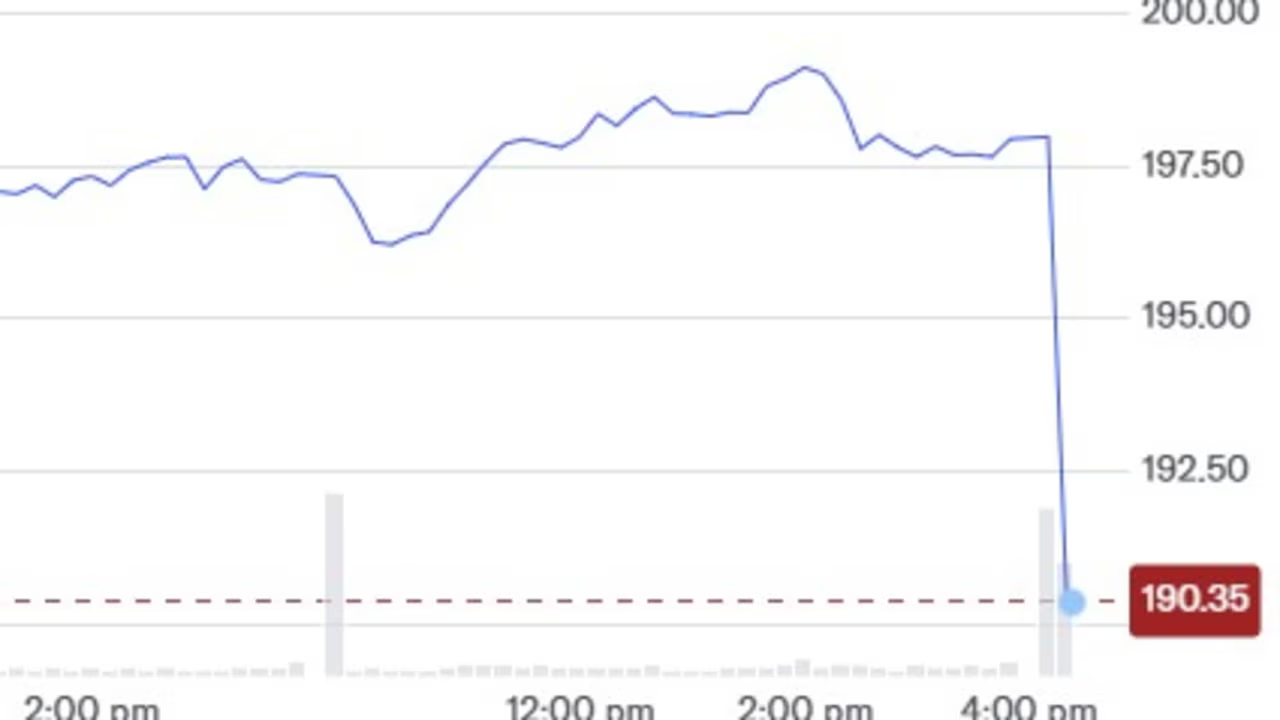
Australian biotechnology giant CSL and several local pharmaceutical companies were hit hard on Friday after US President Donald Trump announced sweeping 100% tariffs on all branded pharmaceuticals entering the United States. The move, unveiled on Truth Social, sent shockwaves through global markets and shaved billions off the value of healthcare stocks in Australia.
Trump specified that companies investing in manufacturing facilities within the United States would be exempt, with the tariffs scheduled to take effect from 1 October 2025. The announcement is part of his broader strategy to boost domestic drug production, a move framed as both a protectionist measure and a bid to reduce reliance on global supply chains.
CSL Leads Market Fallout
The impact was immediate. CSL, a market heavyweight with a global footprint, initially lost $3 billion in market value before clawing back some losses to close $1 billion down, representing a 1.9% fall in its share price.
A CSL spokesperson moved quickly to reassure investors, highlighting that the company already operates extensive US manufacturing sites.
“We have a very significant United States manufacturing footprint. We are already expanding our US capabilities to meet the growing demand for our therapies … As per previous market guidance, we do not expect any material impact from these tariffs,” the spokesperson said.
Despite these assurances, CSL’s struggles are mounting. In August, it shed $20 billion in market capitalisation following disappointing financial results. With Friday’s losses, the company is now $35 billion smaller than it was just two months ago — a dramatic contraction that has placed it under intense investor scrutiny.
Broader Health Sector Hit
The pain extended beyond CSL. Other listed pharmaceutical companies recorded steep declines:
- Soul Pattinson fell 2.5%, wiping $400 million off its market capitalisation.
- Neuren Pharmaceuticals slumped 3.6%, losing $100 million.
- Telix Pharmaceuticals dropped 2.6%, down $130 million.
- Pro Medicus lost 2.5% in value.
Overall, the healthcare sector shed 1.5% of its total market value on the day, a significant move for a traditionally defensive segment of the Australian share market.
Yet the broader ASX200 index held steady, buoyed by rising values among banks and miners. Major players such as BHP and Rio Tinto helped cushion the fall, reflecting a sectoral split that left healthcare as the clear underperformer.
Government Response and Trade Implications
Australian Health Minister Mark Butler addressed the issue in Adelaide, noting the government was still assessing the scope of the tariffs. He emphasised that Australia would do “everything” possible to protect its Pharmaceutical Benefits Scheme (PBS) and maintain stable supply lines.
“We’re still working through the latest announcement from the president this morning. Obviously we have been aware of the administration’s intention to take action against pharmaceutical imports into America and we have been engaging with them,” Butler said.
More than two-thirds of Australia’s pharmaceutical exports to the US are blood and plasma products, an area where CSL is a dominant player. Whether these will be caught in the tariff net remains unclear.
Butler also pointed out the imbalance in pharmaceutical trade flows:
“We buy more pharmaceutical products from the US by quite a distance than they buy from us … It is not in the American consumers’ interest to impose a higher price on the export from Australia to America.”
The opposition condemned the tariffs, calling them “shocking but unsurprising,” while warning of potential disruptions to supply chains and patient access.
Investors Weigh Risks
For investors, the key concern is whether CSL and other Australian biotech firms can successfully navigate the shifting regulatory and trade landscape. While CSL maintains that its US presence will shield it, analysts argue that the company’s heavy reliance on the American market — both for sales and research — leaves it vulnerable.
In August, CSL’s earnings downgrade underscored these vulnerabilities. Revenue from key therapies, particularly plasma-based products, has faced rising costs and slowing growth. Coupled with Trump’s tariffs, market sentiment has soured, leading some fund managers to reassess long-term exposure to the sector.
Healthcare analysts at Macquarie noted that while CSL’s US expansion projects in Marburg and Holly Springs may provide partial protection, execution risks remain.
“Any delays or cost overruns in bringing new US plants online could expose CSL to tariff impacts, even if temporarily. That uncertainty is being priced in,” they wrote in a client note.
Sectoral Resilience Versus Political Uncertainty
The tariff announcement underscores how global politics is increasingly shaping the fortunes of Australian companies. For years, investors assumed that pharmaceutical trade was relatively insulated from the turbulence of geopolitical rivalry. That assumption has now been challenged.
The Trump administration’s decision adds to a growing list of political interventions in global markets, from semiconductor controls to energy sanctions. Healthcare, once seen as a stable and apolitical investment, is now exposed to the same volatility that affects other industries.
This shift is significant for superannuation funds and institutional investors, many of whom rely heavily on healthcare stocks like CSL to provide defensive balance in their portfolios. With Friday’s news, the risk-return calculus for the sector is changing.
Lessons from Previous Tariff Shocks
History provides context. In 2018, during Trump’s first term, tariffs on steel and aluminium rattled global markets but gradually became absorbed into supply chains. Analysts expect a similar adjustment process here, but stress that pharmaceuticals differ because of their direct link to healthcare systems and patient outcomes.
Tariffs on medicines could also generate political backlash domestically in the US, particularly if drug prices rise for American consumers. That in turn could force the administration to water down or revise the policy.
However, Trump’s latest move appears designed to cement his political brand as tough on global trade and supportive of US manufacturing, making a reversal less likely in the short term.
Where to From Here?
For CSL, the challenge will be convincing investors that its “significant US footprint” truly shields it from tariff risk. Transparent updates on its expansion projects, cost structures, and contingency plans will be essential in rebuilding market confidence.
For the Australian government, the task lies in ensuring critical exports like plasma products are not penalised and that bilateral channels with Washington remain open. Canberra is expected to intensify diplomatic engagement in the coming weeks, seeking exemptions or clarifications before the 1 October deadline.
Meanwhile, investors must weigh whether Friday’s losses represent a buying opportunity in oversold stocks or the beginning of a longer correction in healthcare equities. Much will depend on how US authorities implement the tariffs and whether exemptions for existing US operations are applied consistently.
Outlook
The pharmaceutical tariff shock has highlighted just how entangled politics, trade, and markets have become. CSL’s sharp losses may have been pared back by day’s end, but the episode has raised fresh doubts about the stability of Australia’s largest biotech and the resilience of the healthcare sector as a whole.
With global investors increasingly alert to the risks of political intervention, the old adage that “markets move past political noise” no longer holds. For CSL, its shareholders, and the broader Australian economy, the next few weeks will be crucial in determining whether this is a short-lived disruption or the start of a more profound shift in the rules of global healthcare trade.